yahoo Press
Two months into Iran war, economic strain mounts across emerging markets
Images
1 / 4
2 / 4

3 / 4

4 / 4
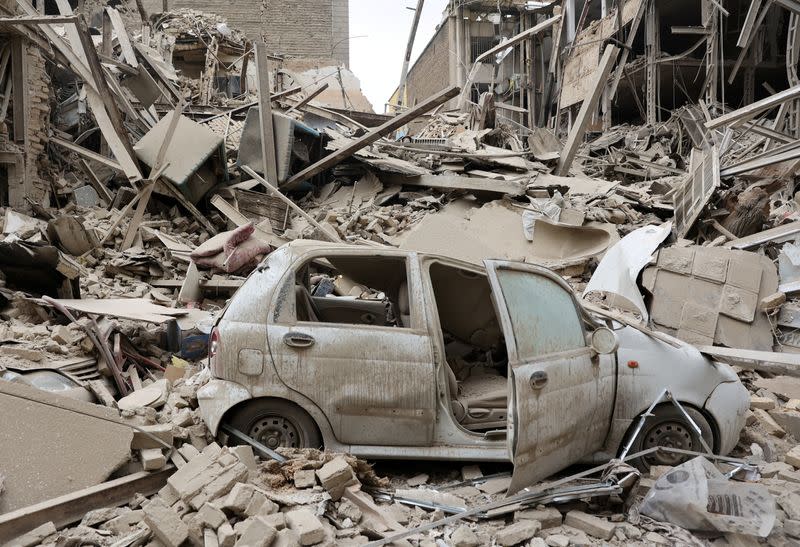
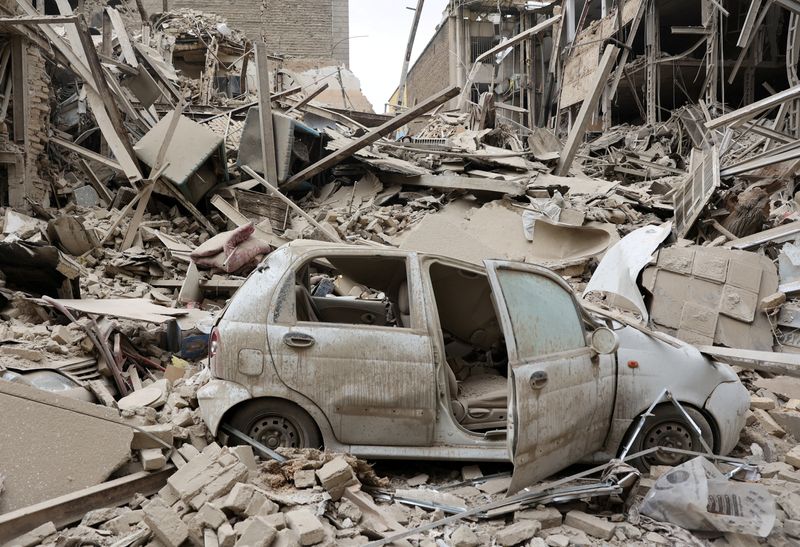
By Marc Jones and Karin Strohecker LONDON, April 27 (Reuters) - Two months since the outbreak of the Iran war, the charts below show how the economic toll is spreading beyond the Middle East, with emerging and developing markets facing rising inflation, growing fiscal strains and trade disruptions. 1/DIRECT HITS Middle East nations and those nearby are seeing the most direct economic hit. Qatar posted its first ever trade deficit at $1.2 billion in March after the closure of the Strait of Hormuz slashed exports by more than 90% and halved imports. JPMorgan economists expect Qatar's economy to shrink 9% this year following damage to an LNG plant, deeper than the IMF's minus 6.1% forecast for Iran. The Fund cut growth projections for emerging and developing economies as a group to 3.9% from 4.2% and this month's IMF and World Bank meetings in Washington included stark warnings. "A full-fledged impact is coming and it is not far away," Qatar Finance Minister Ali Ahmed Al-Kuwari told the event. Emerging Asian markets are particularly vulnerable as more than 50% of crude imports and more than a third of gas imports traditionally come through the Strait of Hormuz. However, further away producers have benefited from higher crude prices. Brazil and Kazakhstan's currencies strengthened more than 9% year-to-date and emerging market stocks have bounced back to record highs, though tech-heavy markets such as South Korea and Taiwan added to the boost. 2/ TURNING TANKERS The jump in energy costs - and with it inflationary pressures - have curbed central banks' room to cut interest rates and started pushing them in the other direction instead. The Philippines hiked rates last week, while Turkey, Poland, Hungary, the Czech Republic, India and South Africa have started turning more hawkish given the dangers of 'second-round effects' - where wages and other key knock-on costs rise. JPMorgan says markets in most of the 15 major emerging economies it tracks are pricing in tighter monetary policy over the next six months. Economists are predicting it, too. "Rising inflationary pressures and risk‑off sentiment could tighten financing conditions, pushing (bond) yields higher," Zahabia Gupta at S&P Global said in a note. 3/ SUBSIDY STRAINS Emerging market governments already spend hundreds of billions of dollars a year cushioning households from high energy prices - and the latest spikes are set to push those numbers higher. The IMF estimates that global fossil fuel subsidies amounted to $725 billion in 2024 - or 6% of global GDP. That's down from 12% in 2022, when Russia's full-scale invasion of Ukraine sparked a jump in energy costs. While the calculations do not splice out emerging markets, the Fund says that the Middle East, North Africa, Europe and Central Asia region dishes out three quarters of the subsidies globally. "We see growing fiscal risks in EM from capping prices, from tax cuts and subsidies if this energy shock is more persistent," Citi's Joanna Chua said in a note to clients, pointing to Egypt, Turkey, Indonesia, India, Hungary and Poland as particularly vulnerable. 4/ THE FRAGILE FEW Egypt, Sri Lanka and Pakistan belong to a particular group of crisis-scarred, lower-income countries that analysts fear are being sucked back towards trouble. In Egypt, not only are fuel and food costs surging, but tourism revenues - which brought in almost $20 billion last year - could drop, as could remittances from those working abroad in the Gulf. A 9% slump in the Egyptian pound this year also means the cost of repaying its debt - with nearly $30 billion of payments due - has soared. Sri Lanka, which defaulted in 2022, has reintroduced fuel subsidies and negotiated a temporary easing on its IMF financing to get some breathing space. Pakistan's gross FX reserves stood at $16.4 billion by end-March - covering less than three months of basic imports - and analysts warn they are actually negative if the central bank's foreign currency liabilities are factored in. 5/ANOTHER BLOW FOR AFRICA The IMF chart below shows how many of the poorer countries in Sub-Saharan Africa are being hit particularly hard by the current situation. The bottom-left quadrant is where a dependence on imported oil overlaps with stretched government finances - so the longer the price of crude stays high, the more the fiscal pressures build. "We have a negative supply shock," the head of the IMF Kristalina Georgieva said at an event in London last week, stressing "the worst thing to do is to try and balloon demand," as some countries are doing by providing population-wide subsidies, rather offering them just to those who need it most. She expects the Fund will have to provide $20 billion to $50 billion of additional emergency support due to the crisis. (Reporting by Marc Jones and Karin Strohecker, Editing by Bernadette Baum)
Comments
You must be logged in to comment.