yahoo Press
Potential signs of life on distant planets sound exciting – but confirmation can take years
Images
1 / 12
2 / 12

3 / 12

4 / 12

5 / 12

6 / 12
7 / 12
8 / 12
9 / 12

10 / 12

11 / 12

12 / 12
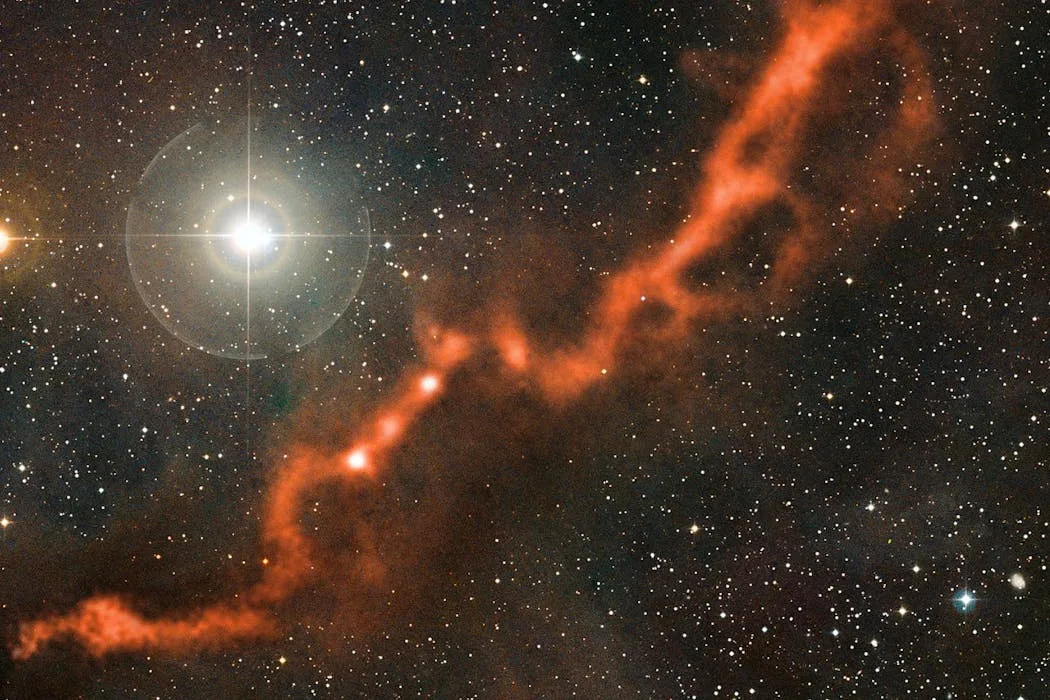
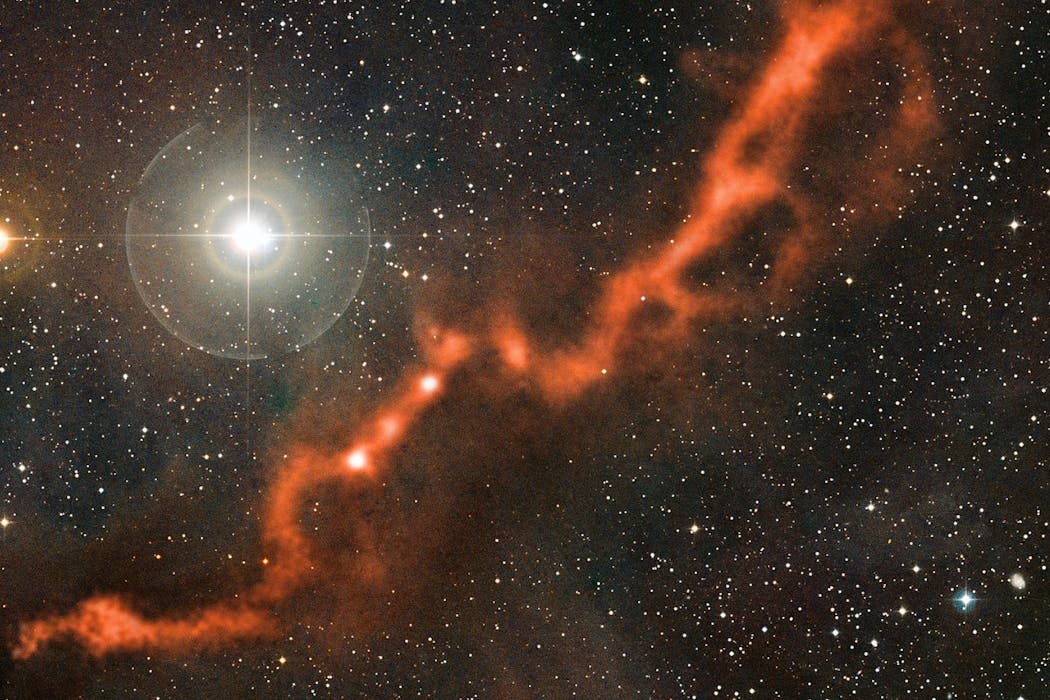
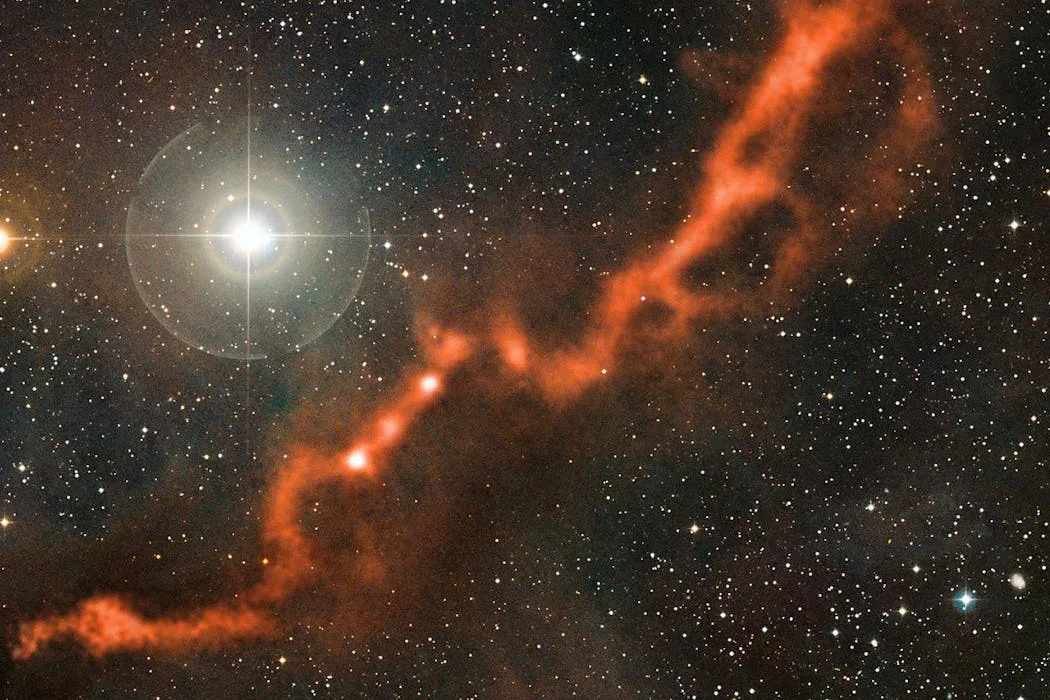
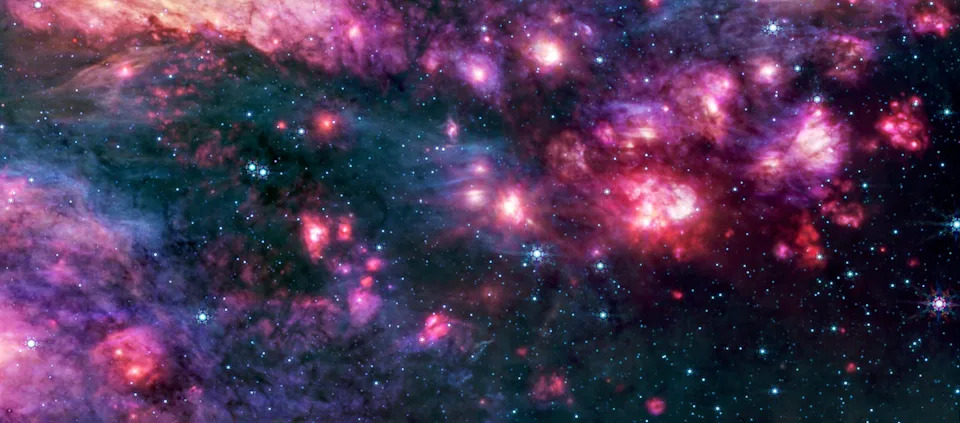
Astronomers can use telescopes to find specific molecules in the atmospheres of neighboring planets, in nebulae – clouds of interstellar dust and gas – hundreds or thousands of light-years away, or in galaxies beyond the far reaches of the Milky Way.

So far, astronomers have found more than 350 molecules in the spaces between and around stars in just under a hundred years – the first such molecule was reported in 1937. Each year, the cosmic chemical stockroom grows by anywhere from a handful to a couple of dozen new finds. Many of these molecules are precursors to biomolecules, meaning they might provide hints about life’s origins elsewhere in the cosmos.

As an astrochemist, my research is all about chemicals found in space, especially in distant cosmic clouds where infant stars are born. Even so, the precise observations captured by these telescopes never cease to amaze me.

With this ongoing boom in astrochemical census data, there is a lot to be excited about. Sometimes, however, this excitement can be premature. Finding molecules in places people will likely never visit is no simple task, so vetting and sometimes correcting these observations is a continual process – especially for molecules whose signals aren’t as strong.

Astronomers can’t visit neighboring planets, let alone distant star-forming regions. So, how do they see what is out there?

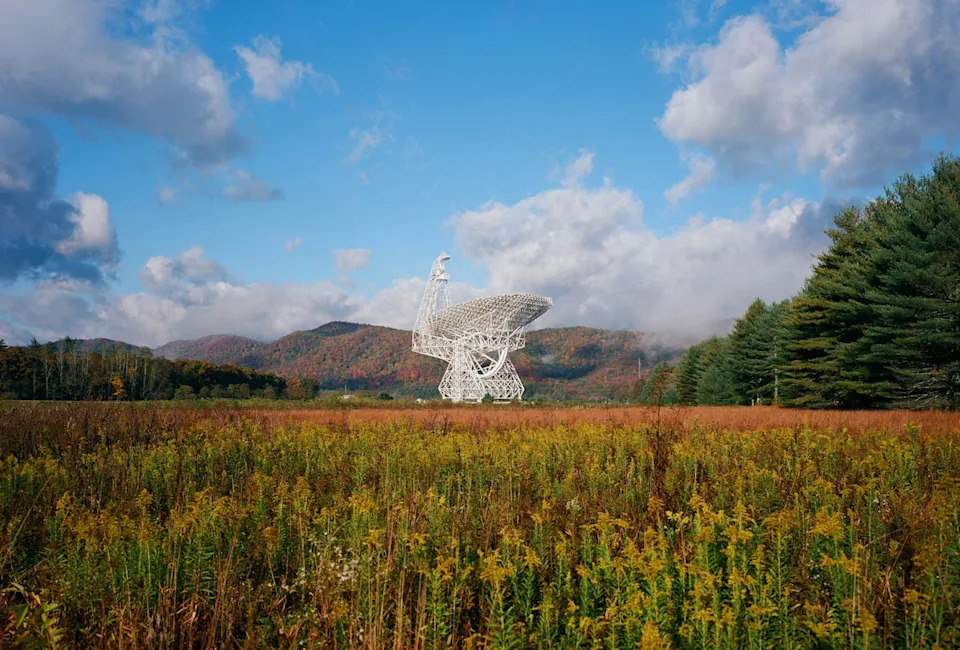
Astronomers observe the cosmos with telescopes that collect all different wavelengths of electromagnetic energy. For astrochemistry, they typically use radio telescopes. These satellite-dishlike instruments are used to “see” radio waves, which have wavelengths much longer than the human eye can perceive.

When molecules freely tumble around as gases in space, they rotate, and this motion releases energy in the form of photons, or electromagnetic particles. Different types of rotations require different levels of energy. Each photon carries that energy with it to a telescope, which records its signal. The more photons of a given energy, the stronger that signal.

If a radio telescope records all of the expected signals for a given molecule – its spectrum – then astronomers can confidently say that they have detected that molecule.

Infrared telescopes, such as the James Webb Space Telescope, or telescopes that detect visible light, such as the Hubble Space Telescope, can also be used for astrochemistry. Both kinds of telescopes, however, collect chemical signals, which are often more difficult to distinguish from one another.

Behind every discovery of a new molecule in space is months or even years of work to capture a chemical’s “fingerprints,” or its spectrum.

I spent about a year doing this kind of work at the University of Cologne in Germany as a Fulbright research fellow. There, I used computer models of astrophysically interesting chemicals to predict what their spectra would look like.

In the lab, I injected the chemicals into a glass tube held under vacuum to mimic conditions in space. Using sensitive instruments, I recorded what a radio telescope would see if it were looking at only that molecule.

Astronomers had already found some of these molecules in space, and my colleagues and I were reexamining them, but we were also looking at molecules that we predicted might exist somewhere in space.

I worked with a team of scientists to adjust the computer inputs over and over until the simulated spectra matched the experimental data. When simulated spectra matched the experiments, that meant that the simulated spectra reliably modeled what a molecule’s fingerprint looks like in space. Reliable model spectra allow astronomers to detect chemical features at frequencies beyond what they can measure in the laboratory.

While my contributions to the Cologne team didn’t lead to a discovery of a new molecule in space, I gained an appreciation for the work behind the scenes of molecule discovery. The laboratory measurements are done precisely so that astronomers can be confident in their detections.

Even with powerful radio telescopes and thorough experiments, some detections aren’t quite as clear as astronomers would like them to be. Sometimes, the signals are too faint for astronomers to be totally confident that they represent the molecules they think they do. Other times, there are too many molecule signals crowded together, causing different signals to blend.

Scientists have detected molecules relevant to biological processes back on Earth in comets and the atmospheres of other planets. These detections are exciting, but most scientists exercise caution to avoid jumping to conclusions because those molecules generally can exist outside of living things.

Sometimes, however, the excitement overshadows the caution and leads to premature conclusions.

Scientists often get excited when new molecules, especially biologically relevant molecules, are potentially present, and they want to share those findings with the world. Some researchers are also concerned about being the first to publish a new result, especially because a lot of telescope data is publicly available after a brief proprietary period.

Perhaps one of the most exciting nondiscoveries in astrochemistry was that of glycine in interstellar space more than 20 years ago. Glycine is the simplest amino acid, a type of molecule essential for life as we know it. Finding this molecule in a nebula would change how scientists think about the evolution of life’s ingredients.

Follow-up studies showed that key signals were missing in the initial report of glycine. As a result, astrochemists now generally agree that glycine had not been found in star-forming nebulae.

More recently, another molecular discovery has been scrutinized: the potential detection of phosphine in Venus’ atmosphere. Unlike with glycine, scientists have not yet agreed on whether phosphine, which is associated with some biological processes on Earth, is indeed present on Venus.

Initial reports of phosphine on Venus spurred chatter about biosignatures and evidence of potential life on Earth’s much hotter sister planet. However, follow-up studies by other scientists couldn’t confirm the initial results.

Over the past five years, scientists have continued to try to confirm or definitively refute Venusian phosphine.

When reading about discoveries of new molecules in interstellar space or on other planets, how can you be confident in the detections you are reading about? It’s important to watch out for flashy headlines that claim signs of life have been found elsewhere in the universe. Molecule discoveries that rely on only one or two signals being detected are generally less reliable than those based on five or more signals.

For discoveries that tease hints of life on other worlds, other scientists are almost certainly going to try to reproduce the results. If you wait a few months for the initial fanfare to die down, you can do a web search to see what new results have come out to support – or refute – the original claim.

This article is republished from The Conversation, a nonprofit, independent news organization bringing you facts and trustworthy analysis to help you make sense of our complex world. It was written by: Olivia Harper Wilkins, Dickinson College

Read more:

Scientists detected a potential biosignature on Mars – an astrobiologist explains what these traces of life are, and how researchers figure out their source

To search for alien life, astronomers will look for clues in the atmospheres of distant planets – and the James Webb Space Telescope just proved it’s possible to do so

New model helps to figure out which distant planets may host life

Olivia Harper Wilkins receives funding from NASA and the National Radio Astronomy Observatory (NRAO).
Comments
You must be logged in to comment.