yahoo Press
The Bank of England risks making a grave error on interest rates
Images
1 / 4
2 / 4

3 / 4

4 / 4
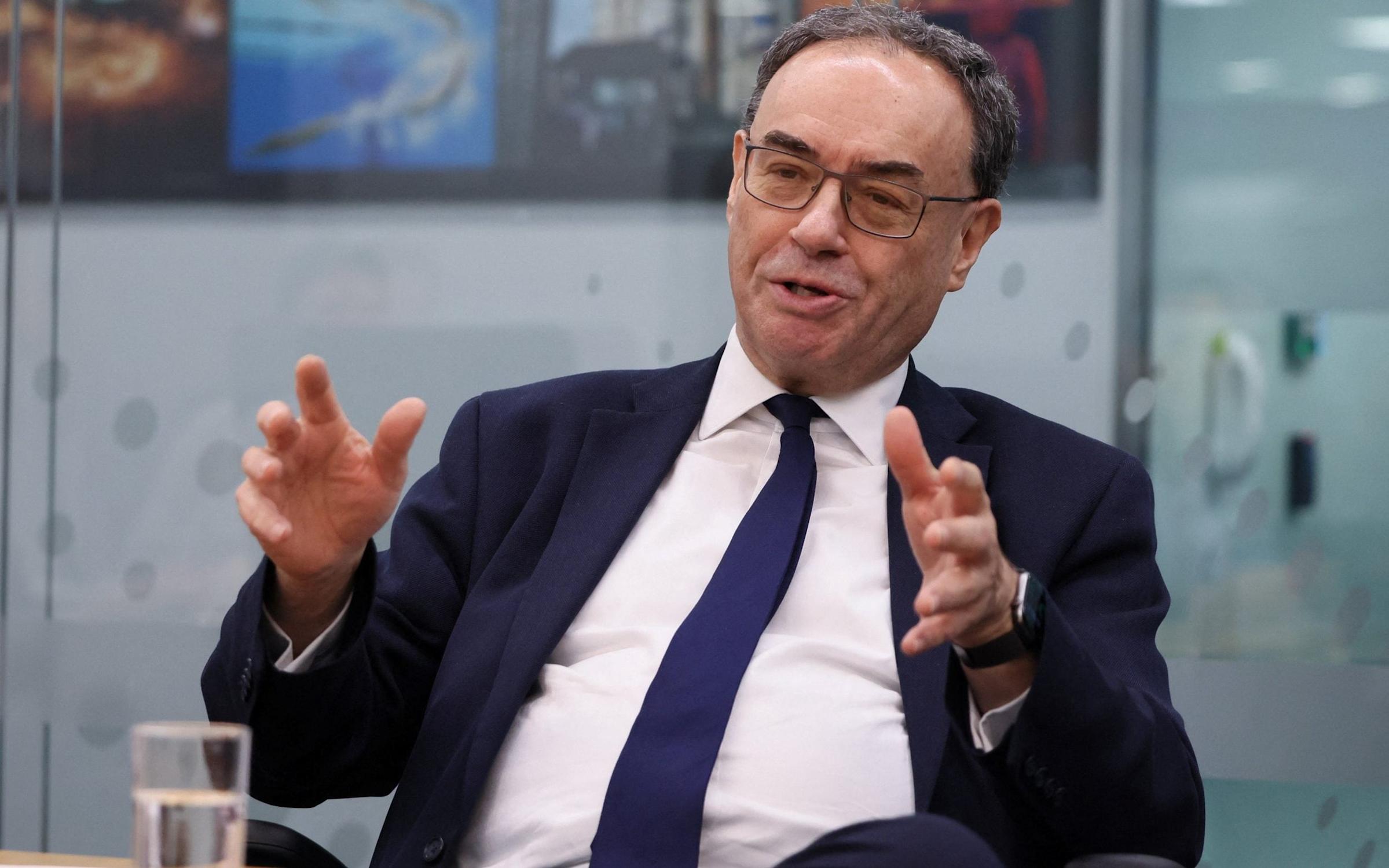
Andrew Bailey has spent his time as Governor of the Bank of England in almost permanent crisis mode.

From Covid to the cost of living crisis, Bailey has had to steer the country’s economy through extraordinary events since he became Governor in March 2020.

The track record of Bailey and his colleagues since then has been patchy. The Bank of England was roundly criticised in the wake of the pandemic and the Ukraine war for failing to act quickly enough to tame a spike in inflation.

Now they confront a new crisis: a surge in oil and gas prices caused by the war in Iran, which is already driving inflation higher. At the same time, growth is expected to slow as higher fuel costs stymie activity.

Bailey and his colleagues will be desperate to avoid making another mistake when they meet for an interest rate decision on Thursday. But can they?

A combination of rising prices and slowing growth “puts central bankers in the most awkward position possible”, Megan Greene, an external member of the Monetary Policy Committee (MPC), has said.

Usually, rising prices would prompt increases in interest rates to calm inflation. But higher borrowing costs risk damaging an already weak economy.

At the same time, if policymakers keep rates too low then price rises could spiral out of control.

It puts policymakers in an unenviable bind.

Last month, the nine members of the MPC voted unanimously to hold interest rates at 3.75pc.

It was the first unanimous vote since 2021. However, that unity has already broken.

The situation in the Middle East is so uncertain and chaotic that there is little agreement on the right course of action.

Opinions on the MPC sit on a spectrum. At one end is Huw Pill, the Bank’s chief economist, who believes interest rates had already fallen too fast even before the closure of the Strait of Hormuz.

Officials cut rates from 5.25pc to 3.75pc between mid-2024 and the end of last year. Pill believes this was a mistake: inflation accelerated last year and has been above 3pc for the last 12 months. The Bank’s target for inflation is 2pc.

Now a new wave of inflation is here and Pill believes the Bank should ramp up interest rates to combat it.

“In the face of profound uncertainties” on energy prices and the way that spreads through the economy, he proposes setting the base rate in a way “that gives the most insurance against having a repeat of 2022”.

Pill said: “We have to entertain the possibility that [higher rates] may be required.”

“We need to retain a focus on our primary objective – getting inflation and maintaining inflation at the 2pc target.”

He added: “If anything, the events of the last four, five years, where we have seen inflation consistently above target, have only increased the need to do that.”

The difficulty, as he acknowledges, is that the economy is in a very different place to 2022.

Then, activity was rebounding rapidly from the Covid lockdowns, with employment soaring and companies struggling to find workers. Today, Britain faces high unemployment and mediocre growth.

Consumer confidence is at record lows, with business sentiment also in an extraordinary hole amid rising insolvencies.

That makes it harder for workers to demand the big pay rises they secured during and after the previous cost of living crisis, which helped sustain inflation. A weak economy should therefore mitigate some of the upward pressure on inflation.

For economists such as Alan Taylor, an MPC member, who sits at the opposite end of the spectrum to Pill, that means the Bank should hold steady on rates rather than ramp them up.

Taylor has said the current crisis is “more nuanced than in 2022”. “This shock looks more like 2011 than 2022 in terms of magnitude, and is also akin to 2011 in that it occurs at a moment of economic weakness and labour market slack,” he has said.

In 2011, inflation peaked at 5.2pc as the Arab Spring drove oil above $100 a barrel. The Bank of England did not panic, instead keeping rates on hold at 0.5pc. A year later, inflation was back almost to the 2pc target.

Taylor suggests the best path is to keep rates on hold for now while awaiting more data.

Yet there are further complications. The nation itself has been changed by previous crises, which means past playbooks do not necessarily still apply.

After 2022, businesses and households know what energy shocks look like now and know how to respond to it.

Instead of holding off purchases because of uncertainty, companies are now stocking up on supplies as fast as possible because they fear supplies running short or rising in price.

Ironically, this panic buying is driving prices higher. The purchasing managers’ index, an influential survey of businesses from S&P Global, shows a significant acceleration in price inflation since the war began.

That in turn suggests inflation could be more sustained this time around, requiring action from the Bank.

That is certainly the expectation in financial markets. Before the war, traders expected two rate cuts this year. Now they expect two increases in the next 12 months.

In recent months, Bailey has held the balance between the two competing camps on the MPC, sometimes casting the decisive vote at meetings.

Recently, he has signalled he is leaning towards the Taylor camp. Bailey played down expectations of interest rate increases when he was in Washington for the International Monetary Fund’s spring meetings. The Governor said he was “not going to rush to judgements”.

That echoes the advice of the IMF, which recommended central banks avoid jacking up borrowing costs unless it is absolutely necessary.

Bailey will set out scenarios on Thursday showing different ways the crisis could develop.

Whatever policymakers decide this week, the risk of making a mistake is high. Hold rates down for too long and a fresh cost of living crisis could erupt. Overreact and ramp up borrowing costs too fast and it could crush an already weak economy.

Michael Saunders, a former member of the MPC who is now at Oxford Economics, suspects the Bank will hold rates again at their meeting this Thursday, but be forced to raise later in the year.

“I would pencil in a couple of hikes, probably not next week, but more likely one in June to September, and one perhaps in the fourth quarter,” says Saunders, who served on the MPC until August 2022 and so experienced the crisis first-hand.

Another increase by the end of the year would “try to keep a lid on pay growth next year”.

If inflation does not take off again, “they could always cut rates again next year - no great harm done”.

While two rate increases would be painful for borrowers, Saunders argues that it is a price worth paying to insure against a repeat of 2022.

As a fresh crisis erupts, the errors of the past are still ringing in the ears of officials.

Try full access to The Telegraph free today. Unlock their award-winning website and essential news app, plus useful tools and expert guides for your money, health and holidays.
Comments
You must be logged in to comment.