yahoo Press
Small fleets, brokers drive new wave of trucking bankruptcies
Images
1 / 5
2 / 5

3 / 5

4 / 5
5 / 5
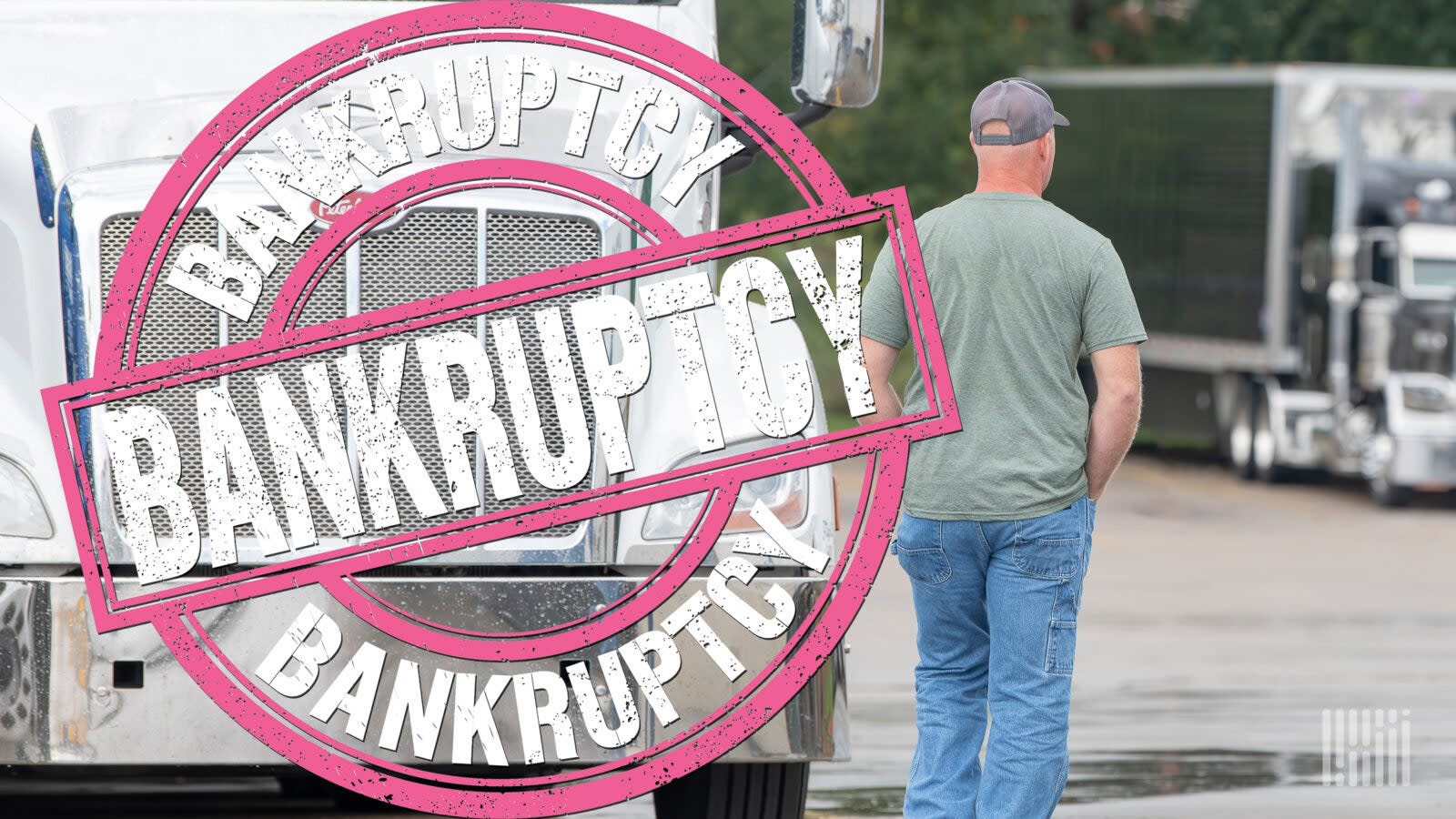
A dozen small trucking and logistics companies across the U.S. have filed for bankruptcy protection in mid to late-April, highlighting continued financial pressure on carriers and brokers navigating choppy freight demand, tight margins and elevated operating costs.

Leading the latest filings is Bound Logistics LLC, a New Jersey-based carrier operating 57 trucks with 57 drivers, according to federal safety data. The company filed for Chapter 11 protection in the District of New Jersey on Thursday, court records show.

Also among the largest fleets in the group is Stron Logistics Inc., an Illinois-based carrier with 9 trucks and roughly 10 drivers. The company filed for Chapter 7 liquidation in the Northern District of Illinois on April 15.

The filings span multiple states, with a heavy concentration in Illinois — a major trucking hub — and include both asset-based carriers and logistics providers.

Among the companies filing:

Allbound Carrier Inc. (Bolingbrook, Illinois) filed for Chapter 11 protection.

Allstar Trailer Sales LLC (Stone Mountain, Georgia), a small carrier/dealer with two trucks and two drivers, filed for Chapter 7.

D.A.R. Carrier Inc. (Oak Lawn, Illinois) filed for Chapter 11 as a small business debtor.

Freight Sherpas Inc. (Chicago) filed for Chapter 11 under Subchapter V.

Honey Bee Freight Group LLC (Norcross, Georgia) filed for Chapter 7 protection.

K&L Trucking LLC (Temple Hills, Maryland) filed for Chapter 7 liquidation.

MLG Freight LLC (Niles, Illinois) filed for Chapter 7.

Rivera On-Point Logistics LLC (Chicago) filed for Chapter 7.

Timex Freight Inc. (Waukegan, Illinois) filed for Chapter 7.

ZD Sand LLC (Voca, Texas), a trucking-related operation, filed for Chapter 11 in the Southern District of Texas.

The filings show a clear pattern: most companies are small fleets or asset-light logistics providers, many operating fewer than 10 trucks or functioning primarily as brokers.

Even larger operators in the group — such as Bound Logistics — remain relatively small by industry standards, underscoring how vulnerable smaller carriers are to prolonged freight recessions.

Many of the Chapter 11 filings are proceeding under Subchapter V, a streamlined restructuring path designed for small businesses with limited debt loads, suggesting these firms are attempting to reorganize rather than immediately liquidate.

Illinois accounted for a significant share of the filings, including:

Stron Logistics

Freight Sherpas

MLG Freight

Rivera On-Point Logistics

Timex Freight

Allbound Carrier

D.A.R. Carrier

The concentration reflects the state’s role as a major freight and brokerage hub, particularly in the Chicago market, where competition among small carriers and intermediaries is intense.

The latest wave of bankruptcies comes amid a prolonged freight downturn marked by:

Weak spot rates and excess capacity

Rising insurance and equipment costs

Tighter credit conditions for small operators

Increased competition from non-asset and digital brokerage models

Scale matters: Only one fleet exceeded 50 trucks (Bound Logistics).

Liquidations dominate: Majority of filings are Chapter 7, signaling closures rather than restructurings.

Chicago cluster: Illinois continues to be a pressure point for small carriers and brokers.

Broker exposure: Several logistics firms (non-asset or hybrid) also filed, pointing to margin compression beyond asset-based carriers.

Company

Location

Fleet size (trucks/drivers)

Chapter

Business type

The post Small fleets, brokers drive new wave of trucking bankruptcies appeared first on FreightWaves.
Comments
You must be logged in to comment.