yahoo Press
Japan's audacious sample-return mission to the Mars moon Phobos has made it to the launch pad
Images
1 / 10
2 / 10

3 / 10

4 / 10

5 / 10

6 / 10
7 / 10

8 / 10

9 / 10

10 / 10
When you buy through links on our articles, Future and its syndication partners may earn a commission.

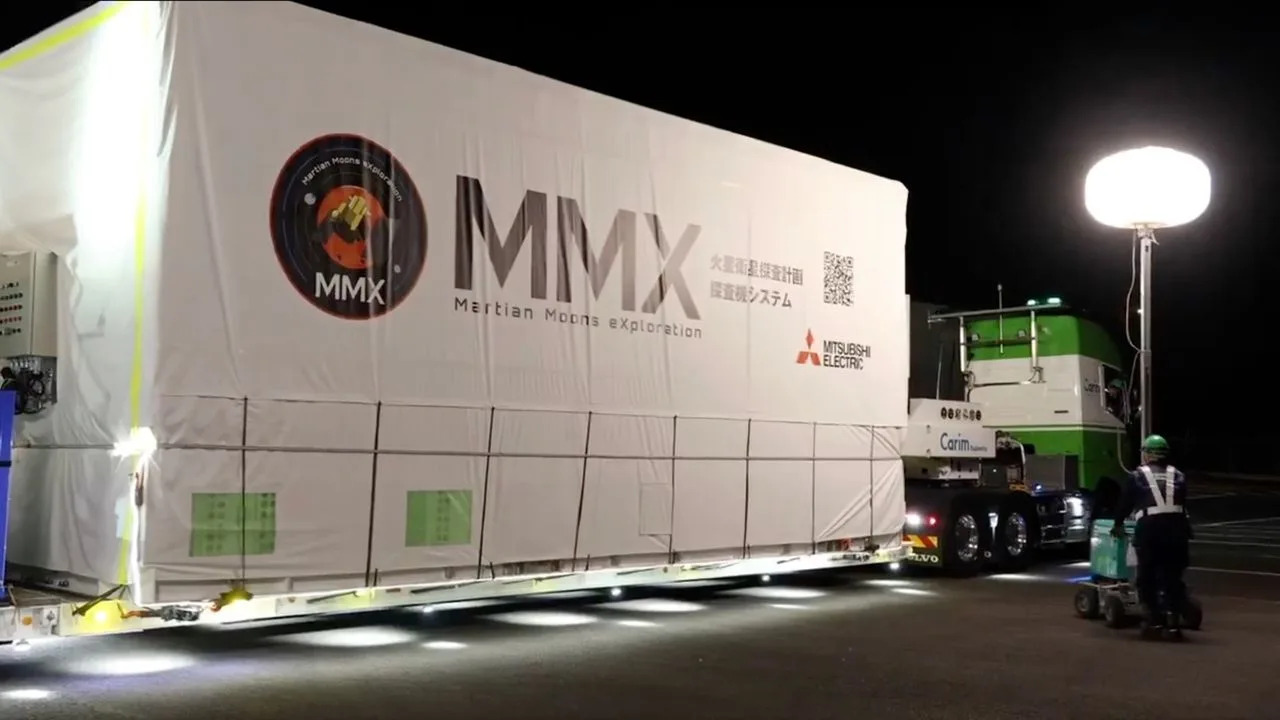
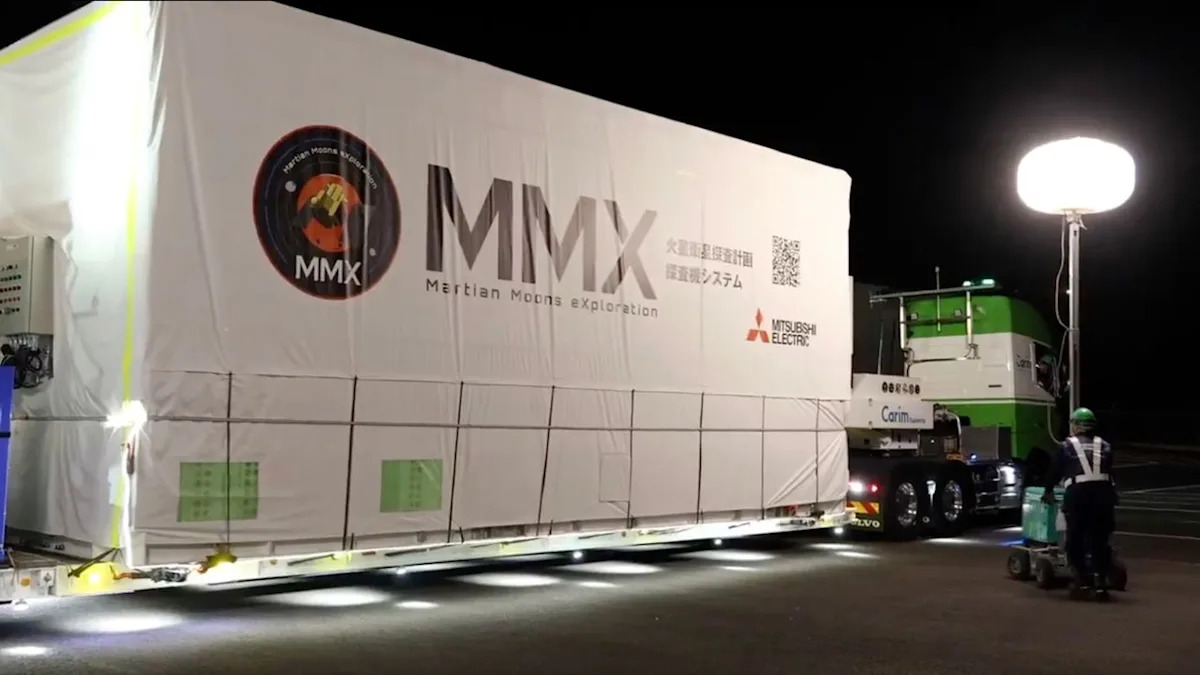
Japan's Martian Moons eXploration (MMX) spacecraft has arrived at the Tanegashima spaceport ahead of launch, which will kick off an audacious mission to bag samples from Mars' moon Phobos and deliver them to Earth.

MMX recently completed its journey to the spaceport on Tanegashima island on March 31, the Japan Aerospace Exploration Agency (JAXA) announced recently on the social media platform X, and will now be prepared for a launch late this year.

The mission will launch on Japan's flagship H3 rocket some time in November or December of this year, during a short optimal Mars launch window that opens once every 26 months.

The mission was earlier scheduled to launch in the previous launch window in 2024, but this was delayed due to issues with the H3 rocket. There had been doubt over the 2026 launch following the second failure of the H3 in seven tries in December 2025, but the issue was soon isolated as a payload fairing separation anomaly, clearing the way for MMX to proceed.

If all goes according to plan, MMX will arrive in orbit around Mars in 2027 to begin mapping and analyzing Phobos and Deimos and search for a landing site. MMX will then land on Phobos in 2029 to collect around 0.35 ounces (10 grams) of samples. The spacecraft will then leave Mars in 2030 and deliver the precious samples to Earth in 2031 for scientists to study.

The mission aims to determine if the two Martian moons, Phobos and Deimos, are captured asteroids or chunks of Mars sent into orbit by a massive impact, similar to how Earth's moon formed about 4.5 billion years ago. MMX will also seek to provide further insights into how Mars and the inner solar system developed.

MMX also carries the MMX IDEFIX rover, jointly developed by the German Aerospace Center (known by the German acronym DLR) and the French space agency Centre National d'Etudes Spatiales (CNES). The four-wheeled, autonomous 55-pound (25-kilogram) IDEFIX will land on Phobos ahead of MMX, operating in an ultra-low gravity environment to gather vital information for a safe landing.

The mission is the latest in a line of Japanese sample-return projects, including the Hayabusa mission to asteroid Itokawa and Hayabusa2, which sampled the asteroid Ryugu and returned to Earth in December 2020.
Comments
You must be logged in to comment.