huffpost Press
House Of Representatives Experiences Sudden Outbreak Of Accountability
Images

1 / 8

2 / 8
3 / 8

4 / 8

5 / 8

6 / 8

7 / 8

8 / 8
WASHINGTON — Three scandal-scarred members of the House of Representatives have resigned from Congress almost within a week.

It’s a rare moment of accountability in a town where scandals are often waved away, waited out or officially pardoned by the president of the United States.

But this does not appear to be Congress — which is as unpopular as it’s ever been — turning over a new leaf in hopes of fundamentally cleaning up its act. Instead, it may be closer to a combination of cynical partisanship and odd timing, with a trio of unrelated scandals culminating simultaneously.

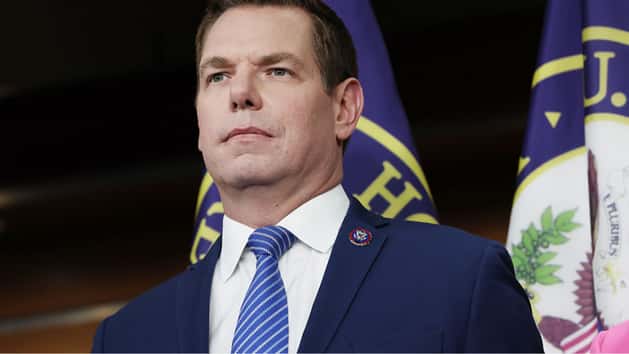
Accusations that former Rep. Eric Swalwell (D-Calif.) sexually assaulted staff and women he met through politics over the past several years might not have surfaced had he not been running for governor. One accuser told CNN, “For a long while I’ve wanted to say something. When I knew he was running for governor, I was like, ‘Oh god, this can’t happen.’”

And it’s possible Rep Tony Gonzales (R-Texas) would have finished his term, despite his affair with an aide who wound up killing herself by fire, if Swalwell wasn’t also going down. In the recent debate over punishing lawmakers, threats of censure or expulsion have sometimes been countered by retaliatory threats from the other side, reflecting a hesitation to allow accountability unless it’s perfectly bipartisan.

Then there’s Rep. Sheila Cherfilus-McCormick (D-Fla.), who resigned Tuesday, who seemed to have few allies and did not even defend herself during the House Ethics Committee’s investigation. She’s under federal indictment for embezzling campaign funds and hasn’t offered a plausible denial of the charges.

Still, plenty of lawmakers cheered the resignations, saying the member punishments outlined in the Constitution served the institution well.

“It worked. They wouldn’t have resigned if they hadn’t been threatened with a vote of their peers on the House floor,” Rep. Teresa Leger Fernández (D-N.M.) told HuffPost. “That’s the process that the Constitution set up.”

Some lawmakers said the resignations could reflect a cultural or political shift.

“It’s not a random sequence of events. For sure, accountability was looming in the case of all of the resignations so far. So I think you’re just seeing members see the writing on the wall,” Rep. Jared Huffman (D-Calif.) told HuffPost. “We need to get a lot better at policing congressional ethics. We just do. And I think probably what you’re seeing is, to some extent, the institution moving in that direction, and the members feeling it.”

Huffman and others said they were disappointed the ethics committee hadn’t moved faster against Rep. Cory Mills (R-Fla.), who was questioned by D.C. police about domestic violence last year, and who was hit with a protective order by a judge over a separate alleged domestic violence incident in Florida. Mills has denied any wrongdoing.

Rep. Nancy Mace (R-S.C.) has threatened to force a vote to expel Mills, and Mills has threatened to counter with an expulsion vote against Mace, who is also under investigation by the ethics committee over alleged improper reimbursement for lodging expenses. It’s not clear if there would be enough votes to expel either member before the committee releases an authoritative account of what rules or laws were broken.

The spasm of expulsion threats could reflect a broader frustration with the dysfunctional House, which is almost evenly split between the parties and often gridlocked, said Rep. Frank Lucas (R-Okla.), a veteran lawmaker who’s served in the House since 1994.

“It is really difficult to pass legislation, and we come to accomplish things, and as the extremes in both parties have become louder and stronger in numbers,” Lucas said, adding that congressional pay has been stagnant for too long. “And then we’re just in a generally pessimistic time, and Congress is a reflection of the country.”

Congress, according to a poll released Tuesday by Gallup, has never been more unpopular: 86% of Americans disapprove of how the national legislature is handling its job, while just 10% approve.

If lawmakers wanted to enact change in a formal way, they could reform the Congressional Accountability Act, which was last revised during the Me Too era in 2018, which ended the careers of nine members of the House and Senate. One proposal under discussion would extend a ban on romantic relationships between lawmakers and their staff to include relationships between lawmakers and the staff of other lawmakers.

There’s also been movement toward a ban on members of Congress trading stocks, but it’s not clear if a bill could pass both the House and Senate — or if the recent round of resignations gives the effort any momentum. There’s no question Republicans won’t allow any new ethics rules that would apply to the White House, a top Democratic priority in response to President Donald Trump maintaining private business ties while in public office.

Rep. Ro Khanna (D-Calif.), one of the House members who has led the push for the Justice Department to release its investigatory files on the late sex predator Jeffrey Epstein, said the accountability in Congress is dwarfed by the lack of accountability elsewhere, since nobody has been prosecuted for participating in Epstein’s crimes. (He didn’t suggest who should be prosecuted.)

“If you’re moving slower than Congress when it comes to standing up for justice and accountability, you really have a problem,” Khanna told HuffPost.

Former HuffPost journalist Ahmed Shihab-Eldin has been detained for

days in Kuwait. He must be freed immediately.

Learn more here.

Credit: Grace Rivera

By entering your email and clicking Sign Up, you're agreeing to let us send you customized marketing messages about us and our advertising partners. You are also agreeing to our Terms of Service and Privacy Policy.
Comments
You must be logged in to comment.