yahoo Press
‘History is being disobeyed’: Jim Cramer says Iran war should be slaughtering stocks, but the US has a ‘secret weapon’
Images
1 / 4
2 / 4

3 / 4

4 / 4
Moneywise and Yahoo Finance LLC may earn commission or revenue through links in the content below.

By every historical measure, stocks should be tanking right now. Oil prices have surged more than 50% since the US-Iran war essentially shut down the Strait of Hormuz, with Brent crude climbing about 7.2% to $102.59 a barrel on April 22 (1).

Energy shocks of this magnitude have historically dragged equities sharply lower. Yet, on the same day, the S&P 500 closed at 7,137.90 (2) — clawing back virtually all its war-related losses and then some.

Thanks to Jeff Bezos, you can now become a landlord for as little as $100 — and no, you don't have to deal with tenants or fix freezers. Here's how

Dave Ramsey warns nearly 50% of Americans are making 1 big Social Security mistake — here’s how to fix it ASAP

The IRS usually taxes gold as a collectible — but this little-known strategy lets you hold physical bullion tax-free. Get your free guide from Priority Gold

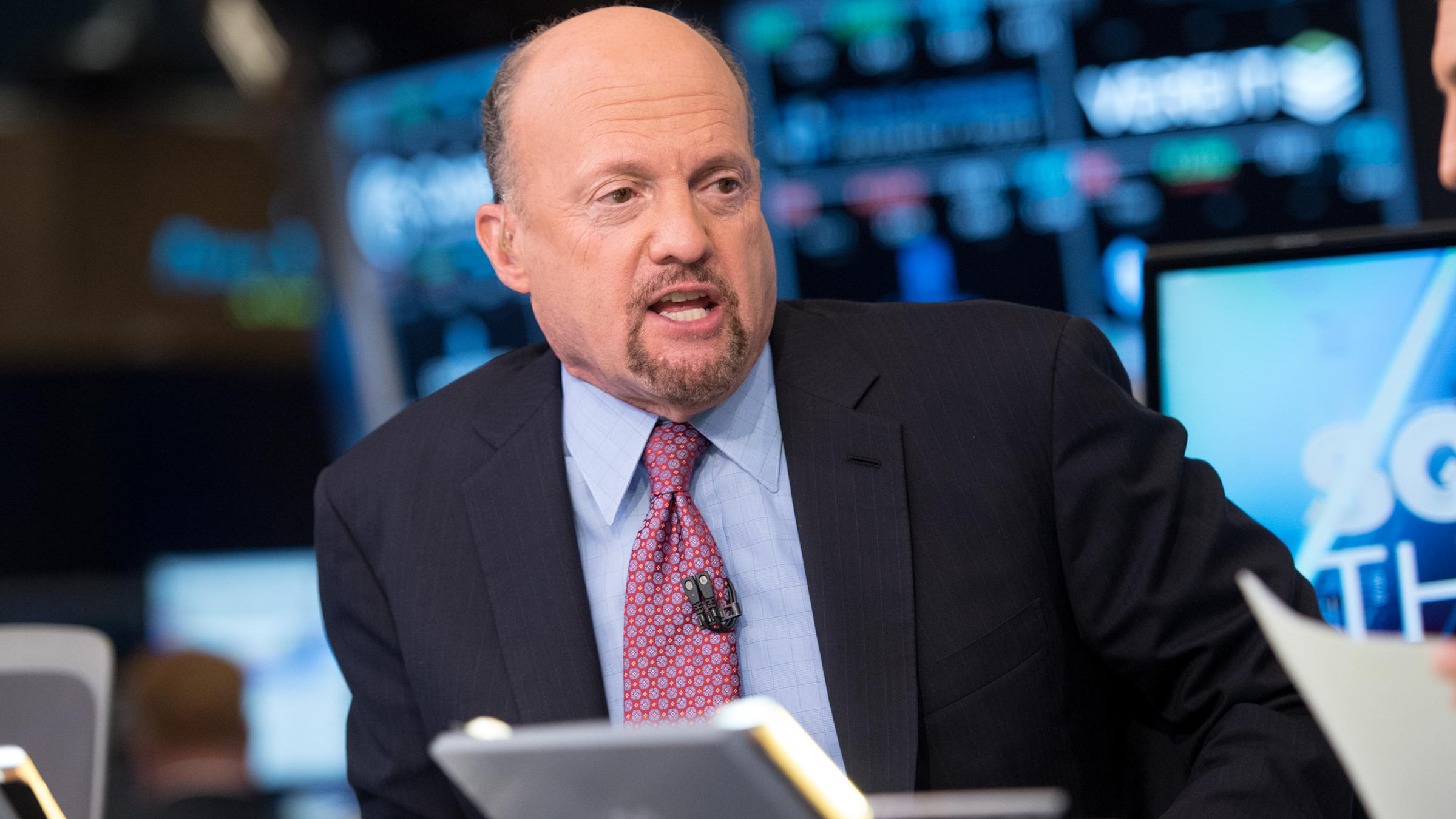
CNBC's Mad Money host Jim Cramer addressed (3) this disconnect head-on, and his explanation comes down to interest rates — something most investors aren't paying enough attention to.

"I think I've been negligent in bringing up the power of low rates, because it's the reason the bulls keep winning when it seems like they should be slaughtered," Cramer said. "Let's not overthink it. If interest rates were spiking, this market would be very different."

The mechanics of Cramer's argument are worth understanding as a personal finance matter: When interest rates rise, investors demand a lower price for every dollar of future corporate profits. This is called price-to-earnings multiple compression.

The reverse is also true. Falling or stable rates let investors justify paying more for stocks, even amid geopolitical chaos.

"What's the Strait of Hormuz have to do with the price-to-earnings ratio of Bristol Myers?" Cramer asked (3). "The answer is nothing."

The 10-year Treasury yield peaked most recently on March 26 (4), and tellingly, Cramer notes (3), the S&P 500′s lowest close of 2026 came just days later, on March 30. Once bond yields rolled over, stocks followed upward. The sequence is the market's core valuation mechanism at work.

Monday's trading reinforced Cramer's point. "Beaten-up software stocks," including Salesforce and Microsoft (3), were among the strongest performers, while energy stocks most directly tied to the war in Iran lingered. Investors were reaching for growth, not defense.

Read More: Robert Kiyosaki warned of a 'Greater Depression' — with millions of Americans going poor. Was he right?

Cramer also pointed to a coming shift at the Federal Reserve as a potential tailwind. Jerome Powell's term expires (5) in May, and President Donald Trump's nominee to succeed him is Kevin Warsh (6), a former Fed governor viewed by market watchers as someone likely to keep short-term rates steady or cut them.

"As long as the rates don't move higher, the new Fed … certainly isn't going to raise short rates and they might even be able to bless us with [rate] cuts," Cramer said.

He also argued that the Fed may be inclined to look past current inflation pressures when it eventually moves. Elevated price readings tied to tariffs and energy costs could be treated as transitory rather than structural.

"The Fed will most likely asterisk these increases as all one-off price increases," Cramer predicted.

America's secret weapon

There's a further reason Cramer believes this oil shock may hit differently than past energy crises: natural gas.

While oil prices are set globally and vulnerable to supply disruptions in the Middle East, the U.S. produces enormous quantities of natural gas domestically, and U.S. natural gas prices remain dramatically lower (7) than international benchmarks, according to the U.S. Energy Information Administration.

American manufacturers and utilities rely heavily on this cheaper domestic fuel source, which acts as a buffer against oil-driven inflation.

"Natural gas — not oil — is our secret weapon," Cramer said.

Vehicle fuel efficiency has also improved significantly in recent years, meaning consumers simply burn less gasoline per mile than in previous energy crises, which dulls the economic punch of high crude prices.

With the ongoing conflict with Iran fueling inflation concerns, many economists believe the Federal Reserve won’t rush to cut interest rates. In fact, a Reuters poll of economists found the Fed may wait at least six months before making any rate cuts in 2026 (8).

Even as Trump continues to call for rate cuts, his nominee to lead the Fed, Kevin Warsh, insists politics won’t dictate monetary policy.

“The president never once asked me to commit to any particular interest rate decision, period,” Warsh told the Senate Banking Committee. “Nor would I ever agree to do so if he had ... I will be an independent actor if confirmed as chair of the Federal Reserve.” (9)

Meanwhile, the economic backdrop suggests inflationary pressures may not ease anytime soon. The war — now stretching close to two months — is expected to keep prices elevated, particularly in energy markets. It’s important to note that Iranian strikes against gulf energy infrastructure will take time to repair, even if the war ends tomorrow.

That’s not surprising given the world is facing “the biggest energy security threat in history,” according to Fatih Birol, head of the International Energy Agency (10).

If tensions escalate further, the consequences could be even more severe. A prolonged shutdown of the Strait of Hormuz could push global inflation to 5.4% by the end of 2026 while dragging global economic growth down to 2.5%, according to the International Monetary Fund (11).

Under a “severe” scenario stretching into 2027, inflation could breach 6%.

If you’ve been putting off major life purchases — like buying a house — while waiting for interest rates to drop, you may be stuck waiting longer than expected. With the war dragging on and inflation risks lingering, borrowing costs could remain high in the near term.

Fortunately, you don’t have to sit around waiting for the Fed to act. One of the easiest ways to reduce your mortgage costs is simply by comparing lenders. In fact, borrowers who shop around could save an average of $80,024 over the life of their mortgage by securing the best rate available, according to LendingTree (12).

Platforms like Mortgage Research Center can help you search for rates offered by reputed lenders near you for free — all from the comfort of your home.

All you have to do is answer some basic questions about your property and your finances (including your annual income and credit score), and Mortgage Research Center will compile a list of the best offers from lenders near you.

You can also get connected with custom mortgage offers from lenders, and set up a free introductory call with no obligation to hire.

Cramer's broader message for everyday investors is to resist the urge to panic-sell every time a geopolitical headline hits the wire. The war in the Middle East is real and ongoing, but so is the market's underlying valuation logic, which is anchored to interest rates, not missile strikes.

"History is being disobeyed and ignored," Cramer said.

And the data backs him up: as Fortune noted (13), nine of the S&P 500's best 10 days since Trump's second term began were thanks to de-escalation signs on either tariffs or Iran — rewarding investors who held on rather than sold.

It's not that geopolitical risk doesn't matter. But it's when rates cooperate that the market has a remarkable ability to look past the noise.

Sharp market swings often tempt investors to hit the sell button. But selling out of fear can lock in losses and derail long-term investing plans. After all, technically, you only lose money when you sell a stock.

That’s why investors like Warren Buffett stress patience.

“American business will do fine over time. And stocks will do well just as certainly, since their fate is tied to business performance. Periodic setbacks will occur, yes, but investors and managers are in a game that is heavily stacked in their favor,” he wrote in Berkshire Hathaway’s 2012 annual shareholder letter (14).

Buffett, who has lived through multiple economic shocks and recessions, preaches simple advice to investors.

“Consistently buy an S&P 500 low-cost index fund,” Buffett said in an interview with CNBC, adding, “Keep buying it through thick and thin, and especially through thin.” (15)

A simple way to do it is to invest small amounts consistently, without even thinking about it.

Platforms like Acorns make it easy by automatically investing your spare change from everyday purchases into a diversified portfolio of ETFs.

Signing up for Acorns takes just minutes: link your cards and Acorns will round up each purchase to the nearest dollar, investing the difference — your spare change — into a diversified portfolio. It can also be tailored to your risk tolerance, so you can keep things slow and steady over a 30-year investment horizon.

With Acorns, you can invest in an S&P 500 ETF with as little as $5.

Even better, if you sign up today with a recurring investment, Acorns will add a $20 bonus to help you begin your investment journey.

Staying invested in equities is important, but diversification can help protect your portfolio when markets turn volatile. Adding assets that behave differently from stocks can help balance risk and reduce the impact of sudden downturns.

One traditional safe-haven asset is gold. During periods of market uncertainty or rising inflation, gold has historically held its value.

Gold IRAs allow investors to hold physical gold or gold-related assets within a retirement account, thereby combining the tax advantages of an IRA with the protective benefits of investing in gold.

You can open a gold IRA with the help of Priority Gold.

If you opt for Priority Gold’s platinum package, you can get free account setup and insured shipping and storage for up to five years. Plus, you can also rollover your existing IRA or 401(k) into a precious metals IRA with Priority Gold — tax and penalty free.

What’s more, when you make a qualifying purchase with Priority Gold, you can receive up to $10,000 in precious metals for free. Just keep in mind that gold is often best used as one part of a well-diversified portfolio.

Real estate is another popular diversifier. Property values often rise alongside inflation because the costs of land, labor and materials tend to climb over time. That means homeowners may see their property values increase even as the purchasing power of cash declines.

And now, you can invest in prime real estate with as little as $100, thanks to passive income generating platforms like Arrived.

Backed by world-class investors like Jeff Bezos, Arrived allows you to invest in shares of rental homes and vacation properties, all without the hassle of mowing lawns, fixing leaky faucets or handling difficult tenants.

Once you find a property you like, select the number of shares you’d like to purchase, and then sit back as you start receiving any positive rental income distributions from your investment.

The best part? for a limited time, when you open an account and add $1,000 or more, Arrived will credit your account with a 1% match.

— With files from Emma Caplan-Fisher

Vanguard’s outlook on U.S. stocks is raising alarm bells for retirees. Here’s why and how to protect yourself

Robert Kiyosaki says this 1 asset will surge 400% in a year and begs investors not to miss this ‘explosion’

No time to lower your crippling car insurance rate? Here’s how to do it within minutes — you could end up paying $29/month without a single phone call

Millionaires under 43 are reshaping investing — just 25% of their portfolios are in stocks. Here’s where their money is going

Join 250,000+ readers and get Moneywise’s best stories and exclusive interviews first — clear insights curated and delivered weekly. Subscribe now.

We rely only on vetted sources and credible third-party reporting. For details, see our ethics and guidelines.

Trading Economics (1); S&P Global (2); CNBC (3), (6), (10), (15); Market Financial Content (4); CNN (5); U.S. Energy Information Administration (7); Reuters (8); AP News (9); International Monetary Fund (11); LendingTree (12); Fortune (13); Berkshire Hathaway (14)

This article provides information only and should not be construed as advice. It is provided without warranty of any kind.
Comments
You must be logged in to comment.