huffpost Press
Experts Point To Unsettling Reason Trump Might Be Attending The White House Correspondents' Dinner
Images
1 / 10

2 / 10

3 / 10
4 / 10

5 / 10

6 / 10

7 / 10

8 / 10
9 / 10

10 / 10
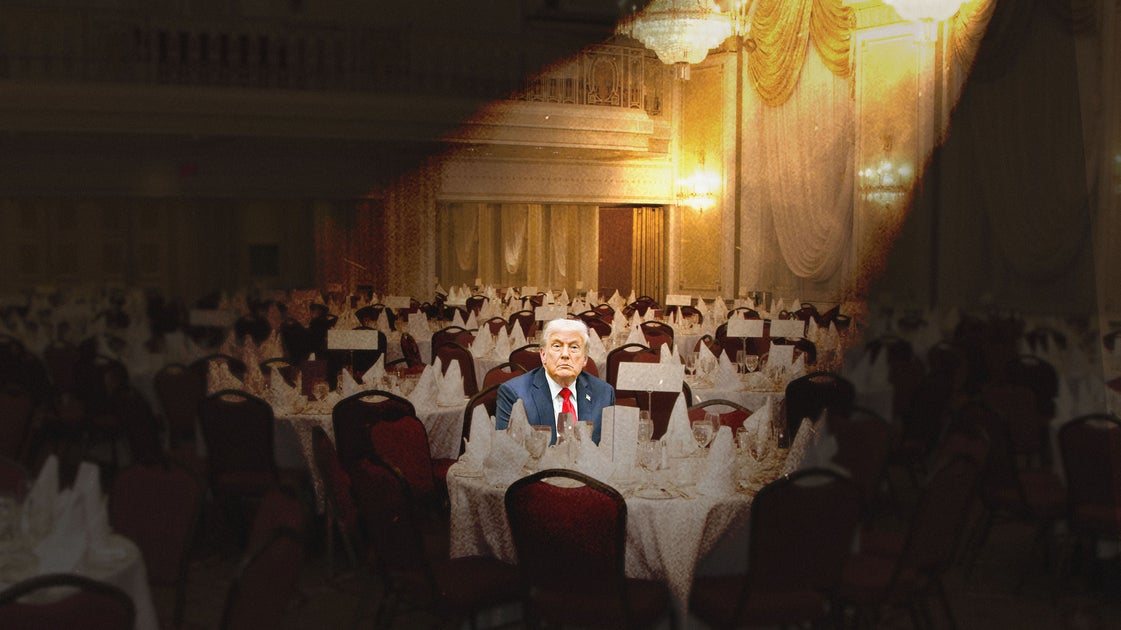
It’s almost time to pop some popcorn and pour a glass of wine: Donald Trump is attending this weekend’s White House Correspondents’ Dinner for the first time as president.

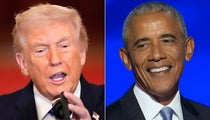
Trump has boycotted the dinner ever since 2011, when he was roasted by then-President Barack Obama over the “birther” theory Trump perpetuated.

In the years since, Trump has avoided the dinner, an event that celebrates and supports the journalists who cover the White House and the press freedom his administration is relentlessly undermining. (HuffPost will not be attending this year’s dinner due to Trump’s attacks on the press.)

But now that Trump’s ending his hiatus, there’s a major question surrounding the event: Will this year’s dinner even go on in its normal format?

Historically, presidents are subject to roast-style jokes by a comedian (past hosts include Conan O’Brien, Trevor Noah, Roy Wood Jr. and Michelle Wolf). But this year, the dinner will be hosted by Oz Pearlman, a TV mentalist. So there are some doubts that Trump will be met with any jokes at all.

“Will we all just give in and start pandering to him because we’re afraid he’ll sue us?” asked Denise Dudley, a clinical psychologist. “Because he sues people who say things that he doesn’t like.”

Trump has targeted and sued the media, including The New York Times and Paramount, and has praised decisions that feel like media suppression, such as the suspension of late-night host Jimmy Kimmel. “So, there’s a lot on the line if you go after Trump at this dinner,” Dudley said.

“I think he’s genuinely convinced that this won’t be a roast,” said Sandra Maurer, a licensed professional clinical counselor in Minnesota. “I think he is expecting that this will turn into ‘praise the president,’ and I don’t know if he’s right or wrong.”

The dinner could take a cowardly turn if he has scared people enough, she added. Yet journalists and professional organizations are encouraging those in attendance to hold Trump accountable and not pander to his demands.

It’s unknown what will unfold at Saturday’s dinner, but therapists told HuffPost that Trump’s behavior and reactions will be interesting to observe.

Taryn Rothstein, a licensed clinical social worker in New York, said that while she doesn’t actually know Trump and cannot diagnose him, “we are seeing narcissistic traits” in his personality.

“So, when I think about why someone with narcissistic traits would choose to do something like this ― choose to put themselves in this position where they are essentially being made fun of ― I’m thinking that it has a lot to do with wanting control and wanting to regain control of the narrative around him,” Rothstein said. “I think it gives him an opportunity to kind of be seen and be in control of the moment, even though people will speak and he won’t be able to stop them, in theory.”

Once again, it’s unknown just how roast-like this event will be.

“I think it just gives him an opportunity to amplify attention, and in theory, get control of perception, because obviously he will speak as well, and people will see his reaction to these jokes,” Rothstein said.

It’s also a way for him to say, “I’m not afraid of anybody ... including the White House Correspondents’ Dinner,” Dudley said. “I think it’s probably a strategic positioning. Showing that ‘I’m in control, and I can go to this thing and I will dominate, and I will win.’”

If Pearlman or anyone else does poke fun at Trump, the president likely has guidance from his team on how to handle that.

“I do also think it’s possible that he has been trained to appear indifferent in a performative way,” Rothstein said.

Trump’s handlers may be telling him not to react to jokes or to smile along in an unconcerned manner, but Rothstein is personally curious how that might play out.

“I do think it’s possible that you’ll see some kind of reaction from him,” she said, adding that you may see smirks or faces that imply someone isn’t funny or impressing him.

Just like personality types, there are also humor types, Dudley said, which are the ways someone interacts with humor and makes jokes. These are:

Affiliative humor: When people all laugh together in an inclusive and sweet way, like friends retelling stories over dinner

Self-enhancing humor: When someone has the ability to laugh at themselves

Aggressive humor: Sarcasm, ridiculing people, humor at the expense of someone else

Self-deprecating humor: Putting yourself down

During an event like the White House Correspondents’ Dinner, self-enhancing and affiliative humor will be the kind of humor Trump needs to use, Dudley said. But experts aren’t so sure he’ll be able to engage in that kind of banter.

“I mean, he responds when someone makes a joke about him on SNL, right?” Rothstein said. “He has a history of not being able to handle people making fun of him.”

Trump tends to use aggressive humor in his day-to-day life, Dudley said.

“I’m laughing at you, not with you ... ding, ding, ding. Does that sound like his general humor? Yeah, it does to me,” added Dudley. “In my opinion, he doesn’t have the actual personality type that is going to handle a roast whatsoever.”

Trump has shown again and again that he does not like being made fun of, and one of the easiest ways to upset someone is by mocking them, Maurer said.

“It’s all about power,” Maurer explained. “He sees all relationships with a power structure. And when you mock somebody, you’re really threatening the power dynamic in the room ... And that’s the thing he hates the most.”

“What happens is that when you’re being roasted ... you have become vulnerable,” Dudley noted. “You’ve given up some of your status ― really all your status, in a way.”

And Trump appears not to know how to respond to this loss of power and status, Maurer said.

“He has no distress tolerance skills, so he can’t hold an uncomfortable emotion. He can’t tolerate that, and so he acts out,” Maurer explained.

“I think if he is made fun of at this event, I think we should anticipate several days of reaction,” Maurer said, noting this could include a series of posts on Truth Social.

He may “try and reestablish ... the sense of power internally, because he doesn’t know how to operate without that,” Maurer added.

“A big part about Trump is he’s this huge representation of the patriarchy and the system in place,” said Will Lacey-Bisetty, a decolonial neuropsychologist in California. “And one of the big things that comes from that is the patriarchy frames femininity as bad, and ties things like vulnerability to femininity.”

Any emotions or signs of vulnerability that Trump displays will be construed as weakness in the eyes of the patriarchy, he added.

“So, he’s backed himself into a corner with an event like this where the whole function of it is to allow people to say things to you, and you be vulnerable and self-secure in that kind of space,” Lacey-Bisetty explained.

More, roasts are a way for people to come together. “To handle a roast, you have to have that ... sense of confidence, but you also need connection and belonging to people,” Lacey-Bisett said.

When you’re part of the community, you’re in on the joke “because it’s due to love, affection, community, and you have all that social scaffolding,” he said. “But ... the patriarchy tells men like Trump to be the lone wolf,” which immediately sets them apart from community and connection.

Bottom line: Time will tell how the event plays out, experts stressed. It’s natural to want to see how he reacts.

“I just think it is human instinct to want to see him in this setting and to want to see what he will do because I think a lot of people feel the chaos and the lack of safety in what’s happening under his administration,” said Rothstein.

By entering your email and clicking Sign Up, you're agreeing to let us send you customized marketing messages about us and our advertising partners. You are also agreeing to our Terms of Service and Privacy Policy.
Comments
You must be logged in to comment.