yahoo Press
Canada wants to stop sending defense dollars to the US — and it could hit jobs, contracts and portfolios
Images
1 / 4
2 / 4

3 / 4

4 / 4
Moneywise and Yahoo Finance LLC may earn commission or revenue through links in the content below.

Canada’s prime minister just took a swipe at the U.S., and it was anything but subtle.

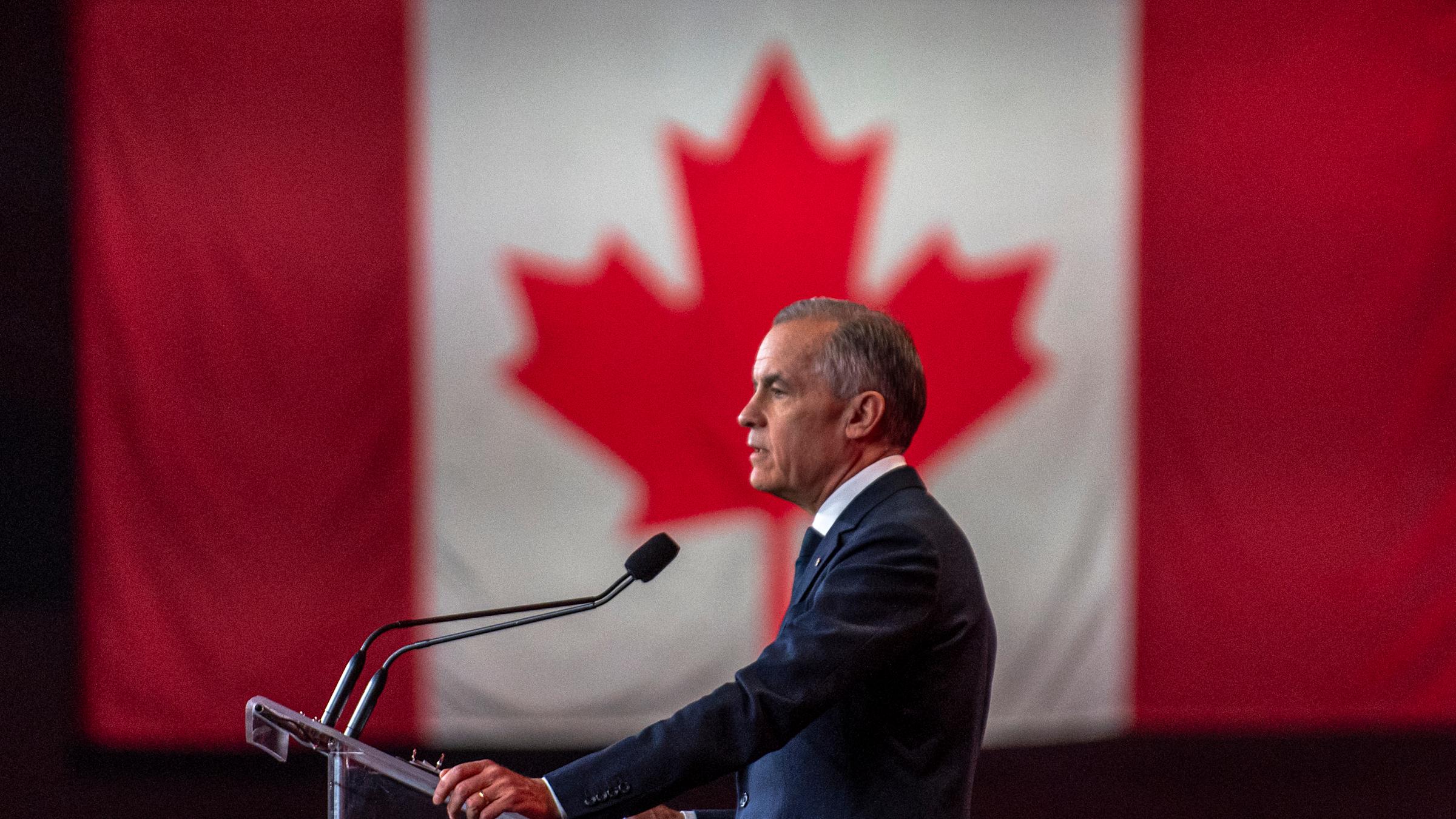
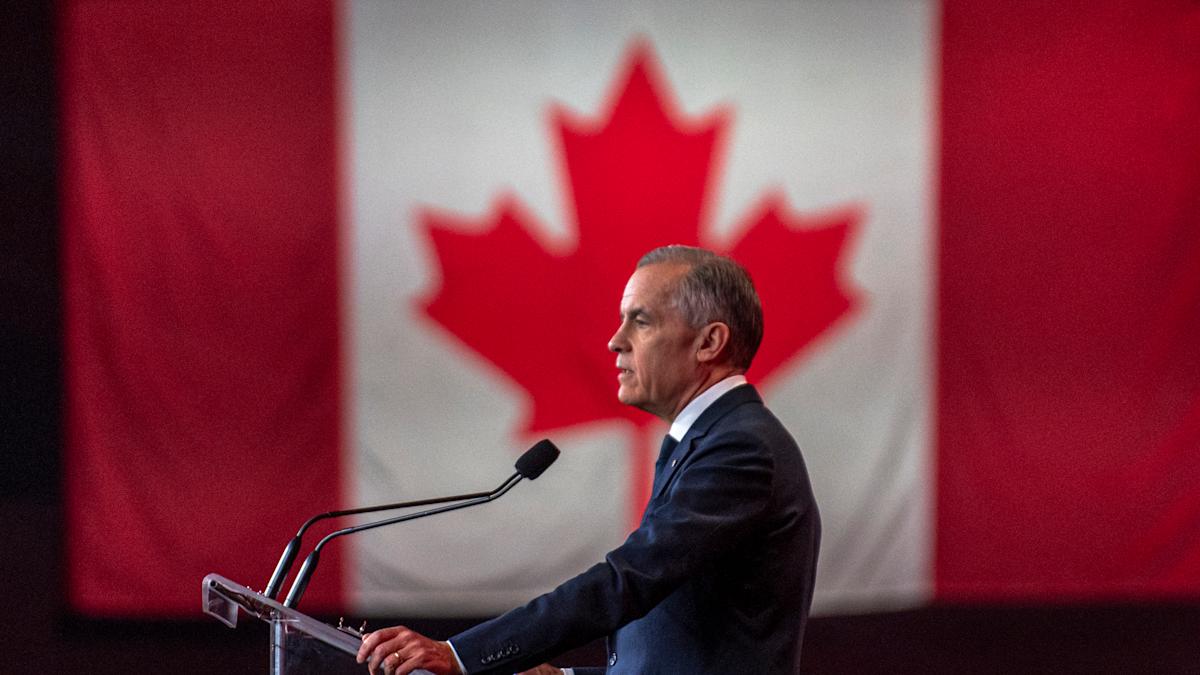
“The days of our military sending 70 cents of every dollar to the United States are over,” said Mark Carney, drawing loud applause from supporters who packed the Montreal Convention Centre to hear him close out the governing Liberal Party’s national convention (1).

Thanks to Jeff Bezos, you can now become a landlord for as little as $100 — and no, you don't have to deal with tenants or fix freezers. Here's how

Dave Ramsey warns nearly 50% of Americans are making 1 big Social Security mistake — here’s how to fix it ASAP

The IRS usually taxes gold as a collectible — but this little-known strategy lets you hold physical bullion tax-free. Get your free guide from Priority Gold

It landed as a political line meant to energize his base, but it’s also a financial warning shot underscoring Canada’s growing unease with its reliance on U.S. military manufacturing. Carney wants to reduce Canada’s dependence by building domestic defense production and diversifying suppliers.

If Canada follows through, it could reshape defense policy north of the border while affecting American companies, workers and investors in ways many people won’t see coming.

For decades, Canada has leaned heavily on U.S. defense contractors. From aircraft to weapons systems to advanced tech, a large share of Canadian military spending has flowed south.

That’s what Carney is targeting. His message, delivered during a high-stakes political moment ahead of key byelections, is about sovereignty: Build more at home and spend more at home, while relying less on the U.S. His recently unveiled Defence Industrial Strategy calls for an additional $6.6 billion over the next five years to grow the Canadian Armed Forces into a modern military force (2).

“United, we will build Canada strong … a Canada strong that no one can ever take away,” Carney said at the Liberal Party convention.

His comments echo a broader global trend. Countries are rethinking supply chains, especially in critical sectors like defense, energy and technology (3). The pandemic exposed vulnerabilities, and rising geopolitical tensions have made them harder to ignore.

U.S. tariffs have added fuel to those concerns. Canada responded with a mix of retaliatory tariffs and defensive measures. Ottawa imposed 25% tariffs on a broad range of U.S. goods and later expanded them to cover steel and aluminum. Meanwhile, provinces such as Ontario and British Columbia pulled U.S. alcohol from shelves (4) and shifted some purchasing toward Canadian suppliers.

The federal government also offered relief to help businesses and workers absorb the impact, and some counter-tariffs were later adjusted or removed as tensions between the nations eased.

Still, Carney’s speech suggests friction remains. If Canada reduces its reliance on U.S. defense spending, the immediate impact is likely to hit large contractors, including companies such as Lockheed Martin (5), Boeing and General Dynamics (6).

Read More: Robert Kiyosaki warned of a 'Greater Depression' — with millions of Americans going poor. Was he right?

Military-focused companies support vast ecosystems, including manufacturers, suppliers, logistics firms and service providers across the U.S. When contracts shrink or move elsewhere, that pressure spreads and could impact growth and hiring.

But there’s another layer many Americans may overlook: their investments.

Defense companies are widely held in retirement accounts, index funds and ETFs. You may not own shares in them directly, but if you have a 401(k), you’re likely exposed. Most of these plans rely on broad-market index funds that are required to hold every company in an index, including major defense contractors.

If foreign governments shift defense spending inward, revenue projections for those firms can change. That doesn’t mean stocks collapse overnight, but it can weigh on long-term returns.

In other words, a policy speech in Montreal can eventually show up in a portfolio statement in Montana.

For U.S. investors, the smartest move may be to stay deliberate. Defense companies are often found inside index funds, retirement plans and ETFs, which means many investors are exposed without even realizing it.

That makes it difficult to fully understand how much of your portfolio could be tied to defense spending.

A financial advisor could help you figure out if you’re overleveraged without meaning to be, while crunching the numbers and building a plan that works over the course of 30 years. That’s why finding the right fit matters.

And that’s where Advisor.com comes in.

Advisor.com does the heavy lifting for you, screening advisors based on their track record, client ratios and regulatory background. Their network is also made up of fiduciaries, meaning they’re legally required to act in your best interests.

All you have to do is enter a few details about your finances and goals, and their AI-powered matching tool can connect you with a qualified expert who suits your needs.

And because there’s no one-size-fits-all solution, you can set up a free initial consultation to see if the advisor is the right fit.

An advisor can help you keep a long-term perspective, as policy shifts like this tend to unfold gradually. A well-balanced portfolio can also help absorb changes without forcing you into sudden or reactive decisions.

Around the world, countries are rethinking supply chains and where they spend their money. That kind of global fragmentation can ripple through markets in unpredictable ways.

In periods of geopolitical uncertainty, investors often turn to assets like gold or silver that hold their value outside traditional financial systems. One way to invest in those metals is with Priority Gold.

Investing in gold, in particular, has long been viewed as a hedge against market instability, and a gold IRA allows investors to hold physical gold in a tax-advantaged retirement account. In this way, Priority Gold helps investors diversify their retirement savings by adding precious metals to their portfolio through gold IRAs, offering guidance throughout the process — from account setup to asset selection.

To learn more, you can get a free information guide that includes details on how to get up to $10,000 in free silver on qualifying purchases. Just keep in mind that precious metals are often best used as one part of an otherwise well-diversified portfolio.

Of course, diversification doesn’t just mean hedging against risk. It can also mean reducing reliance on sectors driven entirely by government policy.

In 1999, the S&P 500 peaked, and it took 14 years to fully recover. Today, some analysts see a similar challenge ahead. Goldman Sachs is forecasting annual returns of just 3% from 2024 to 2034, while Vanguard projects closer to 5%.

That’s not entirely surprising. Equities are trading near historic highs, and it’s not just stocks. From gold to crypto, many asset classes are sitting at elevated levels. That’s why some investors look beyond traditional markets entirely.

Platforms like Masterworks allow individuals to invest in fractional shares of blue-chip artwork — pieces by artists like Banksy, Basquiat and Picasso — offering exposure to an asset class that has historically shown low correlation to stocks.

More than 70,000 investors have joined the platform since 2019, and Masterworks has sold 27 artworks to date, with net annualized returns of 14.6%, 17.6% and 17.8%.

Moneywise readers can get priority access to diversify with art: Skip the waitlist here.

Note that past performance is not indicative of future returns. Investing involves risk. See important Regulation A disclosures at Masterworks.com/cd.

— With files from Chris Clark

Vanguard’s outlook on U.S. stocks is raising alarm bells for retirees. Here’s why and how to protect yourself

Robert Kiyosaki says this 1 asset will surge 400% in a year and begs investors not to miss this ‘explosion’

No time to lower your crippling car insurance rate? Here’s how to do it within minutes — you could end up paying $29/month without a single phone call

Millionaires under 43 are reshaping investing — just 25% of their portfolios are in stocks. Here’s where their money is going

Join 250,000+ readers and get Moneywise’s best stories and exclusive interviews first — clear insights curated and delivered weekly. Subscribe now.

We rely only on vetted sources and credible third-party reporting. For details, see our editorial ethics and guidelines.

CBC (1), (5), (6); Government of Canada (2); Deloitte (3); Reuters (4)

This article provides information only and should not be construed as advice. It is provided without warranty of any kind.
Comments
You must be logged in to comment.