yahoo Press
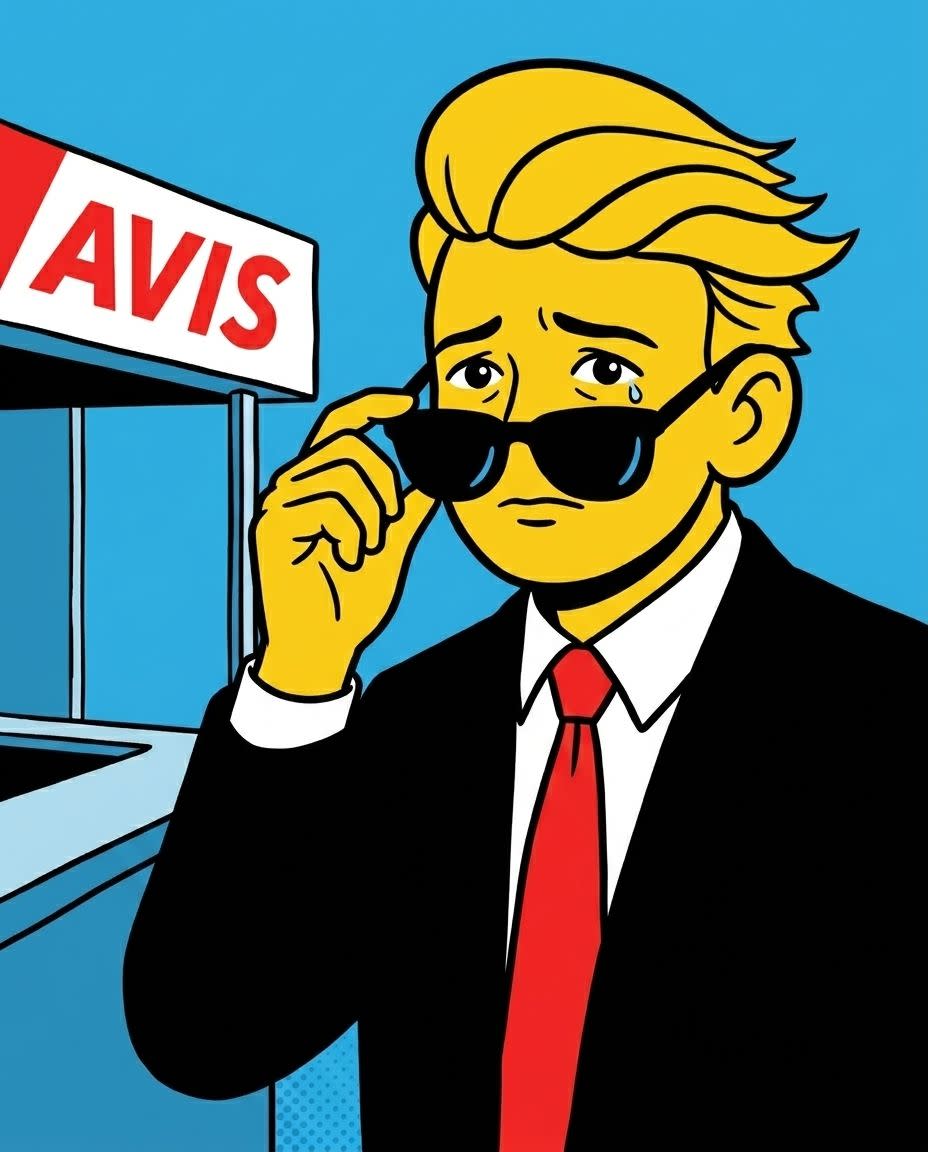
This Avis Short Squeeze Is Real… Just Like it Was the Last Time
Images
1 / 5
2 / 5

3 / 5

4 / 5
5 / 5
The above button links to Coinbase. Yahoo Finance is not a broker-dealer or investment adviser and does not offer securities or cryptocurrencies for sale or facilitate trading. Coinbase pays us for certain activity generated through this link. Prices displayed are informational.

Somewhere on Reddit right now, a guy named ThunderBull420 is telling his followers that $CAR is the trade of the decade. He's not entirely wrong, but he's also almost certainly going to get hurt. Avis Budget Group's stock has gone ballistic over the last month, skyrocketing about 575%, and the whole setup is structured in a way that should make anyone who remembers 2020 and 2021 feel a very specific kind of déjà vu. The squeeze mechanics are genuine, the fundamental tailwinds are real, and the question of whether you're a genius or a bag holder depends almost entirely on where you're standing when the hedge funds decide they're done feeling playful.

Here's the thing about short squeezes: they work exactly as advertised right up until they don't, and the people who get hurt are almost never the ones who understood the mechanism. CAR had everything a squeeze needs. The float is a comically thin 10 million shares that two hedge funds, SRS Investment Management and Pentwater Capital, have cornered roughly 82% of between them through shares and swaps. Going into the rally, about 13% of the available float was short. What followed was arithmetic.

Trump's proposed 25% tariff on imported vehicles handed the bulls a legitimate fundamental story to tell while the mechanics did the actual work. Basically, if new cars get expensive, consumers rent instead of buy, and it follows that rental companies benefit… right? CEO Brian Choi has guided for $800 million to $1 billion in adjusted EBITDA this year, so the tariff tailwind is real. These are genuine points in the stock's favor, and we mention them because it would be unfair not to, but they are emphatically not why a stock with an analyst consensus target of $106.43 is trading at multiples of that number.

The comparison retail traders keep making is to the Hertz squeezes of 2020-2021, and it's worth taking seriously rather than deploying as a nostalgic narrative device. There are actually two Hertz moments, and they teach different lessons.

Our analysts just identified a stock with the potential to be the next Nvidia. Tell us how you invest and we'll show you why it's our #1 pick. Tap here.

The first one, May 2020, is the more famous of the two for being the moment that the WallStreetBets crowd and the wider movement around them made their first show of power and spooked both the wider market and one of its titans. Hertz filed for bankruptcy, the stock was heading toward zero, and retail traders on Robinhood drove shares up 1,462% from their $0.40 low to an intraday high of $6.25 because the number was small and the story was exciting. Hertz briefly tried to sell new shares into the rally before the bankruptcy court pointed out that selling equity in a bankrupt company to retail investors might not be entirely appropriate. Carl Icahn, who had owned 39% of the company and understood what bankruptcy meant, had already sold at a loss of over $1.8 billion. The stock went back to zero. Unfortunately, almost none of this yarn is relevant to CAR except as a reminder that retail enthusiasm and corporate solvency are different things.

The second Hertz moment, November 2021, is the one that should actually give people pause. Avis reported a genuinely strong quarter with revenue up 96% year over year, and mentioned electric vehicles in passing. Then WallStreetBets did the rest. The stock tripled in a single session, hit $545, triggered eleven separate trading halts, and short sellers absorbed $4.29 billion in mark-to-market losses at the peak. SRS Investment Management, which had quietly accumulated a 27.7% stake before any of this happened, made out extraordinarily well. The retail investors who bought at $500 did not. SRS is the same fund now sitting on the winning side of the current CAR squeeze, suggesting it has a very good memory and a much-improved model.

The fundamentals underneath the squeeze are worth understanding, not because they're driving the price, but because they clarify what you're actually buying. Avis reported a net loss of $856 million in Q4 2025, driven partly by a $518 million non-cash EV fleet impairment charge. Shareholders' equity stands at negative $3.129 billion against $6.1 billion in corporate debt. Short interest borrow utilization is running at 89%, with fewer than 900,000 shares available to short, and borrow rates between 3.25% and 4.25%. New shorts keep arriving anyway, because at some point a stock trading at nearly 5x its price from 30 days ago becomes too tempting to ignore, and institutional funds are not known for their patience with obvious dislocations.

Barclays has already identified the most elegant resolution to this whole situation: an approved 5 million share ATM offering that is sitting on Avis management's desk right now. ATM stands for “at-the-market,” which means the company has the legal authority to sell new shares directly into the current elevated price, therefore diluting existing holders, flooding the float, and unwinding the squeeze dynamics in roughly the amount of time it takes to execute a trade. If management exercises it, the pin finds the balloon. Whether they choose to do that, and when, is the only variable that actually matters at this point.

The rental car trade is real. The squeeze is real. The last time retail investors decided a car rental company was the trade of the decade, the hedge fund made billions, and the Reddit crowd held the bag. History doesn't repeat, but it does, occasionally, rent the same mid-sized narrative.

One stock. Nvidia-level potential. 30M+ investors trust Moby to find it first. Get the pick. Tap here.
Comments
You must be logged in to comment.