bbc Press
Black children eight times more likely to be strip searched by police - report
Images
1 / 8

2 / 8
3 / 8

4 / 8

5 / 8

6 / 8
7 / 8

8 / 8
Black children are eight times more likely to be strip searched by police than their white peers in England and Wales, a new report by the Children's Commissioner says.

While the report outlines that the number of children strip searched has more than halved in four years, it warns that ethnic disparities persist and calls into question the use of force in some cases.

The report by Dame Rachel de Souza's office also found that black children were almost five times as likely to be subjected to force during stop and search than white counterparts.

The National Police Chiefs' Council (NPCC) said that updates to official guidance on stop and search, which are out for public consultation, would ensure a "child-centred approach" was taken by police officers.

Using data from the first half of 2024, the report found that an estimated total of 377 strip searches took place in the whole of that year - down 56% on 854 searches recorded in 2020.

"But there are still far too many strip searches happening," Dame Rachel said.

The report, published on Wednesday, highlighted that some strip searches are still being conducted in public view, with 26 recorded between July 2023 and June 2024.

It added that, in the same period, 22 were conducted without an appropriate adult present, something Dame Rachel said "should never be happening".

Ethnic disparities were also apparent in the strip search of children, with black children more likely to be strip searched than children of other ethnicities, the report said.

"Although only 6% of the population of 10-17 year olds in the 2021 census were black, 35% of the children strip searched were of black ethnicity," it said.

For the first time, the report also looked at the use of force during stop and search.

It found that, while the vast majority of cases involving force were of children aged between 11 and 17, there were 46 instances recorded with children under the age of 11.

In addition, while almost one fifth of all stop and searches resulted in a use of force, the most common outcome for these instances was no further action being taken (46%), "calling into question the use of necessary and proportionate tests".

Racial disparities were also highlighted as areas of concern in examining the use of force.

The report said white and Asian children were under-represented in being subject to use of force, while black children were over-represented compared to the general population of children.

Dame Rachel said: "I am particularly concerned about the ethnic disproportionality as to why officers say force was needed: White children are more likely to be described as having a mental health need, while for black children the reason identified is simply their size or build.

"We cannot accept that black children are subjected to use of force because of the way they are perceived."

The report also examined the number of children subjected to repeat strip searches for the first time.

It said almost a third (30%) of strip searches in the period under review involved children who had already been strip searched at least once before.

Dame Rachel said this risked "significant and repeated damage to their mental wellbeing, their relationship with the police, and showing a clear failure to successfully intervene with children."

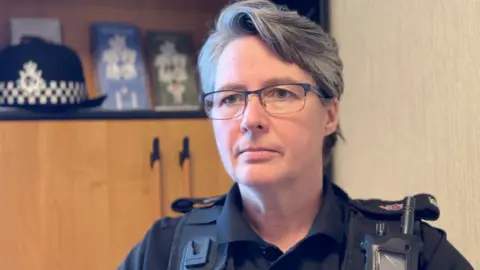
Deputy Chief Constable Andy Mariner, of the NPCC, said policing has made changes to policy about strip searching since the first Children's Commissioner report was published in 2022.

He said updated police practice "strengthens safeguarding requirements, and places greater emphasis on the quality of the encounter - including communication, de-escalation, and dignity. It also sets clear expectations on the use of force and the use of handcuffs and is simpler and more practical".

"While there are positive signs in that the number of strip searches have been falling over time, we continue to work with policing partners, stakeholders and academics to understand and address the disproportionate use of stop and search, which we understand can undermine trust between policing and communities."

He added that while stop and search, including strip search, "is a legitimate and useful policing tool to help us in removing dangerous weapons and drugs from the streets", "we know that when it is used inappropriately, it can damage our relationships with affected communities".

A Home Office spokesperson said: "We're introducing extensive safeguards for children and young people for strip searching and bringing in reforms to drive up standards in policing, improve vetting and tackle misconduct."

The Children's Commissioner first started investigating the police's use of strip searches for children following the case of Child Q - who was strip searched at the age of 15 at her school in Hackney, east London, in December 2020.

The black schoolgirl, who was wrongly suspected of possessing cannabis, was on her period and forced to expose her intimate parts while no appropriate adult was present.

The case led to public protests in March 2022, after details came to light in a safeguarding report which found the search was unjustified and racism was "likely" to have been a factor.

Last year, Scotland Yard said the officers' actions in the Child Q case were "regrettable" and it "should never have happened".

Two Met Police officers involved in the search were dismissed without notice for gross misconduct, while a third received a final written warning.

Home-Start Staffordshire Moorlands says it has faced "increasing funding challenges".

Around a fifth of children do an hour of exercise daily and a third of Year 6 children are obese.

The former US president and New York City mayor meet for the first time at a child care centre in the Bronx.

Police say some young people have been force to leave the island as a result of the issue.

Sarah Bool tells the Commons more awareness is needed and calls for a national screening programme.
Comments
You must be logged in to comment.