bbc Press
Olly Robbins's revelations are a dangerous moment for Keir Starmer
Images
1 / 8

2 / 8

3 / 8
4 / 8
5 / 8
6 / 8
7 / 8
8 / 8
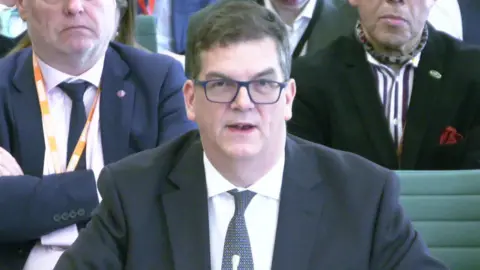
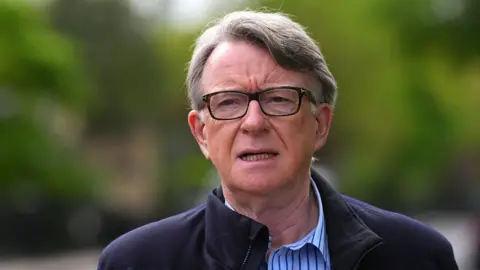
Sir Olly Robbins did not tell anyone in No 10 about the vetting concerns around Lord Mandelson. That is one thing he confirmed pretty quickly in his appearance before the Commons Foreign Affairs Committee.

At the end of last week, that would have counted as a positive development for No 10.

After all, what fuelled so much of the initial fury from opposition parties about the latest Mandelson developments was their assumption  - a wrong assumption, as it transpires  - that the prime minister or his team must have known about every element of the vetting process.

But that is pretty much where the good news for Sir Keir Starmer ends.

In his nearly two-and-a-half hour-evidence session, Sir Olly  - his voice at one point cracking under emotional strain  - offered up an at times devastating account of Downing Street's relentless drive to install Lord Mandelson in Washington DC, an appointment Sir Keir now acknowledges was a grave mistake.

In the process, he made an entirely new revelation of a separate attempt to install in a different diplomatic post a different Labour figure who, it later emerged, had his own controversial ties with a different sex offender.

The core of Sir Olly's argument is that when he became head of the Foreign Office in January 2025 the department was being put under serious pressure to expedite the process for Lord Mandelson's security clearance, but regardless of that pressure giving him the clearance was the right call.

Downing Street's position is the exact opposite. They argue that there was not undue pressure on the Foreign Office, but that Sir Olly nevertheless made the wrong call at the end of the vetting process to give Lord Mandelson security clearance.

Sir Olly acknowledged that the pressure was not exerted personally on him and was communicated to the Foreign Office by No 10 officials rather than political figures  - although he said they, in turn, must have come under pressure from higher up the Downing Street chain.

But given his contention that the pressure he was under from No 10 did not affect the decision he made, then why does Sir Olly's description of the atmosphere around Lord Mandelson's pending appointment in January 2025 matter?

One reason why it matters is that it calls into question the prime minister's claim that if he had known at the time what he now knows about the concerns raised by UK Security Vetting (UKSV), then he wouldn't have pressed ahead with the appointment.

That's because Sir Olly's implicit claim - contested vigorously now by No 10 - is that the political team in Downing Street were determined that Lord Mandelson would become the ambassador come what may.

And of course it is worth remembering, as the committee discussed at length, that by this point the appointment of Lord Mandelson as ambassador had already been publicly announced.

Part of the disagreement here is a disagreement about how serious UKSV's concerns about Lord Mandelson actually were.

We will presumably never know what specific risks they identified, although it was interesting Sir Olly said they did not relate to Jeffrey Epstein.

In Sir Olly's account, he was presented with a verbal briefing which said that UKSV believed Lord Mandelson's case to be "borderline" but they were leaning against recommending he be granted clearance.

Having considered possible mitigations, Sir Olly then decided to give Lord Mandelson clearance, something which he says is not tantamount to having "overruled" UKSV.

But the No 10 position is different. They say that under a traffic light warning system, UKSV ticked two red boxes, indicating "high concern" and that they believed his clearance application should be denied.

At first blush these two accounts are irreconcilable, although one possible way of reconciling them is that the verbal briefing Sir Olly received may have mischaracterised the UKSV position.

That is one element of this which the committee is doubtless going to want to probe further, and perhaps where Sir Olly felt on shakiest ground.

Then there was the new issue Sir Olly's evidence presented for No 10, which came out of the left-field.

He claimed that in March 2025 he was asked by civil servants working for the prime minister to "potentially" find a job as an ambassador for Matthew Doyle.

At the time Lord Doyle was the prime minister's director of communications. Lord Doyle, like Lord Mandelson, has a long history as an influential figure on the right of the Labour Party. He first worked in government under Sir Tony Blair.

He was subsequently given a peerage, an appointment which itself descended into scandal over Doyle's relationship with a convicted sex offender - something which would not have been known to Sir Keir or his team at the time of this episode in March 2025.

Lord Doyle has apologised for his past association with Sean Morton, a former Labour councillor who admitted indecent child image offences in 2017.

He has said his support for Morton's election campaign came at a time when he was maintaining his innocence.

Sir Olly's revelation about Lord Doyle is already going down badly with Labour MPs who, as one senior Labour figure puts it, believe that this "through one example shows the character and culture of this government and how it's run".

Note, too, that Sir Olly claims to have been told by No 10 not to discuss the prospect of a diplomatic appointment for Lord Doyle with David Lammy, then the foreign secretary, and now - even more awkwardly, Sir Keir's number two.

For all that Sir Olly's evidence session was bruising for the prime minister on the specifics of Lord Mandelson, it feels like this territory is where things get more dangerous for Sir Keir because it speaks to how he has operated as prime minister.

When Labour MPs come to form a judgment on the prime minister after the elections on 7 May, the events of the past few days will be a factor, but less because of what exactly transpired with Lord Mandelson and more for what the Mandelson saga tells them about Sir Keir.

It's a saga which has some distance left to run even this week. Later on Tuesday there will be up to three hours more debate in the House of Commons on this.

It seems inevitable that Conservative leader Kemi Badenoch will focus on this issue at Prime Minister's Questions on Wednesday (perhaps re-asking the six questions that she posed to Sir Keir in the Commons on Monday).

Then there are still enormous quantities of documents the government has undertaken to publish as part of the "humble address" process, including communications between ministers and government advisers with Lord Mandelson when he was in position as ambassador. All sorts of embarrassment could lurk in those.

For Sir Keir, acknowledging that appointing Lord Mandelson was an error may have been the easy part. Drawing a line under that error is proving impossible.

Sign up for our Politics Essential newsletter to keep up with the inner workings of Westminster and beyond.

Sir Olly Robbins has defended his actions amid a row over the vetting of the former US ambassador.

Speaker Sir Lindsay Hoyle asked MP Zarah Sultana to leave after she used unparliamentary language.

Sir Olly Robbins has defended his decision to approve the peer's security clearance for the role.

Sir Olly Robbins is expected to defend his decision not to tell Sir Keir Starmer that Lord Mandelson failed vetting.

The PM tells the Commons that if he had known the peer failed security vetting he would not have been appointed.
Comments
You must be logged in to comment.