bbc Press
Key evidence from sacked official at heart of Mandelson row
Images
1 / 4

2 / 4
3 / 4

4 / 4
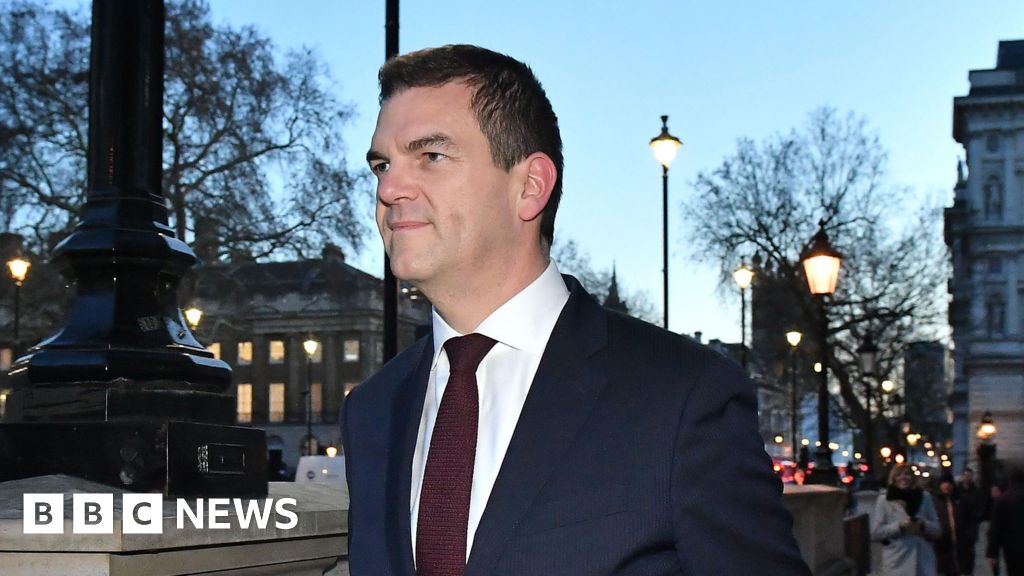
Sir Olly Robbins, the former top civil servant at the Foreign Office, has been giving evidence to MPs on the foreign affairs committee about his role in vetting Lord Mandelson to be the UK's ambassador to the US.

It comes after Sir Olly was effectively sacked last week after it emerged his department had granted the peer security clearance for the role in January 2025, against the recommendation of security officials who vetted him.

Lord Mandelson formally took up the role the following month, but was sacked seven months later over his ties to the late convicted sex offender Jeffrey Epstein.

Here are the key points from his evidence to the committee.

In a letter to the committee published as he was giving oral evidence, Sir Olly said that when he arrived in post at the Foreign Office on 20 January, Lord Mandelson's appointment had already been announced and agreed to by the US.

He also noted that Lord Mandelson had already been given access to the Foreign Office building as well as "highly classified briefing on a case-by-case basis".

He said these factors "resulted in a dismissive approach" to developed vetting, the process required to obtain security clearance, from Downing Street.

Sir Olly said there was a "strong expectation" coming from Downing Street that Lord Mandelson "needed to be in post and in America as quickly as humanly possible".

He said his office had been "under constant pressure" over when the vetting process would be completed.

There was "never any interest, as far as I can recall, in whether, but only an interest in when," he added.

He later said that: "Whilst I think the department felt under pressure, we were proud of the fact we'd not bowed to that pressure."

In his letter, the former civil servant said he had not seen the documentation from UK Security Vetting (UKSV), the government's in-house vetting unit, containing their vetting assessment of Lord Mandelson.

He said that instead, he was given an oral briefing, during which he was told the vetting agency considered Mandelson to be a "borderline case" and that they were "leaning towards recommending that clearance be denied".

He said UKSV acknowledged that the Foreign Office "may wish to grant clearance, with appropriate risk management".

And he pushed back on the idea that UKSV "fails" candidates - emphasising instead that officials provide an assessment for the Foreign Office to act on.

Sir Olly said the risks identified in Lord Mandelson's vetting report "did not relate to Jeffrey Epstein".

Despite questions from Labour MP Emily Thornberry, who chairs the committee, Sir Olly declined to say if there was anything flagged during the vetting that had not already been made public.

On Monday, Sir Keir Starmer said he should have been informed about the result of Lord Mandelson's vetting at the time.

But Sir Olly defended his decision not to share this, saying he decided what information to share based on internal civil service guidance.

Both Downing Street and the Cabinet Office had "explicitly" approved this approach, he told the MPs.

He pointed to comments made by Foreign Office Minister Stephen Doughty last September, who told the Commons the vetting process was "rightly independent" of ministers, who are "not informed of any findings other than the final outcome".

Sir Olly said he would have advised the government to carry out Lord Mandelson's vetting before announcing the appointment.

He said former US President Joe Biden had agreed to the appointment towards the end of his term in office.

"I think if the nomination had changed after that point, the incoming administration may well have commented on it publicly and it would, yes, have caused quite an issue in the relationship," he added.

Sign up for our Politics Essential newsletter to read top political analysis, gain insight from across the UK and stay up to speed with the big moments. It'll be delivered straight to your inbox every weekday.
Comments
You must be logged in to comment.