yahoo Press
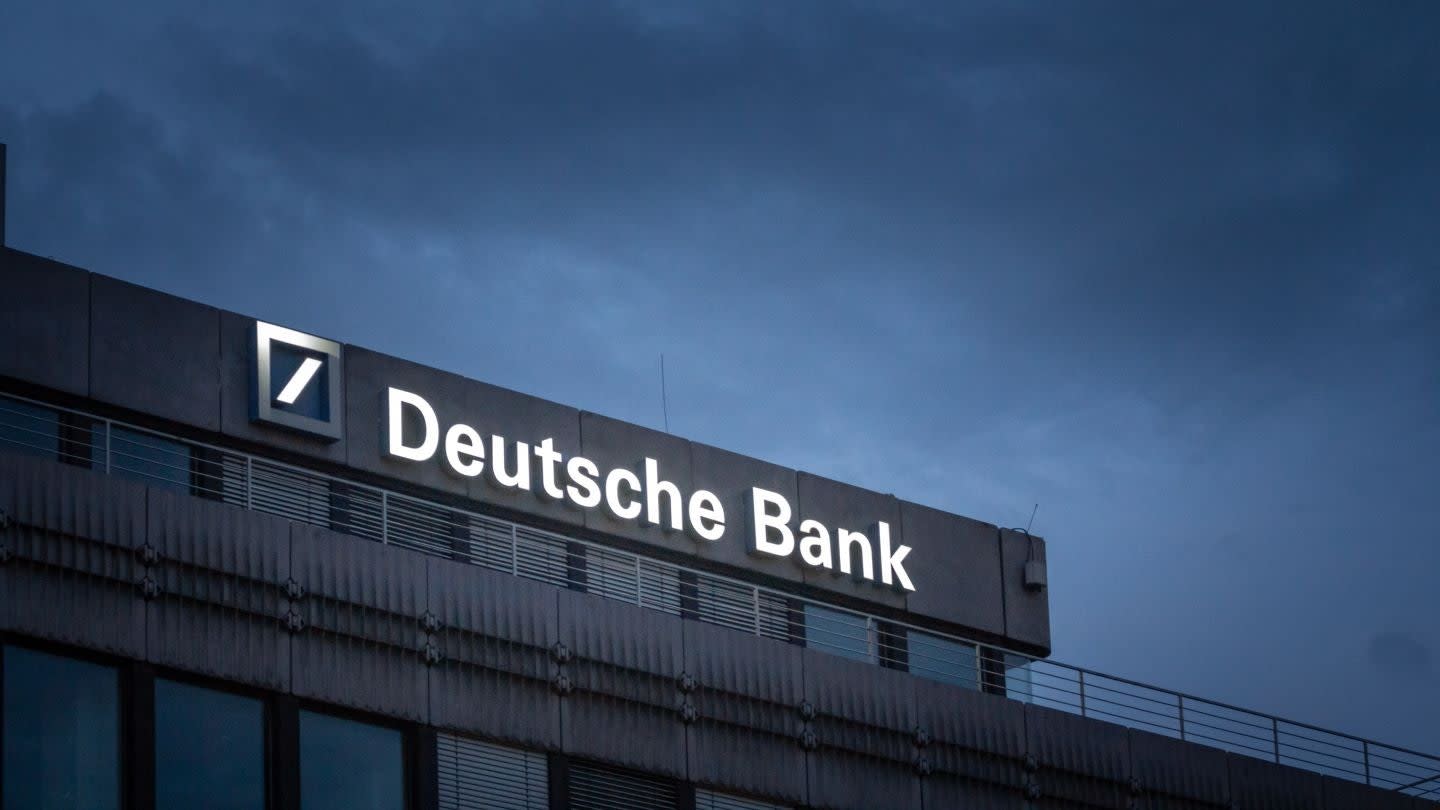
Deutsche Bank self-reports potential Russian sanctions breach
Images
1 / 4
2 / 4

3 / 4

4 / 4
The above button links to Coinbase. Yahoo Finance is not a broker-dealer or investment adviser and does not offer securities or cryptocurrencies for sale or facilitate trading. Coinbase pays us for certain activity generated through this link. Prices displayed are informational.

Deutsche Bank has notified financial regulators about possible violations of EU sanctions rules tied to Russian clients.

The German bank identified instances in its retail division where deposits above €100,000 ($117,598) were received from people covered by EU sanctions restrictions.

The cases emerged after Deutsche set up a task force to review its internal controls following changes to Germany’s sanctions enforcement framework in February.

Those changes, stemming from an EU directive, brought in tougher criminal penalties, faster enforcement and the removal of grace periods, increasing pressure on banks to identify and stop potentially banned transactions more quickly.

Under EU sanctions rules, banks are barred from taking deposits above €100,000 from Russian nationals, residents or businesses set up in Russia.

German outlet Finanz-Szene first reported the matter.

In response, the bank said: “Deutsche Bank continuously reviews its processes related to sanctions compliance as part of the ordinary course of business. Whenever we identify potential issues, we put in place appropriate measures to adapt and improve our processes and we inform the relevant supervisory authorities proactively.”

The disclosure follows a January search by German prosecutors at Deutsche’s Frankfurt headquarters as part of an investigation into suspected money laundering linked to Roman Abramovich.

According to chief executive Christian Sewing, that investigation concerns the bank’s handling of transactions between 2013 and 2018 and whether it was too slow to submit a suspicious activity report.

At the time, the focus was on connections to companies linked to Abramovich.

Abramovich, who has been under EU sanctions since 2022, has denied wrongdoing.

Meanwhile, in January, Bank of Scotland, a unit of Lloyds Banking Group, was fined by the UK watchdog over an account for a sanctioned individual.

The bank was fined £160,000 ($219,268.8) by the Office of Financial Sanctions Implementation (OFSI), part of HM Treasury, in this regard.

Although the watchdog did not name the concerned individual, several media sources identified the person to be Dmitrii Ovsiannikov, previously governor of Sevastopol in Russian-occupied Crimea.

"Deutsche Bank self-reports potential Russian sanctions breach " was originally created and published by Private Banker International, a GlobalData owned brand.


The information on this site has been included in good faith for general informational purposes only. It is not intended to amount to advice on which you should rely, and we give no representation, warranty or guarantee, whether express or implied as to its accuracy or completeness. You must obtain professional or specialist advice before taking, or refraining from, any action on the basis of the content on our site.
Comments
You must be logged in to comment.