yahoo Press
Chimpanzees in Uganda are in a ‘civil war,’ and researchers are unsure how it will end
Images
1 / 12
2 / 12

3 / 12

4 / 12

5 / 12

6 / 12
7 / 12
8 / 12
9 / 12

10 / 12

11 / 12

12 / 12
Aaron Sandel can pinpoint when it all started.

The codirector of the Ngogo Chimpanzee Project had been observing a group of apes on June 24, 2015, in Uganda’s Kibale National Park, where the project is located, when he suddenly noticed the chimps fall silent. Several began grimacing, a facial expression indicating they were nervous. Others started touching each other for reassurance.

In the distance, more chimps could be heard, but it wasn’t anything unusual. For at least two decades, the Ngogo chimpanzees had formed a considerably large community, with more than 200 individuals living together in harmony at its peak.

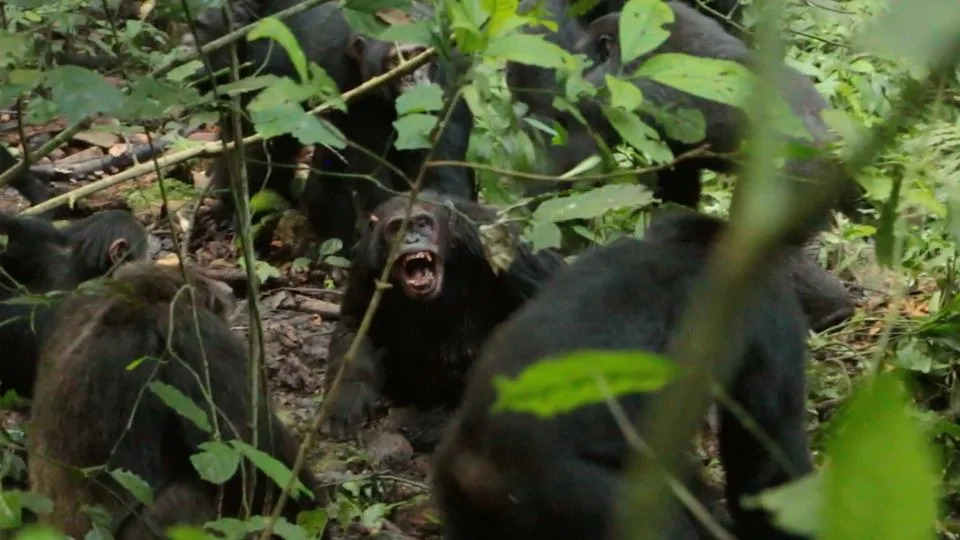
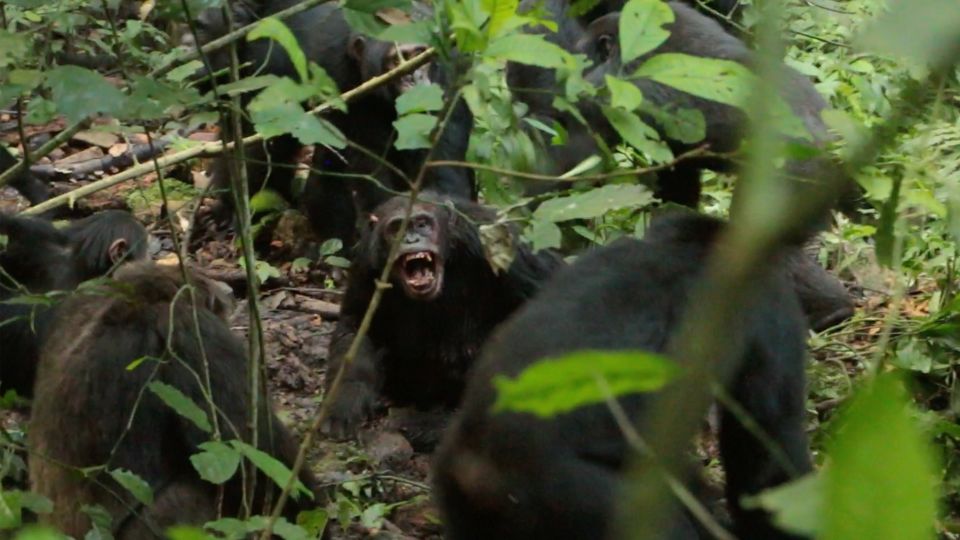
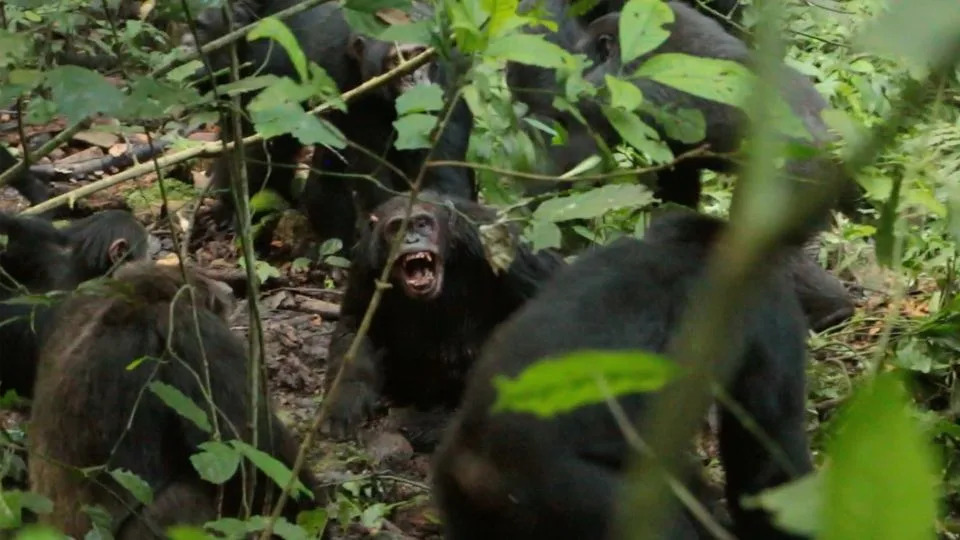
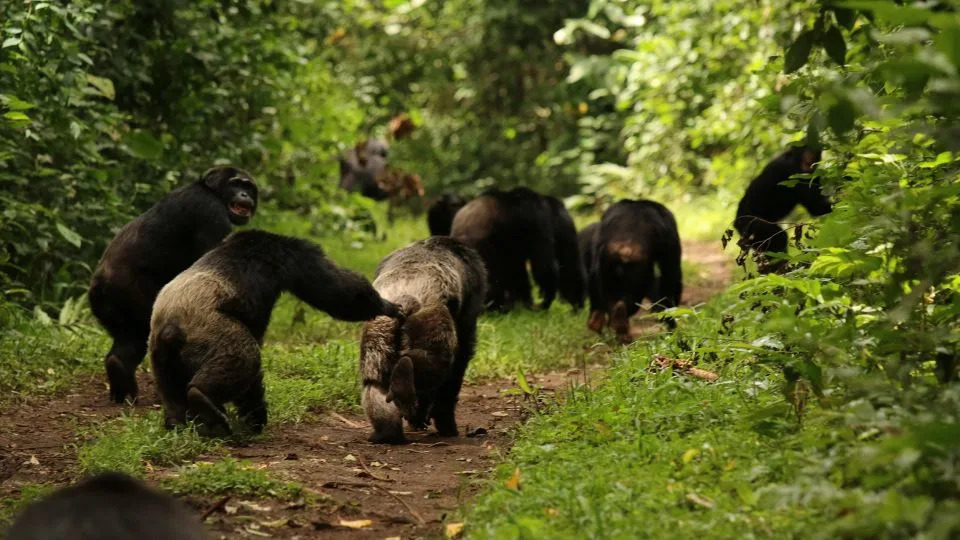
But when Sandel saw more chimps appear, the primates did not reunite in their typical fashion of loud screaming, pats on the back and holding hands. Instead, a number of chimpanzees took off running, leaving Sandel and fellow researcher John Mitani puzzled. The once close-knit group of chimps were suddenly treating each other like strangers.

“I remember asking John, ‘What’s going on?’ He said, ‘I don’t know,’” Sandel recalled. “And that also stuck with me, because this is one of the world’s experts on chimps. He’d studied these chimps for two decades. But we were seeing something new.”

Sandel credits that day as the beginning of the split, when the large group began to organize into two factions now known as the Western and Central chimps. “I think it planted the seeds of polarization, which resulted in the group’s downfall,” said Sandel, who is also an associate professor of anthropology at the University of Texas at Austin.

Since that day, the violence between the two groups has grown, with raids resulting in lethal attacks on adults and infants occurring several times a year. Now, a new study documents what the researchers deem as a chimpanzee “civil war,” a rare occurrence that is estimated to happen every 500 years and has only been observed once before.

The findings, which were published April 9 in the journal Science, provide a unique glimpse into how shifting social ties can cause strife among nonhuman groups of animals, an elusive event in the wild, yet one that could highlight the role of interpersonal relationships in human conflict, researchers say.

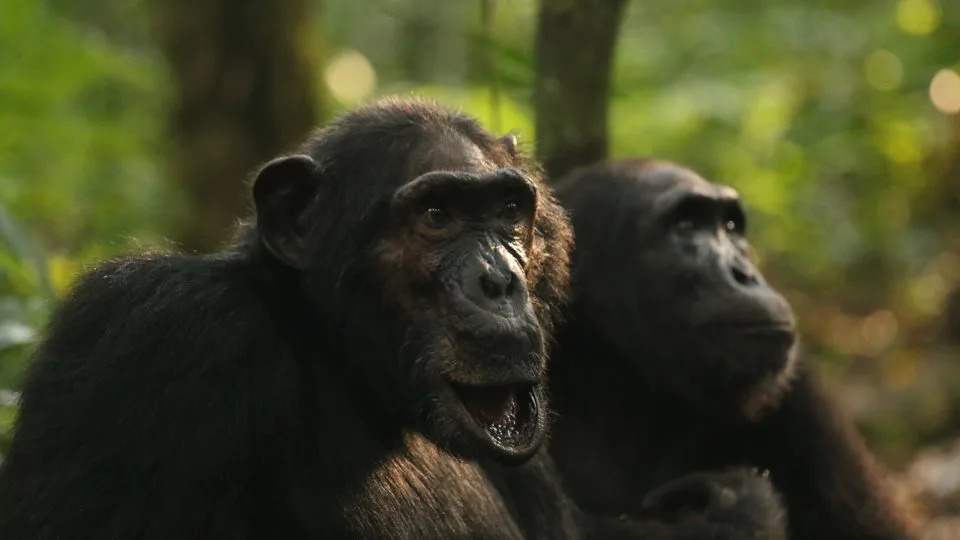
Chimpanzees are naturally territorial. Regularly, a group of individuals — typically male — will gather and perform patrols to check for rival group members near the borders. If they find any outsiders, they will attack and sometimes kill the other chimp.

The Ngogo Chimpanzee Project was cofounded in 1995 by John Mitani, who is now an emeritus professor of anthropology at the University of Michigan. From the start, experts have debated whether the unusually large group of chimps would split. Researchers did not initially believe they would, since there were no signs of fracture at the time. The forest also was well equipped to support the big group, as the protected area they occupied was rich in food and trees, said lead author Sandel.

But after that day in 2015, the chimps quickly split themselves into the Western and Central clusters, named for the territories the chimps have divided within. Now, they patrol to keep one another away.

The Western chimps are more aggressive than the Central chimps; between 2018 and 2024 the group organized up to 15 patrols every four months and killed an average of one adult and two infants per year from the Central group, according to the study. The Western chimps appear to have an advantage over the Central chimps, likely due to their early cohesion, Sandel said.

The first lethal attack occurred in 2018 on a young adult male named Errol. The chimp was attacked by five Western adult males that had been feeding at a fig tree near the middle of the Ngogo territory. When Sandel joined the project in 2012, Errol had been about 10 years old and was the subject of his dissertation.

Before the split, the chimps were able to traverse the entire territory, but now their land is split in two, with the border near the center, Sandel said. The border is always changing, he added, and it appears the Western chimps are currently succeeding at pushing it farther east.

The second lethal attack, in 2019, happened while Sandel and other researchers were observing several chimps feeding within a large tree. A group of Western chimps rushed in and surprised them, causing chaos to break out.

The Central chimps scattered as the Western chimps climbed up the tree. The researchers, unaware that the group had permanently split at the time, watched as three adult males cornered a chimp from the Central group and began attacking him. Sandel immediately recognized the victim to be Basie, a 33-year-old member of the Ngogo group.

As the chimps piled on top of him, an adult female chimp, Aretha, attempted to shield Basie from his attackers, but she was quickly chased away. When the chimps finally relented, Basie was escorted back home by an over 50-year-old male chimp named BF, who had appeared to be close with Basie over the years. Basie died the next day.

So far, the death toll stands at seven adult and 17 infant chimps from the Central cluster, with an additional 14 chimps missing that could have also been victims of lethal attacks, according to the study.

“It’s definitely sad to see these chimps kill one another, especially seeing chimps that I know so well being killed. I do sometimes feel like a war correspondent,” Sandel said. While the researchers are currently studying the acts of violence, they are also getting opportunities to study other chimp emotions, such as empathy, as well as acts of heroism and friendship, he added.

“I feel like we’re tapping into something really at the heart of what it means to be a chimp,” Sandel said. “By seeing these relationships change in such a dramatic way, we are getting insight into chimps that we don’t normally have from observation alone, and a window into their mind and to their emotions.”

Late primatologist Jane Goodall had observed the first known chimpanzee ‘civil war’ in the 1970s during her research on chimpanzees at Tanzania’s Gombe National Park. Suddenly, chimps that had grown up together were splitting up and killing one another in what Goodall and colleagues had dubbed as the “Four-Year War,” and the darkest time in Gombe’s history.

While the Ngogo researchers can’t be certain why the war started among their group, they have a few theories. Similarly to Goodall’s group of chimps, the community had experienced a change in the dominance hierarchy, which appeared to immediately affect how the chimps interacted with another, Sandel said. The Ngogo researchers hypothesize that the death of several chimps due to unknown causes in 2014, a 2015 change in the alpha male and a respiratory epidemic in 2017 had led social ties to weaken and the group to splinter.

“The careful documentation of this rare event through years of long-term data provides an invaluable insight into inter-group conflict,” said Katie Slocombe, a comparative psychologist and professor of psychology at the University of York in the United Kingdom. Slocombe was not involved with the new study.

“It was the largest known chimpanzee community, so maintaining effective relationships with so many individuals may have become challenging for community members,” Slocombe said in an email. She added that this new information on the chimpanzee group could add to our understanding of how interpersonal relationships and other environmental factors contribute to human conflict.

The study authors argued that since chimpanzees do not have cultural markers that are largely credited to causing human war, such as religion or ethnicity, studying the chimps could be beneficial to learning more about our own species and the role of relational dynamics in human warfare, Sandel said.

There are two likely possibilities as to how the war will end, Sandel added. The first is that the Central group will organize themselves in a way that allows them to better defend their territory and the border against the Western group, and the lethal attacks will become less frequent. The second possibility is similar to what Goodall observed at Gombe: The stronger group will kill all the members of the weaker group.

“There’s a third one, which seems extremely unlikely, but there could be some reunion between the groups,” Sandel said. “For everything I know about chimp behavior, I don’t see how that’s possible, but I also know enough about chimps never to be so surprised by what they’re capable of.”

Taylor Nicioli is a freelance journalist based in New York City.

Sign up for CNN’s Wonder Theory science newsletter. Explore the universe with news on fascinating discoveries, scientific advancements and more.

For more CNN news and newsletters create an account at CNN.com
Comments
You must be logged in to comment.