yahoo Press
'The results shocked me': A shopper compared 32 items at Walmart and Costco — and one store was nearly 26% cheaper
Images
1 / 4

2 / 4

3 / 4

4 / 4
The above button links to Coinbase. Yahoo Finance is not a broker-dealer or investment adviser and does not offer securities or cryptocurrencies for sale or facilitate trading. Coinbase pays us for certain activity generated through this link. Prices displayed are informational.

Moneywise and Yahoo Finance LLC may earn commission or revenue through links in the content below.

With food costs way up since pre-pandemic — and the fear of much higher prices caused by the conflict in Iran — American shoppers are hungrier than ever for deals at the grocery store (1).

But it can be difficult and time-consuming to comparison shop, seek out coupons and discounts, and sort out legitimate deals from slick marketing.

Thanks to Jeff Bezos, you can now become a landlord for as little as $100 — and no, you don't have to deal with tenants or fix freezers. Here's how

Dave Ramsey warns nearly 50% of Americans are making 1 big Social Security mistake — here’s how to fix it ASAP

The IRS usually taxes gold as a collectible — but this little-known strategy lets you hold physical bullion tax-free. Get your free guide from Priority Gold

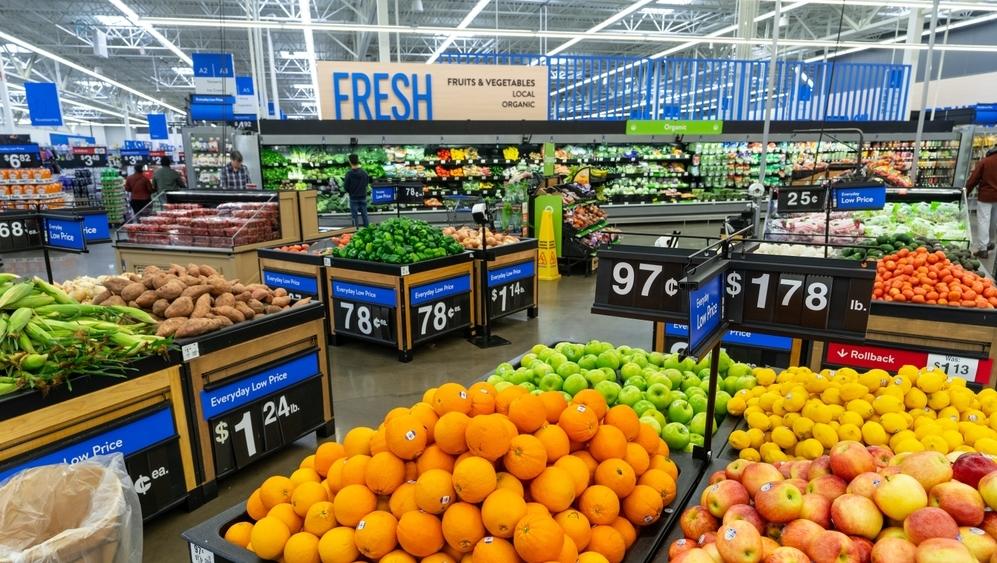
Business Insider's Savannah Born, who lives in Indianapolis according to her LinkedIn, set out to compare prices of 32 common items at two of the nation's leading budget grocery chains, Walmart and Costco.

She calculated unit prices (so, cost per pound or ounce), and the differences were striking. Although Walmart (NASDAQ:WMT) edges out Costco (NASDAQ:COST) for a few items — chicken was $0.42 less per pound, sugar and flour significantly cheaper by weight, and a dozen eggs 15 cents less — Costco offered better value overall, and it wasn't close.

Overall, Costco prices for Born's chosen items were nearly 26% cheaper (2).

This matches the findings of a spring 2026 survey from Consumer Reports, which compared Walmart prices to other major brands. It did not compare unit prices, but instead a representative cart full of specific grocery items, which varied depending on what was available in each store.

By this method, only a handful of retailers beat Walmart for value, including Costco, which, with average prices 21% lower than Walmart, is the cheapest large grocery chain in the nation. BJ's, Lidl, Aldi and WinCo also rang in with average prices below the blue behemoth's (3).

Whether it's Costco or another membership-based retailer, to make the discount worth it, you'll need to shop often enough to make back the annual membership fee. At Costco a standard membership is currently $65, which includes other perks including discounts on gas, tires and prescription eyeglasses.

Also, many Americans are limited by geography, and approximately 19 million live in food deserts, where accessing any grocery store can be an ordeal (4). If you have to drive further to hunt down deals, you might not save much, given what you spend in time and gas (and gas prices are up — way up).

Plus, shopping in bulk requires having space at home to store food, and bulk perishable items aren't practical for smaller family sizes. After all, it doesn't count as a deal if the lettuce rots in your fridge.

Finally, if you're on a fixed income, such as Social Security, foods that are cheaper in terms of unit price may not matter much to you, since you might not have the cash available to pay for items in larger quantities.

Read More: Robert Kiyosaki warned of a 'Greater Depression' — with millions of Americans going poor. Was he right?

Looking for lower prices in-store is far from the only way to reduce your food spending. One resource with a ton of tips is Leanne Brown's free cookbook, Good and Cheap.

Given the astronomical fees, ordering takeout a couple of times a month can easily blow your food budget. You're less likely to open a delivery app in a moment of weakness if you keep easy dinners and pantry staples on hand.

Adding a few to each grocery order until you have a decent stock at home will help you stay on track.

Pre-made drinks are extremely expensive, especially relative to the paltry nutrition they provide.

Try choosing water with a splash of juice or squeeze of citrus instead. If you're a fizzy drink fiend, a cheap home carbonation machine might help you save in the long run.

Grocery store loyalty programs and points programs can help you save money if you’re a frequent shopper. Likewise, spending time looking for a low- or no-fee credit card with a cash back program can also help you to trim down your overall budget.

From here, you may want to make your money work harder for you. But if, like many Americans, you’re struggling to save consciously, you could put your spare change to work while you shop.

Acorns allows you to automatically invest your spare change from your everyday purchases into a diversified portfolio of ETFs managed by experts at leading investment firms like Vanguard and BlackRock.

This means that while you’re spending on essentials, you’re also saving for the future.

For instance, if you buy groceries for dinner tonight for $43.25, Acorns will round up the purchase to $44.00 and invest your change in a smart investment portfolio. So the purchase automatically becomes a 75-cent investment in your future.

Then, once you’re comfortable with squirreling away your spare change, you can set up recurring payments to give your new portfolio a little boost.

Sign up today and get a $20 bonus investment when you set up a $5 monthly deposit.

This doesn't have to be perfect.

Planning ahead to use one ingredient in multiple meals can reduce food waste and impulse purchases. Soups, stews, dried beans and rice take some time to prepare, so when you do, make extra and freeze the rest in individual portion sizes (5). Famed financial guru Dave Ramsey also swears by beans and rice, specifically, if you’re really trying to cut down on costs.

Another simple way to cut costs is by taking advantage of discount programs tied to stores and services you already use. For example, AARP offers access to a wide range of deals on prescriptions, dental plans, travel, entertainment and more.

Joining a senior-focused organization like AARP can get your discounts on almost everything. As one of the most trusted organizations for older Americans, AARP not only offers money-saving perks, but they can also help you make informed financial and health decisions.

AARP members get access to guides that can help you make the most of Social Security, choose the right Medicare plan and uncover other government benefits — potentially saving you thousands.

Sign up with AARP today and get 25% off your first year.

With food prices up over 25% since late 2020 (6), it's worth it to look for deals wherever you can, including on your insurance costs. Cutting down on quarterly or yearly expenses can free up more room to add to your retirement savings.

One way to do this is to shop around for a better deal on your home and auto insurance with Insurify.

By using a comparison platform like Insurify, you can instantly view quotes from top-rated providers to ensure you aren't paying a hidden ‘loyalty tax’ to your current insurer.

Just answer a few basic questions, and Insurify will show you the most affordable deals in as little as 3 minutes.

Not only is the process 100% free, but you could also save up to 15% by bundling your car and home insurance.

But it isn’t enough simply to stash away extra cash in your checking account. If you’re saving an emergency fund, or simply hoping to grow your uninvested cash in an account where it’s always accessible, choosing a high-yield account like a Wealthfront Cash Account can be a great option, offering both competitive interest rates and easy access to your money when you need it.

A Wealthfront Cash Account currently offers a base APY of 3.30% through program banks, and new clients can get an extra 0.75% boost during their first three months on up to $150,000 for a total variable APY of 4.05%.

That’s ten times the national deposit savings rate, according to the FDIC’s March report.

Additionally, Wealthfront is offering new clients who enable direct deposit ($1,000/mo minimum) to their Cash Account and open and fund a new investment account an additional 0.25% APY increase with no expiration date or balance limit, meaning your APY could be as high as 4.30%.

With no minimum balances or account fees, as well as 24/7 withdrawals and free domestic wire transfers, your funds remain accessible at all times. Plus, you get access to up to $8M FDIC Insurance eligibility through program banks.

— With files from Genna Buck

Vanguard’s outlook on U.S. stocks is raising alarm bells for retirees. Here’s why and how to protect yourself

Robert Kiyosaki says this 1 asset will surge 400% in a year and begs investors not to miss this ‘explosion’

No time to lower your crippling car insurance rate? Here’s how to do it within minutes — you could end up paying $29/month without a single phone call

Millionaires under 43 are reshaping investing — just 25% of their portfolios are in stocks. Here’s where their money is going

Join 250,000+ readers and get Moneywise’s best stories and exclusive interviews first — clear insights curated and delivered weekly. Subscribe now.

We rely only on vetted sources and credible third-party reporting. For details, see our editorial ethics and guidelines.

CNBC (1); Business Insider (2); Consumer Reports (3), (6); U.S. Department of Agriculture Economic Research Service (4); Leanne Brown (5)

This article provides information only and should not be construed as advice. It is provided without warranty of any kind.
Comments
You must be logged in to comment.