yahoo Press
‘Like the 1930s’: Ray Dalio warns Trump’s agenda could plunge the US into times ‘worse than a recession.’ How to prepare
Images
1 / 4
2 / 4

3 / 4

4 / 4
Moneywise and Yahoo Finance LLC may earn commission or revenue through links in the content below.

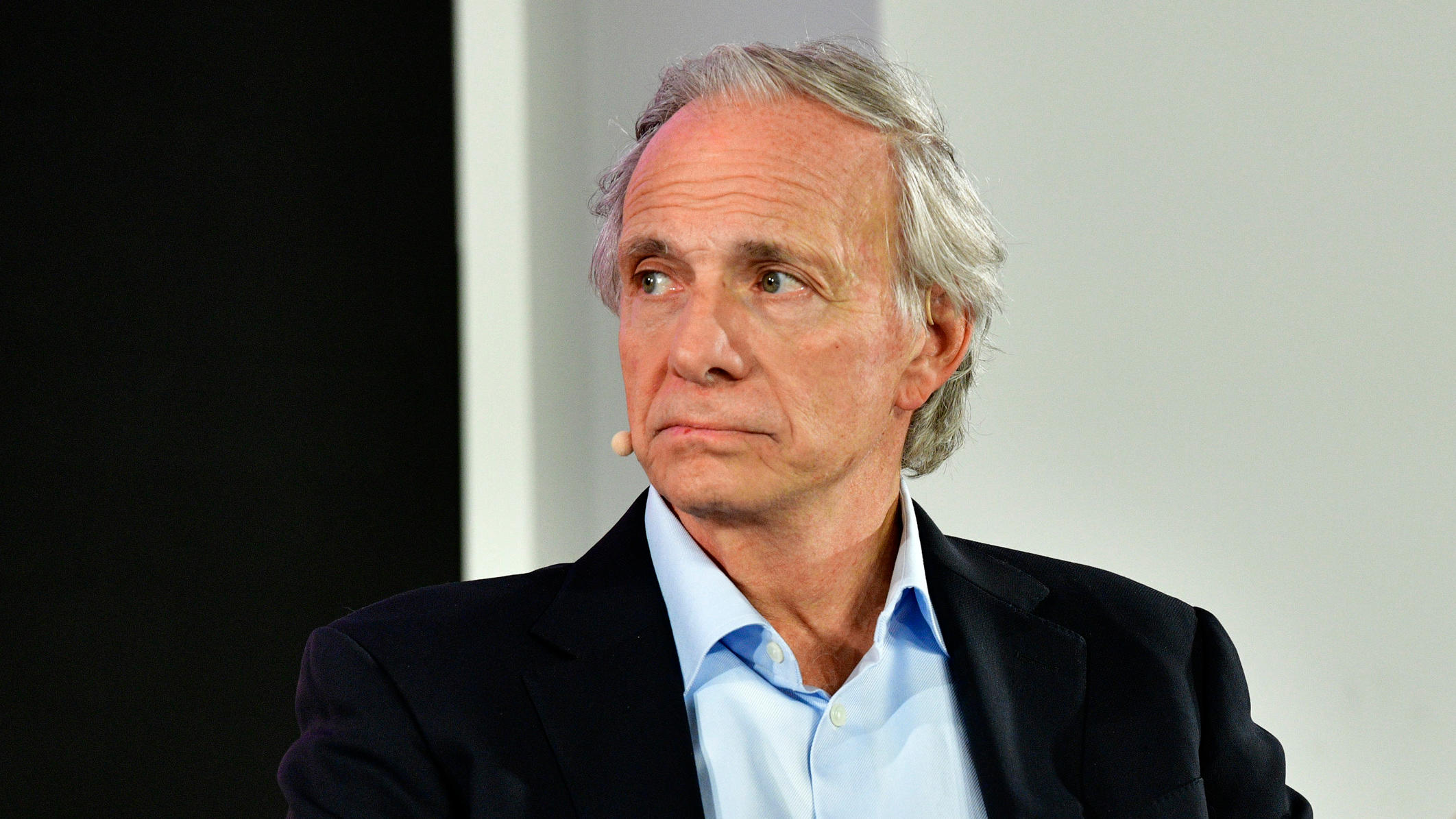
The founder of Bridgewater Associates, one of the world’s largest hedge funds, has voiced concern that President Donald Trump’s economic agenda could lead to “something worse than a recession.”

“Right now, we are at a decision-making point and very close to a recession,” billionaire investor Ray Dalio told NBC’s Meet the Press last year. “And I’m worried about something worse than a recession if this isn’t handled well (1).”

Thanks to Jeff Bezos, you can now become a landlord for as little as $100 — and no, you don't have to deal with tenants or fix freezers. Here's how

Dave Ramsey warns nearly 50% of Americans are making 1 big Social Security mistake — here’s how to fix it ASAP

The IRS usually taxes gold as a collectible — but this little-known strategy lets you hold physical bullion tax-free. Get your free guide from Priority Gold

A recession is typically defined as two consecutive quarters of negative GDP growth. A much more “profound” change would be a breakdown of the current monetary order. These kinds of forward-looking assessments are something Dalio has some amount of experience with, having correctly predicted the 2008 financial crisis.

To be sure, a recession is bad news. However, what Dalio is sounding the alarm over could be much worse financially for the average American — the upheaval of a U.S. backed global monetary system.

Trump has triggered global economic chaos with his on-again, off-again “reciprocal” tariffs (2). But Dalio fears something worse — the U.S. could end up isolated as its biggest trading partners sign cross-border agreements that exclude the world’s largest economy.

“By and large, it’s changing the world order in a way which is making it more inefficient and actually causing growth around the United States,” Dalio said during a Paley Media Council event last year (3).

The end of World War II ushered in a new monetary and geopolitical world order. But history tends to repeat itself. Tariffs, combined with a high level of debt and a rising superpower challenging the existing superpower, could lead to “profound changes” in the world order.

“Such times are very much like the 1930s,” Dalio told NBC.

“These go in cycles that can be measured, and I worry about the breakdown of that kind of order, particularly since it doesn’t need to happen,” he noted, adding that there are better ways to restructure debt.

Whether tariffs are implemented in a “stable” way or a “chaotic and disruptive way” can make “all the difference in the world,” he said. But so far, the tariffs have been akin to “throwing rocks into the production system.”

Or, in other words, highly disruptive.

Read More: Robert Kiyosaki warned of a 'Greater Depression' — with millions of Americans going poor. Was he right?

Despite Dalio’s warning, recent data suggests the U.S. economy continues to grow. Real GDP increased by 2.1% in 2025 (4), though there are still signs of concern.

According to Bureau of Labor Statistics data, the U.S. had almost no job growth last year. Employers added just 181,000 jobs in 2025 — an 88% decrease from the 1.46 million jobs added in 2024 (5).

The good news is that hiring has picked up this year, with 178,000 new jobs in March. Job gains have occurred in health care, construction, transportation and warehousing, and social assistance, while federal government employment continues to decline (6).

As of March, the unemployment rate is at 4.3%. The rate hasn’t dipped below 4% since May 2024 (7).

While this is far from ideal, it’s not at the level of the Great Depression in the 1930s, as Dalio suggests, when nearly a quarter of America’s labor force couldn’t find employment.

However, the war in Iran is another complicating factor for the economy, leading to the biggest jump in U.S. inflation in nearly four years (8). Consumer prices rose 3.3% in the 12 months ending in March, largely fueled by a spike in energy costs (9).

Even if the powers that be make a permanent deal to end the conflict, the effects will likely be felt in the economy for months to come.

So it’s no surprise that consumer sentiment fell to a record low in April — and that Americans’ perceptions of their current financial situation matched the worst since 2009 (10).

If you’re an average American, how can you heed Dalio’s warnings about the dire consequences of Trump’s economic agenda?

You can start by establishing an emergency fund (if you don’t already have one) that will cover at least three to six months of expenses — perhaps more if you’re in a job that could be impacted by tariffs, trade wars and soaring transportation costs.

Here are five more practical tips to hedge against an uncertain financial future.

It’s a good idea to pay down high-interest debt (like credit cards) and avoid building up more debt, if possible. If you have a great deal of high-interest debt to get rid of, consider tapping into your home’s equity through a Home Equity Line of Credit (HELOC).

A HELOC is a revolving line of credit that leverages the equity in your home as collateral so you can borrow and repay funds as needed — similar to a credit card.

AmeriSave offers a flexible HELOC that lets homeowners borrow against their equity as needed during a draw period, making it useful for renovations or debt consolidation. The application is primarily online and available in most states.

It’s a good fit for borrowers who want convenience and flexibility rather than a large lump-sum loan up front. You can draw funds only when you need them, so it’s useful for ongoing or unpredictable costs. Interest is charged only on what you use, and you repay the balance over time. It’s essentially a flexible credit line secured by your home, delivered through a mostly online application process.

After you’ve taken care of your emergency fund and high-interest debt, it’s time to get serious about sticking to a budget — but it doesn’t have to be complicated.

A quick daily check-in of your accounts can show you exactly where your money is going.

An app like Rocket Money can easily flag recurring subscriptions, upcoming bills and unusual charges by pulling in transactions from all your linked accounts.

This can help you cut unnecessary costs, and then you can manually redirect savings straight into your retirement fund. No spreadsheets, no guesswork, no stress. Small habits like this can make a big difference over time.

Rocket Money’s intuitive app offers a variety of free and premium tools. Free features include subscription tracking, bill reminders and budgeting basics, while premium features — like automated savings, net worth tracking, customizable dashboards and more — make it easier to stay on top of your retirement contributions and overall financial goals.

It may also be a good time to diversify your investments across different asset classes to mitigate risk. That might mean adjusting your mix of stocks, bonds and other assets.

If you’re close to retirement, you might want to shift to lower-risk assets, like dividend-paying stocks. Alternative investments, such as gold and real estate, are often considered a hedge against inflation and recession.

In fact, gold was worth more than 58 times as much in 2016 as it was in 1910 — over 100 years ago (11). And that’s before the precious yellow metal went on a historic bull run in 2025.

One way to invest in gold that can also offer significant tax advantages is to open a gold IRA with the help of Priority Gold.

Gold IRAs allow investors to hold physical gold or gold-related assets within a retirement account, which combines the tax advantages of an IRA with the protective benefits of investing in gold — making it an attractive option for those looking to potentially hedge their retirement funds against economic uncertainty.

To learn more, you can get a free information guide that includes details on how to get up to $10,000 in free silver on qualifying purchases. Just keep in mind that gold is often best used as one part of a well-diversified portfolio.

Rental properties have long been a proven source of steady, passive income for high-net-worth investors — so it’s no wonder that real estate accounts for nearly 25% of the typical family office portfolio (12).

You can tap into this market through real estate crowdfunding platforms like Arrived.

Backed by world-class investors, including Jeff Bezos, Arrived allows you to invest in shares of vacation and rental properties, earning a passive income stream without the extra work that comes with being a landlord of your own rental property.

To get started, simply browse through their selection of vetted properties, each picked for their potential appreciation and income generation. Once you choose a property, you can start investing with as little as $100, potentially earning monthly dividends.

If you’re new to hedging — a risk management strategy that can help offset losses by purchasing investments in an opposite position to an existing investment — you may want to consult with a financial advisor to see how this could help mitigate risk in your portfolio.

Advisor.com can help you find a licensed financial professional who’s right for you.

The platform does the heavy lifting for you, vetting advisors based on track record, client ratios and regulatory background. Plus, their network comprises fiduciaries, who are legally required to act in your best interests.

Just enter a few details about your finances and goals, and Advisor.com’s AI-powered matching tool will connect you with a qualified expert best suited for your needs based on your unique financial goals and preferences.

From there, you can set up a free initial consultation with no obligation to hire to see if they’re the right fit for you.

Depending on whether you’re close to retirement or not, you may want to adjust your retirement strategy — and adjust your risk tolerance to match that strategy. If you’re a young investor, you still have time for the market to recover, so avoid panic selling.

- With files from Jing Pan

Vanguard’s outlook on U.S. stocks is raising alarm bells for retirees. Here’s why and how to protect yourself

Robert Kiyosaki says this 1 asset will surge 400% in a year and begs investors not to miss this ‘explosion’

No time to lower your crippling car insurance rate? Here’s how to do it within minutes — you could end up paying $29/month without a single phone call

Millionaires under 43 are reshaping investing — just 25% of their portfolios are in stocks. Here’s where their money is going

Join 250,000+ readers and get Moneywise’s best stories and exclusive interviews first — clear insights curated and delivered weekly. Subscribe now.

We rely only on vetted sources and credible third-party reporting. For details, see our editorial ethics and guidelines.

NBC News (1), (5); The Guardian (2); Observer (3); Bureau of Economic Analysis (4); Bureau of Labor Statistics (6), (7), (9); Bloomberg (8), (10); United States Gold Bureau (11); Knight Frank (12)

This article provides information only and should not be construed as advice. It is provided without warranty of any kind.
Comments
You must be logged in to comment.