yahoo Press
After long avoiding politics, commodity traders cozy up to Trump
Images
1 / 6
2 / 6

3 / 6

4 / 6
5 / 6
6 / 6
(Bloomberg) — For decades, the world’s biggest commodity traders have sought to remain outside of politics, doing deals with anyone who has natural resources to buy or sell. Now, Donald Trump is changing the rules of the game.

Most Read from Bloomberg

Hormuz Chaos, Lebanon Clashes Dent Trump Peace Deal Hopes

Nvidia Makes Quantum Computing CEO a Billionaire in Days

Trump Says New Iran Talks to Seek End of Hormuz Standoff

Trump Says Iran Will Suspend Nuclear Program as Hormuz Opens

Congo to Top Ethiopia to Become Sub-Saharan Africa’s Fifth-Largest Economy

The US government has plunged into commodity dealmaking in recent months, awarding a series of contracts or partnerships with the potential to be hugely lucrative for the companies involved. The shift means that proximity to the White House is becoming increasingly essential for the handful of typically low-profile trading houses that control the flow of natural resources around the world — and is forcing the industry into some uncomfortable political choices.

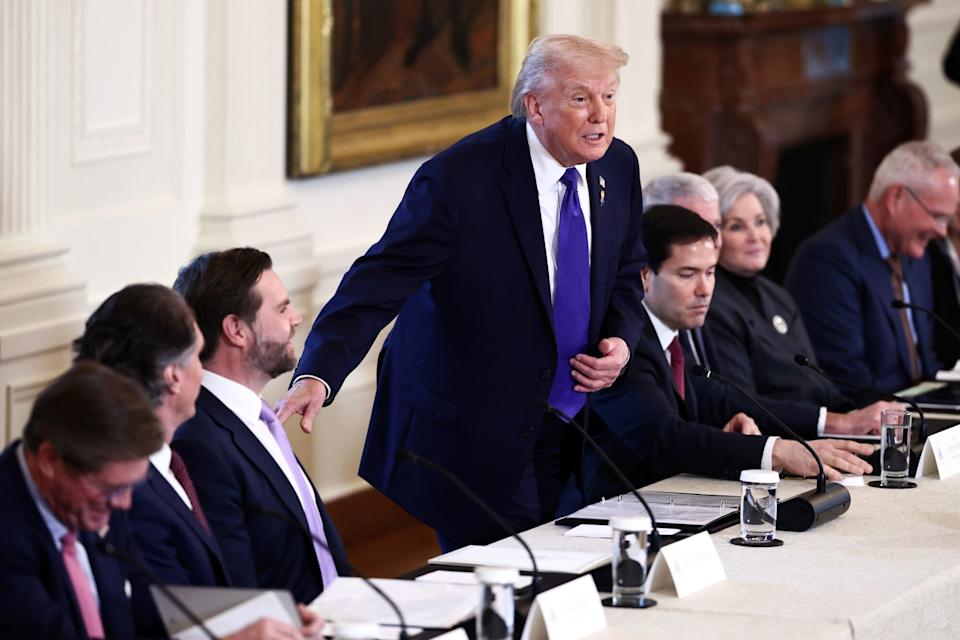
In the past six months, top executives from three large oil and metals traders have attended publicly documented meetings with the president at the White House — more than the total for the prior 25 years. Some major players have taken steps to quietly unpick key relationships with Chinese entities, which could attract negative attention from the US. One of the world’s largest oil traders even overhauled its ownership and leadership after the US Treasury described it as a “puppet” of the Kremlin.

The US government’s more muscular role in the resources sector is likely to loom large this week as commodity executives and financiers gather in Lausanne, Switzerland, for the industry’s main annual conference, the FT Commodities Global Summit.

For generations, the commodity traders stuck to the principle that their business should be apolitical, striking deals just as happily in capitalist America and communist China, apartheid South Africa or Vladimir Putin’s Russia. As Marc Rich, the industry’s godfather and founder of the company that is today Glencore Plc, told a journalist in 1992: “In our business we’re not political. We never have been.”

To be sure, it’s nothing new for the trading houses to do deals with governments or to be photographed meeting leaders of countries. But never before in modern history has the US government been such an important player in the commodities industry.

Whether it’s dealings with China, tariffs, or military action in major oil producers, a number of Trump’s key policies connect to natural resources and have seen everything from oil to soybean deals pushed to the front of the US national interest. That’s meant a growing reliance on the clutch of largely privately-held trading houses that dominate markets for agriculture, metals and energy.

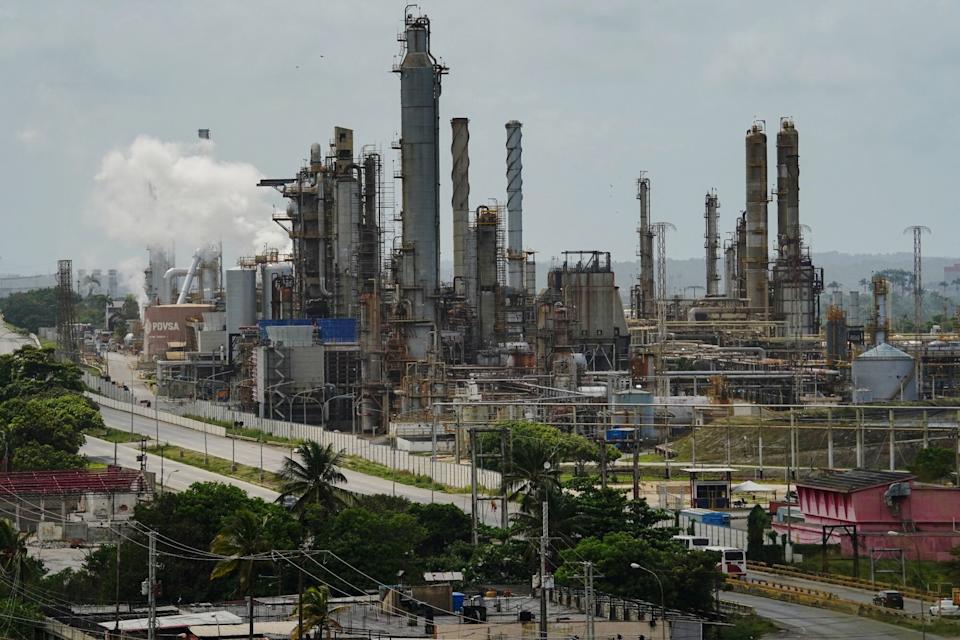
When the US needed oil to be lifted quickly out of Venezuela in the wake of a military operation to replace the country’s president, it called on Vitol Group and Trafigura Group to help. For its $12 billion national stockpile of critical metals, it has brought in Mercuria Energy Group, Traxys and Hartree Partners to source them.

“I think the industry evolves with its environment. In a world that’s increasingly becoming fractured and mercantile, the more transactional capabilities of the traders are back in demand,” said Wouter Jacobs, director of the Erasmus Commodity & Trade Center at Erasmus University in Rotterdam.

Proximity to the White House has paid off for some. Vitol and Trafigura bought Venezuelan oil from state-owned Petróleos de Venezuela SA at a steep discount to benchmark Brent crude under special licenses from the US Treasury. They are now selling it into a market rocked by the war in Iran where refineries are paying huge premiums to secure immediately available cargoes of crude.

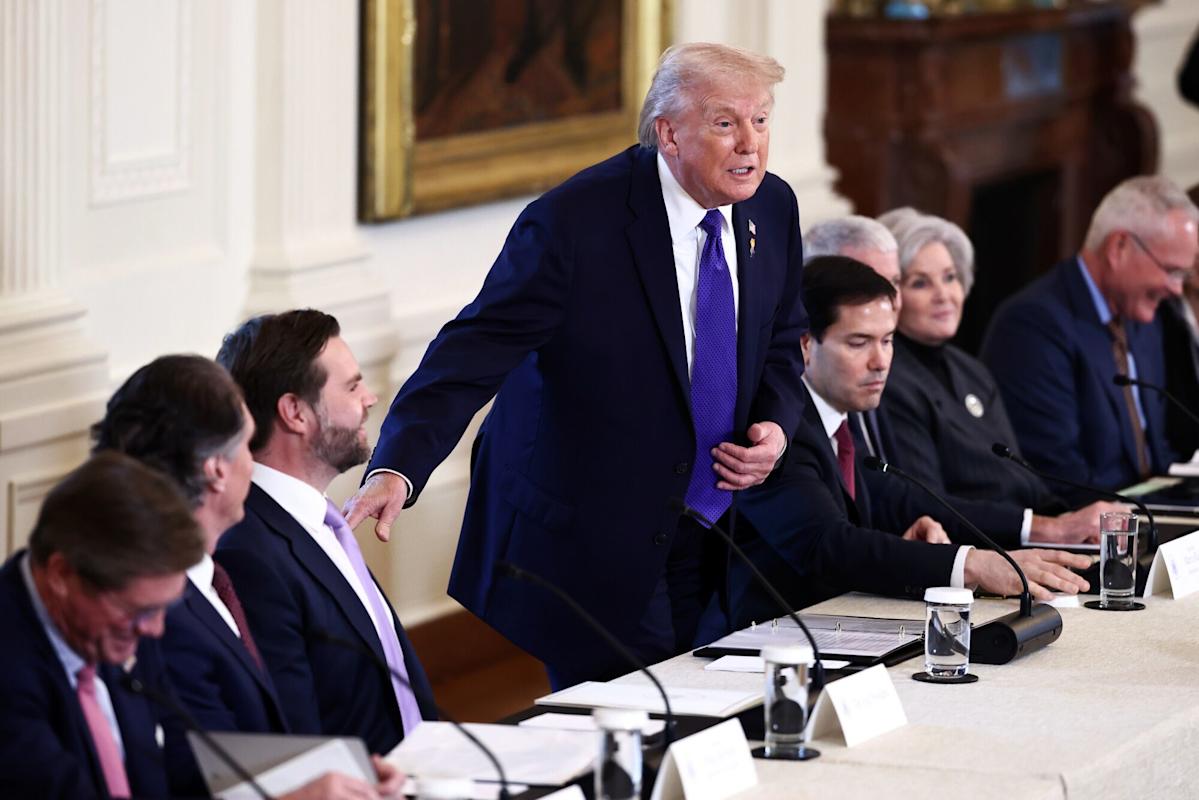
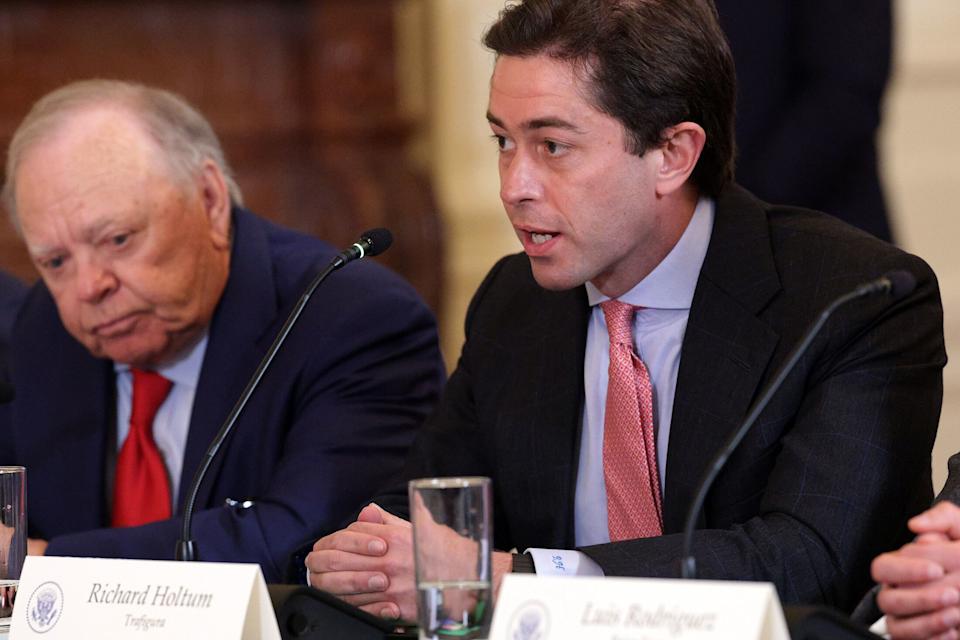
When Trump summoned oil executives to the White House in January, attendees included Trafigura Chief Executive Officer Richard Holtum and two senior Vitol executives — one of whom was a major Trump donor.

“It’s almost a feature of this US administration to make a show out of everything, putting business executives in front of the cameras,” Jacobs said. “It’s not always been that way in the past and usually the traders have preferred to stay out of the spotlight, but clearly they feel that the trade off is worth it.”

In metals, the White House has leaned on traders as it seeks to dislodge China from its dominant position in metals in central Africa, particularly in the Democratic Republic of Congo.

A Mercuria joint-venture was engaged to bring copper produced by CMOC Group Ltd.’s giant Tenke Fungurume mining project to the US. A US-backed fund has struck a preliminary deal to buy a minority stake in copper-cobalt mines in the country worth $9 billion from Glencore.

But Trump’s focus on commodities has also created headaches for the trading houses.

Vitol and Trafigura received letters from Congress demanding more information about their Venezuelan deals after executives from both traders attended a meeting with Trump at the White House.

The US government prompted the exit of the co-founder of one major commodity trader: after a social media post from the Treasury described Gunvor Group as “the Kremlin’s puppet,” the company announced its co-founder and CEO Torbjörn Törnqvist was leaving as part of a management buyout. Gunvor denied the US claim, and said at the time that its leadership transition had been long planned. Still, it acknowledged that “misperceptions about its past have become an impossible distraction.”

The most delicate issue is the trading houses’ relations with China, which, as the world’s largest consumer of almost every commodity, is their biggest customer. In the current climate, any close ties with Chinese entities risk creating problems with the US government.

Trafigura had held talks with Chinese supply chain conglomerate Xiamen ITG Group to form a joint venture to trade raw materials and finance commodity deals, Bloomberg reported in February, but has since abandoned the discussions, according to people familiar with the matter.

In response to questions, Trafigura confirmed that its discussions with ITG ended without a deal and said this was “for commercial reasons.” A representative for ITG didn’t immediately respond to a request for comment.

Mercuria has bought back shares owned by an entity linked to the Chinese state, in part to allow it to participate in US government-related deals, a person familiar with the matter said.

Jean-Francois Lambert, a consultant to the trading industry and a former commodity banker, said Mercuria’s move was a indication of the shifting geopolitical reality for traders.

“In a fragmenting geopolitical landscape, neutrality is a trading house’s most valuable asset,” he said.

—With assistance from Alfred Cang and Julian Luk.

Most Read from Bloomberg Businessweek

The $10 Billion Startup Training AI to Replace the White-Collar Workforce

India’s Computer Science Grads Are Unprepared for the AI Revolution

OpenTable Won Over the Wrong Customers, Then Changed Course

Quince’s Best-Kept Secret Isn’t Its Cheap Cashmere and Couches

Consulting Used to Be a Dream First Job. AI Changed That

©2026 Bloomberg L.P.
Comments
You must be logged in to comment.