yahoo Press
The future of Netflix is now
Images
1 / 6
2 / 6

3 / 6

4 / 6

5 / 6
6 / 6
The above button links to Coinbase. Yahoo Finance is not a broker-dealer or investment adviser and does not offer securities or cryptocurrencies for sale or facilitate trading. Coinbase pays us for certain activity generated through this link. Prices displayed are informational.

Netflix (NFLX) stock got hammered on Friday, falling 10%, as tends to happen when companies miss guidance for the current quarter.

But the strategic path that Netflix has taken to this moment — and the outline of the company's path ahead — reveals that the entertainment leader has fully entered a new era.

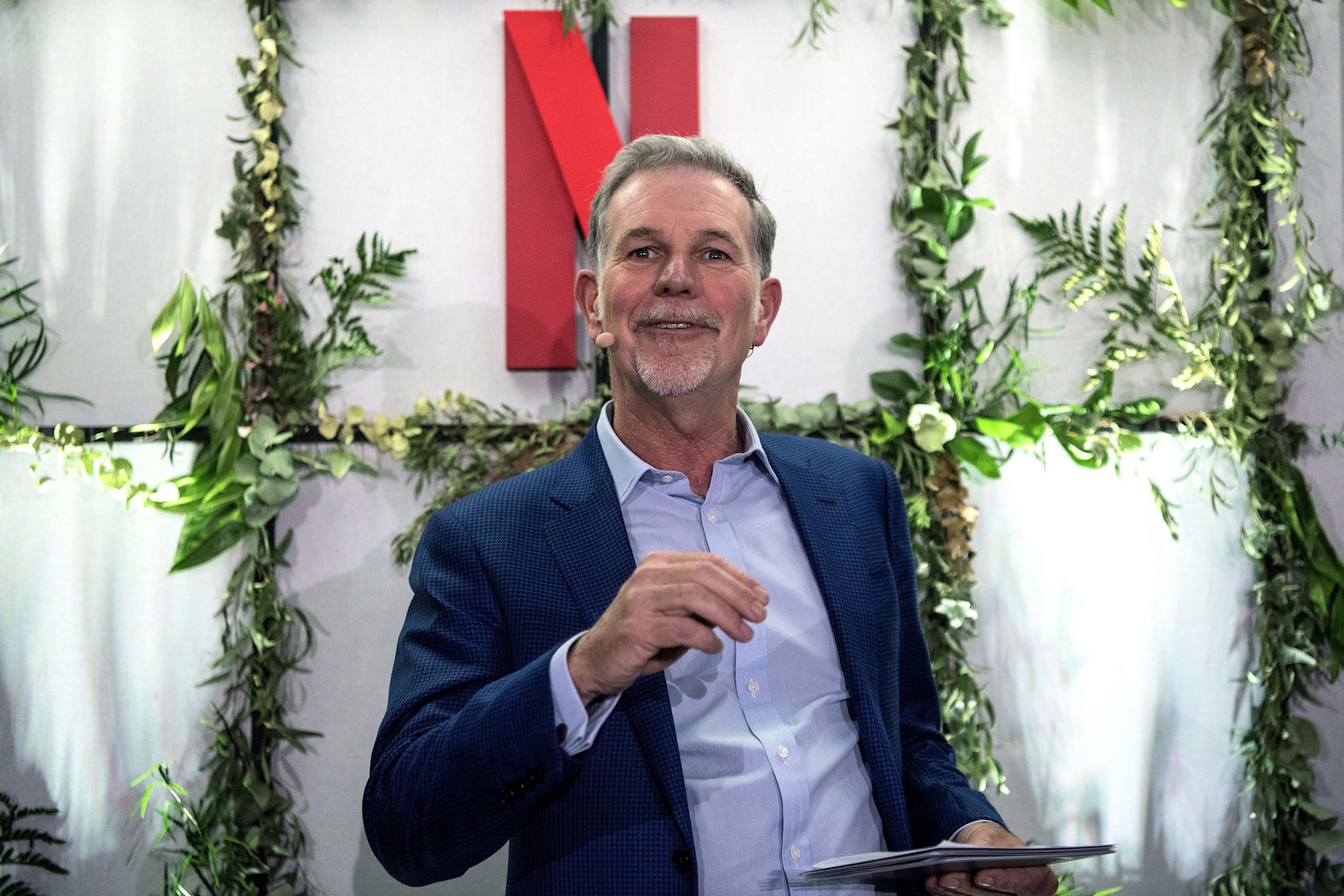
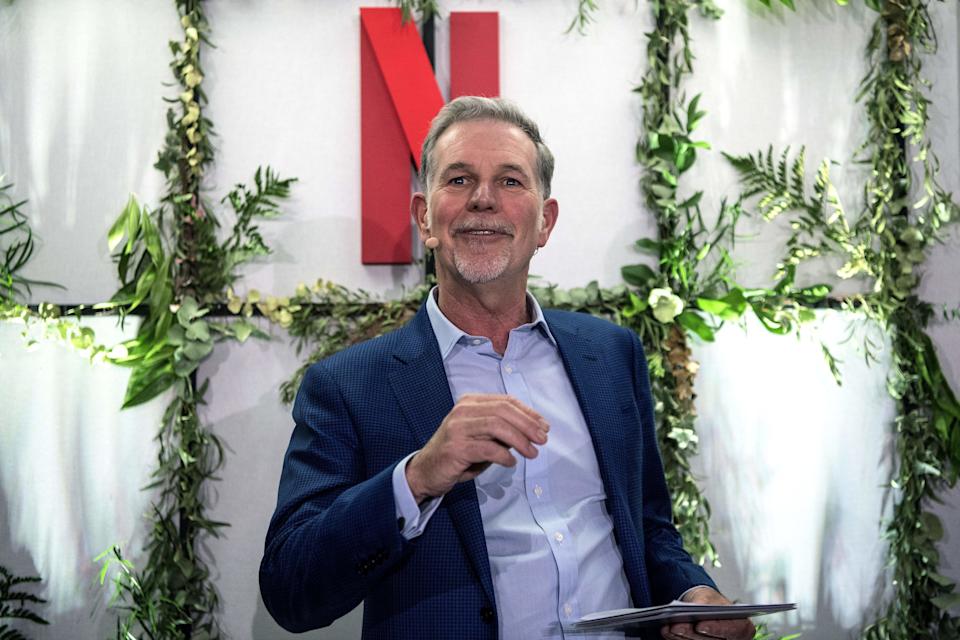
The obvious marker of the company's new era is who it will not be bringing along — co-founder Reed Hastings. Hastings announced Thursday he won't be standing for reelection to the company's board.

How Netflix characterizes its current initiatives, opportunities, and plans of attack are also significant markers of a company that has moved from an insurgency to an incumbency phase of corporate life. And is doing so by using some of the profitable tools once wielded by the incumbents it has since overtaken.

The biggest source of sign-ups in the company's first quarter was its ad-supported tier. For years, Netflix was adamant that not having ads was key to its experience. Now, the company boasts about launching "new products throughout 2026 to help advertisers assess the incrementality of their buys on Netflix, all verified by Netflix's trusted first-party data," adding, "Our improved capabilities are attracting many new advertising clients — we now work with over 4,000, up 70% year over year — and we continue to expect ~$3B in ad revenue this year, up 2x from 2025."

In its letter, Netflix also said that its mission "remains ambitious and unchanged: to entertain the world."

Rather than leaning mostly on a smattering of original content and a strong back catalog of hits from across the industry, Netflix now has original movies, shows, live events, games, and podcasts all on offer.

"We want to win more moments of truth," the company wrote, noting that "not all hours are created equal."

The company boasted that over 31 million people in Japan tuned in for the World Baseball Classic. The company has aired two NFL games on Christmas the last two years and is on the hunt for more. The brand has moved well beyond "Netflix and chill."

Netflix also made a protracted push to acquire Warner Bros. (WBD), eventually losing a bidding war to Paramount (PSKY).

Co-CEO Ted Sarandos said that during its pursuit of Warner Bros, "we really built our M&A muscle."

"And the most important benefit of this entire exercise, though, was that we tested our investment discipline," Sarandos added. "And when the cost of this deal grew beyond the net value to our business and to our shareholders, we were willing to put emotion and ego aside and walk away." Sarandos added that there is "no change" to Netflix's view on capital allocation after this exploration.

But exploring a deal of this size opens a sort of corporate Overton Window, where all future entertainment deals will have to consider Netflix as a potential part of the equation.

The company's peer set has also changed.

In the pre-pandemic bull market, the tech leaders that powered stocks to new highs were known as the FAANG stocks — Facebook (META), Apple (AAPL), Amazon (AMZN), Netflix, and Google (GOOG).

Today's version, the Magnificent Seven, includes four of these original names plus Tesla (TSLA), Nvidia (NVDA), and Microsoft (MSFT). Notably dropped from the group? Netflix.

Of course, Netflix talked at length on Thursday's earnings call about its use of technology, the opportunities it sees with AI, and so on. But in the 2010s, Netflix, Facebook, and Amazon were operating with a similar goal: acquire users to reshape the economics of entertainment, advertising, and shopping, respectively, for a digital age.

Today, two of them are known as "hyperscalers." One of them is the largest entertainment company in the world.

That Netflix has since been removed from the stock market's group of tech leaders is no knock on the company. Rather, it is a sign of how the company's competitive opportunity has evolved. An evolution that brings Netflix's large, global audience into contact with a growing number of monetization paths.

"The entertainment industry remains extraordinarily vibrant and intensely competitive," Netflix wrote in its shareholder letter on Thursday. "We believe we have meaningful advantages as we strive to become a must‑have service for consumers: a strong global brand, a wide range of high‑quality programming, a best‑in‑class product experience, and a frequent role at the center of culture," the company continued.

"In such a dynamic environment, we’ve learned that the best thing we can do is get better faster than the competition."

The tech analyst Ben Thompson is best known for his idea of Aggregation Theory, which says, in short, that the economics of the internet make it such that gathering the most demand for a product — rather than controlling the supply of a product — creates the opportunity to reap the highest profits.

Asked years ago in an interview about which company he'd learned the most from studying, Thompson said Netflix.

"In every step, [Netflix has] been ahead of their competitors and their suppliers and have gotten superior deals because they understand how the internet works in the way that's fundamentally flipped so many assumptions on their head," Thompson said.

That primacy is how the company got here. For Netflix in 2026, the future is now.

Click here for in-depth analysis of the latest stock market news and events moving stock prices

Read the latest financial and business news from Yahoo Finance
Comments
You must be logged in to comment.