bbc Press
Faisal Islam: What people in power think the impact of the Iran war will be
Images
1 / 8

2 / 8
3 / 8
4 / 8
5 / 8
6 / 8
7 / 8
8 / 8
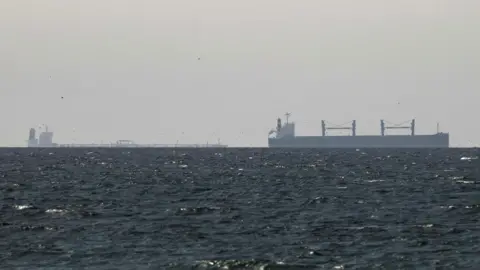
The two centres of this crisis are the 24-mile Strait of Hormuz south of Iran and 7,000 miles away in the White House.

This week was the unique opportunity for the rest of the world to make its economic case to US President Donald Trump's administration directly at the Spring meeting of the International Monetary Fund (IMF) and World Bank – taking place in Washington DC just down the road from the White House.

The sense I got speaking to the majority of G7 finance ministers, some central bankers, and some of the world's top financiers was unhappiness about the rest of the world picking up the inadvertent but predictable costs of the US's decision to go to war.

It was the Chancellor Rachel Reeves who was especially vocal on the "folly" and "mistake" of war "which is not ours".

The meetings of finance ministers such as the G20 breakfast were sombre affairs. According to participants, the United States was the only voice in the room projecting short-term confidence.

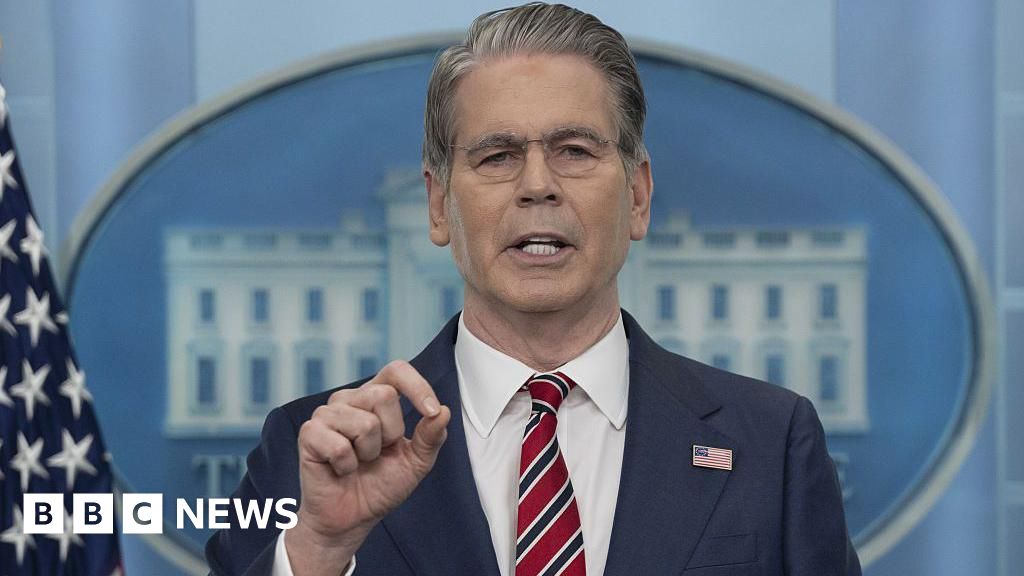
Asian financiers in particular displayed clear worry "about real shortages of energy," according to those in the room. Shortly after multiple concerns were expressed around the breakfast table, US Treasury Secretary Scott Bessent popped up on US financial TV to say there was nothing to worry about. Markets and the economy would recover fast, he said.

However, the Canadian finance minister François-Philippe Champagne, who was present at all the key meetings and has been at the sharp end of dealing with Trump's tariff war, had a different take.

"Geography doesn't change. People don't change that much either, so that is going to be a risk in terms of world energy that we'll have to manage for years to come, even when the conflict is over," he said.

Kristalina Georgieva, IMF managing director told me, the world faced a "slower moving shock" while the World Bank's president Ajay Banga told me about the impact on economically poorer countries.

Iraq is not shipping or producing oil, which is normally responsible for 85% of revenues. Bangladesh, with significant household needs for gas for cooking, is cut off from Middle East suppliers. And Pacific Island nations with little energy storage are waiting for tankers and container ships at the end of very long shipping routes. These are just some real examples of extreme supply-chain fragility exposed by the stoppage in the Strait.

In response, the World Bank has readied support funds of up to $100bn (£74bn) – more than for the Covid lockdowns – to help economically poorer countries deal with rising energy and food costs.

Speaking before Iran said it would temporarily reopen the Strait, Georgieva warned: "March was a tough month, but April is likely to be even tougher."

"Why? Because the tankers that left by 28 February have reached their destinations, and there are no new deliveries coming… A tanker is a slow-moving vessel. It would take 40 days to get all the way to Fiji."

Despite the promising developments on Friday, the countdown clock for world food prices is very much ticking. Urea, the key input for fertiliser, has doubled in price. While countries in the north of the world are planting food now, the problem for global food availability could come in June to July.

Banga said: "The real problem will be, if fertiliser is not available three months from today, and we reach the planting season of the non-northern countries, then we start getting into a difficult cycle on food availability.

The Trump Administration's response to all of this was two fold: the war will be over soon and the gain is worth the pain.

The Willard Hotel, just across from the US Treasury Building, is the institution where the phrase "lobbying" was invented. And the rest of the world was here to exert some diplomatic pressure to avoid an economic disaster. Bessent was holding court with a few members of the press, including myself.  What did he make about the concerns in the IMF forecast about the Iran War causing a rare global recession?

"I wonder what the hit to global GDP would be if a nuclear weapon hit London," he told me.

"I am less concerned about short-term forecasts for long-term security… a small bit of economic pain for a few weeks is worth taking off the incalculable tail risk."

I asked him to clarify exactly what he meant and he pointed to the Iranian launch at Diego Garcia. Bessent was also bullish about the US blockade on Iran whose ships "shall not pass" he said. At the same time he was bullish about negotiations with Iranians who could credibly speak for all arms of the Iranian leadership.

The French finance minister Roland Lescure had just had a private meeting with Bessent when I met him.

"I'm not going to tell you everything I'm telling them, but the Strait is the knot of this crisis and it needs to be unknotted. This is costing us all," he told me.

Pointedly, he said that the US was also feeling the pinch in terms of higher gasoline prices. The Iranians, he said, were using the economic damage as leverage. "This is their weapon of deterrence," he added.

By contrast, he believes that French domestic energy prices will not go up much.

"In the 70s when there were oil shocks, 90% of [French] energy was coming from hydrocarbons. It's now 60%. We're using the crisis to double down and invest even more in nuclear and renewables."

For UK Chancellor Rachel Reeves there was also a change in energy policy. She is now looking at trying to maximise production from existing North Sea fields through "tie backs" and enact a radical reform to break the link between electricity prices and rising gas prices. New proposals are expected in days.

Despite the issues the UK faces, the Governor of the Bank of England Andrew Bailey was pretty clear to me that the Bank shouldn't rush to raise interest rates to combat higher inflation from the war. The way to deal with inflation was de-escalation, he said.

The war was not the only talking point. There are other clouds on the horizon – from concerns about private credit to AI cybersecurity vulnerabilities created by Anthropic's Mythos model.

"The Strait of Hormuz, we know where it is, and we know how large it is. The issue that we're facing with [Mythos] is the unknown, unknown," said Canada's finance minister Champagne.

When I spoke to Barclays chief executive C.S. Venkatakrishnan, the Gulf crisis was only number three in his list of concerns. The first was "whether there has been an overbuilding in technology and AI".

"The second is what's going on in private credit and the liquidity issues. And third, of course, is what's going on in the Middle East," he said.

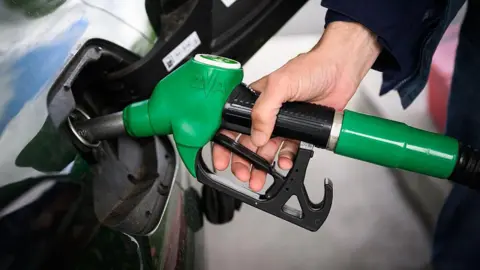
While there is still much uncertainty from the Gulf, the clouds are less dark now, allowing some to focus on other concerns. Reeves could even be hopeful after growth figures showed the UK on course for 0.5% to 0.6% growth in the first quarter. As news emerged yesterday of the reopening of the Strait, energy prices tumbled. So too did borrowing costs, petrol prices, and mortgage rates.

Everyone here in Washington DC is daring to believe the crisis has peaked. The consequences if it has not are dire.

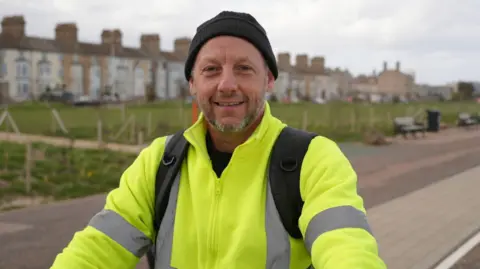
One man says he cancelled his holiday to Spain due to the rising costs and uncertainty.

Brent crude sinks by a tenth after Iran says the key waterway is open for commercial ships for the rest of the ceasefire.

US President Donald Trump welcomed Tehran's announcement but said the US naval blockade would continue until a peace deal was reached.

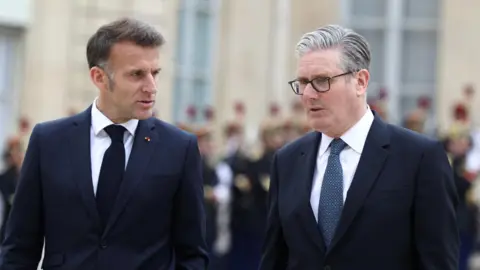
Sir Keir Starmer has said further details of the plan will come after a meeting in London next week.

Some kind of diplomatic progress is now under way, but is it enough to prevent a return to war?
Comments
You must be logged in to comment.