yahoo Press
Scientists decipher the geological history of the Grand Canyon
Images
1 / 13
2 / 13

3 / 13

4 / 13

5 / 13

6 / 13
7 / 13
8 / 13
9 / 13
10 / 13

11 / 13

12 / 13

13 / 13
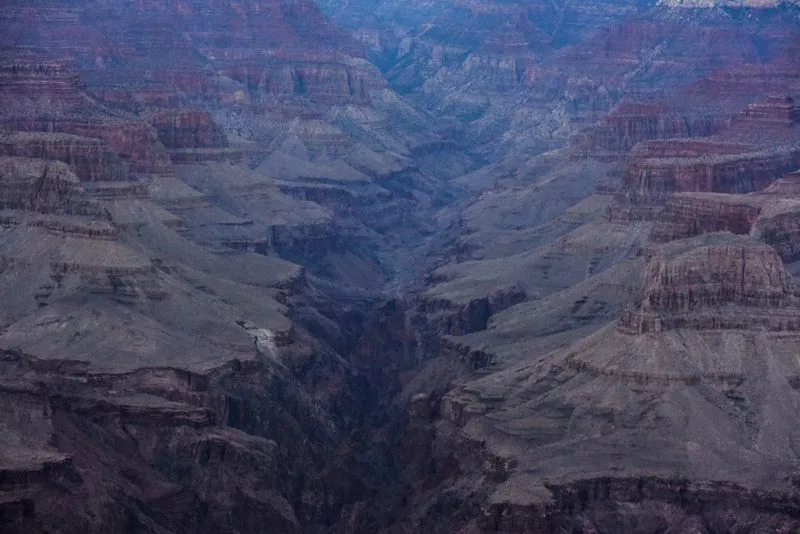
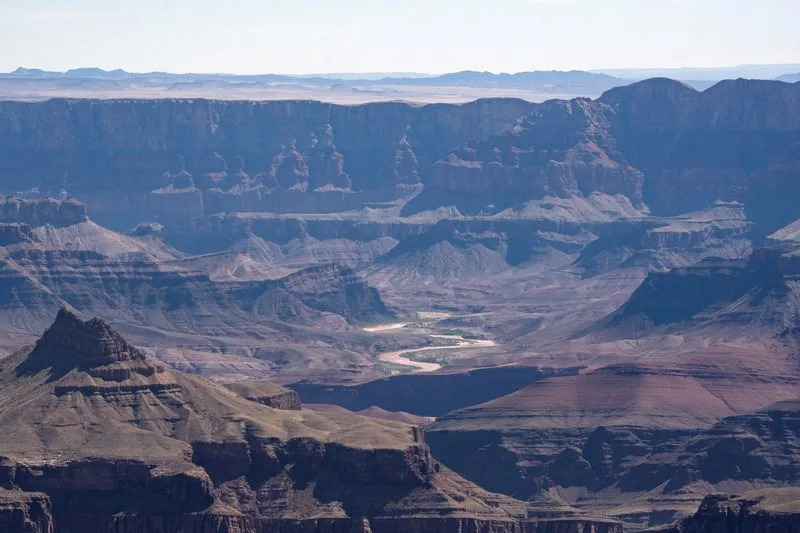
By Will Dunham April 17 (Reuters) - The Grand Canyon is a marvel on the landscape of North America, a breathtaking geological feature in the southwestern U.S. state of Arizona presenting dramatic contours and richly colored vistas. Research is now providing insight into how and when the Colorado River, whose continuous might has carved out the canyon over millions of years, came to flow through the region. By studying tiny grains of the mineral zircon in sandstone made up of sediments carried by the river and particles of ash from volcanic eruptions long ago, the researchers managed to trace paths that the river took in the past. The study indicated that the river, around 6.6 million years ago, began to flow into a large depression in the Earth's surface, called a basin, in northeastern Arizona, forming a wide and shallow lake east of where the Grand Canyon later took shape. The lake water built up over time and eventually spilled over a low point on the lakeshore starting around 5.6 million years ago, sending it coursing through the region that became the Grand Canyon, the researchers found. The river then filled and spilled through another series of basins downstream from the Grand Canyon, ultimately reaching the Gulf of California about 4.8 million years ago, emptying into the sea at a spot in northwestern Mexico, they found. The lake, which may have reached a width of more than 90 miles (150 km), has long since disappeared. The researchers have informally called it Bidahochi Lake based on the name of a local geological formation. It was situated largely on what is now the Navajo Nation reservation. "Scientists have long debated when the Grand Canyon was carved, and our study contributes to that conversation," said UCLA geologist John He, co-lead author of the study published this week in the journal Science. "Imagine you go out to a river bank and scoop up a handful of sand. In that handful, there are hundreds of thousands of sand grains that look like any other sand grain. But within that handful there will be a couple of hundred or even thousands of microscopic grains of zircon crystal, each of which is a vault of information about where it comes from," He said. The dating of the ash helped determine when the riverine sand beds bearing the zircons were deposited. The Colorado River originates at La Poudre Pass in Rocky Mountain National Park in Colorado and runs about 1,450 miles (2,330 km). "A longstanding question has been: where did the Colorado River go before it flowed through Grand Canyon?" said study co-lead author Ryan Crow, a research geologist at the U.S. Geological Survey in Flagstaff, Arizona. "We have long known that the river existed in western Colorado 11 million years ago, and that it did not (run through) Grand Canyon until after 5.6 million years ago. But until now we knew almost nothing about where it was during the intervening time," Crow said. Other geological mechanisms also may have helped shape the river's routing, Crow said. The Grand Canyon, whose walls reveal sedimentary and volcanic rock formed up to 1.8 billion years ago, is about 280 miles (450 km) long, up to about 18 miles (29 km) wide and up to more than a mile (6,100 feet or 1,860 meters) deep. "Past work shows that over the last million years the Colorado River has been carving into rock at an average rate of about 100 meters to 160 meters (330 to 525 feet) per million years, so the process of canyon carving continues. The canyon we see today is the result of about five million years of river incision and erosion," Crow said. The canyon continues to inspire awe. "Grand Canyon, a natural wonder of the world, captures the attention and curiosity of almost everyone that sees it. People relate to it in different ways. But I think many, even those who rarely think about geology, have similar questions when they see Grand Canyon. How did the canyon form? When did the canyon form? Those are questions we strive to answer," Crow said. "The architecture of the planet is so exposed, laid bare in front of us," He said of the canyon's walls. "There is something disquieting about this, being challenged to envision the millions of years of geologic time by the solidity of a towering wall of rock." (Reporting by Will Dunham in Washington, Editing by Rosalba O'Brien)
Comments
You must be logged in to comment.