huffpost Press
Religion Experts Analyzed Trump's Comments About Pope Leo — And A 'Bizarre' Accusation Stands Out
Images
1 / 9

2 / 9
3 / 9
4 / 9
5 / 9
6 / 9
7 / 9
8 / 9

9 / 9
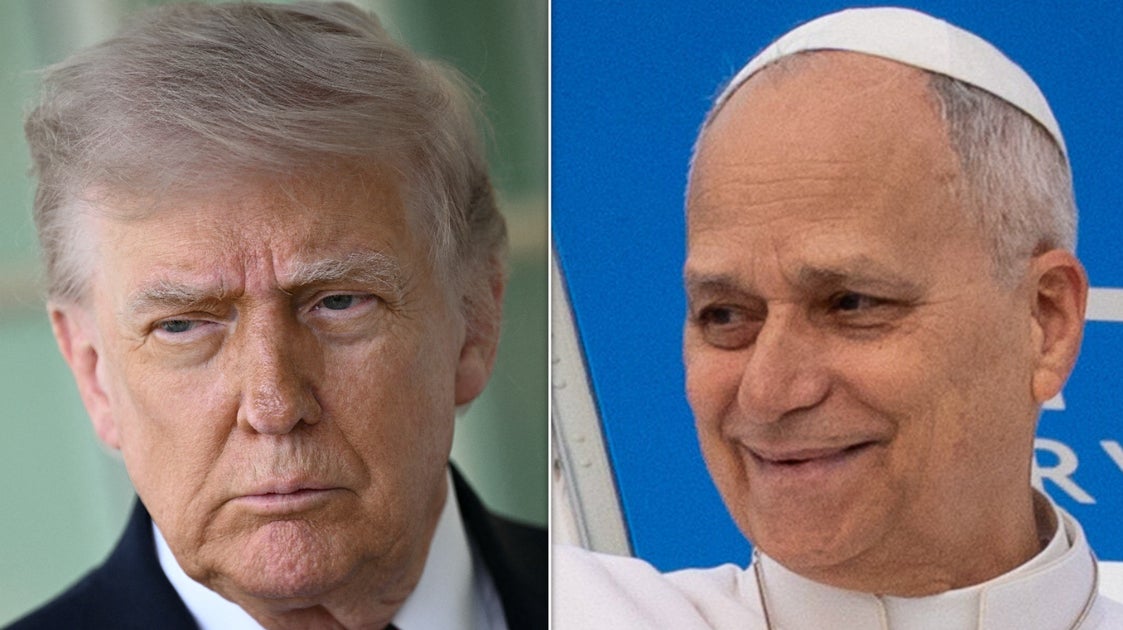
Experts in Catholicism and religious studies are still grappling with President Donald Trump’s recent attacks against Pope Leo XIV, including one particularly “undignified” accusation that Trump has leveled against the pope: That Leo “likes crime.”

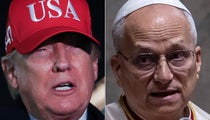
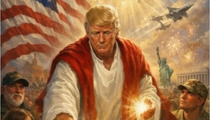
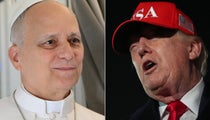
Trump was widely condemned after he attacked Leo in a lengthy Truth Social post on Sunday night, calling the pope “WEAK on Crime” and “terrible for Foreign Policy.” The president also claimed that the pope feared the Trump administration, and that the first U.S.-born pope in history was only selected because “they thought that would be the best way to deal with President Donald J. Trump.”

“Leo should get his act together as Pope, use Common Sense, stop catering to the Radical Left, and focus on being a Great Pope, not a Politician,” Trump added.

Trump’s rant about the pope was published on Truth Social after the broadcast of a “60 Minutes” segment that featured three American cardinals discussing the pope’s notably more direct tone in his recent statements speaking out against the U.S.-Israeli war in Iran.

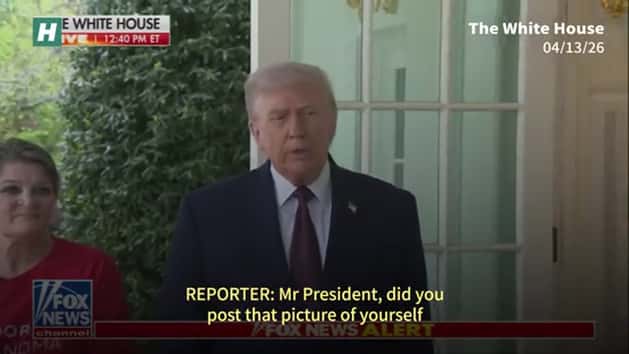
Trump continued his attacks on Leo, subsequently telling reporters on Sunday night that he believes the pope “likes crime.”

“I don’t think he’s doing a very good job, he likes crime, I guess,” he said, before adding, “he’s a man that doesn’t believe in stopping crime.”

Last week, the pope referenced Trump’s threats to erase Iran’s entire civilization, and said it was “truly unacceptable.”

He also called on “all people of good will to search always for peace and violence,” and he invited people to contact their local political leaders to encourage them to “work for peace and to reject war always.”

During a prayer service in St. Peter’s Basilica on Saturday, Leo did not mention Trump by name, but he spoke about the “delusion of omnipotence that surrounds us” and how it has destabilized the “balance within the human family.”

Leo responded to questions about Trump’s Sunday night attacks, telling reporters on a flight to Algiers on Monday that he has “no fear of the Trump administration.”

“The message of the church, my message, the message of the Gospel: Blessed are the Peacemakers. I do not look at my role as being political, a politician,” he said. “I don’t want to get into a debate with him. I don’t think that the message of the Gospel is meant to be abused in the way that some people are doing.”

“I will continue to speak out loudly against war, looking to promote peace, promoting dialogue and multilateral relationships among the states to look for just solutions to problems,” he added, according to Reuters.

“It’s so all undignified,” said Robert Orsi, professor of religious studies and an expert on American Catholicism at Northwestern University.

Orsi told HuffPost that the president’s attacks are so “horrible” that they are hard to rationalize.

“Certainly, it makes no sense to call any pope soft on crime,” he said. “I have no idea what that means.”

Orsi believes that, if anything, Trump appears to be “repurposing a 1960s/1970s Republican talking point against all of his opponents.”

“‘Soft on crime’ was a major talking point of the Nixon administration,” he said, later adding, “He seems literally to be repurposing an old Republican talking point — as an attack on the pope! It simply makes no other sense.”

Peter Casarella, professor of theology and executive director of the Fons Vitae Catholic initiative at Duke Divinity School, said he was “puzzled” by Trump’s accusation that the pope “likes crime,” since Leo is “legitimately worried about the possibility of war crimes being committed.”

“I think he might be trying to turn the tables on the Pope by appealing to the concerns that Pope Francis and Pope Leo have raised many times about the inhumane treatment of migrants and the separation of families at the border,” he told HuffPost. “Trump’s bizarre argument, if I understand it, is that he can offer a form of security to the American people by sending criminals back across the border, and a Pope ‘who likes crime’ will take that security away.”

“The obvious problem is that no Pope has ever said that criminal behavior is fine or that borders should be eliminated,” he continued. “Neither of those positions are in line with the teachings of Christ or of the Church.”

Deepak Sarma, inaugural distinguished scholar in the public humanities at Case Western Reserve University, called Trump’s recent remarks about the pope “blatant attempts at gaslighting — a default strategy in his pattern of rhetorical mischaracterization.”

Sarma, who received a Ph.D. in the philosophy of religions at the University of Chicago Divinity School, told HuffPost that Trump claiming that Leo is “weak on crime,” among other accusations, “falsely attributes such beliefs and orientation to him and is irrelevant, if not malicious and borderline defamatory.”

“While his gaslighting and misrepresentations have worked for many of his MAGA disciples and cult members, it has had the opposite effect on his Catholic supporters, who now are seeing through Trump’s masquerade,” they added, citing to a recent poll that showed that Trump’s support from Catholics dropped below 50%.

Despite Trump’s frustrations with Leo speaking out against war and his calls for peace, Sarma emphasized that “the Pope’s desire for world peace is not only consistent with Catholic/Christian doctrine but is also surprisingly consistent with the desires of atheist, non-Catholic, non-Christian liberals.”

Sarma said it’s normal for a pope in the modern era to address global issues, and that perhaps Leo’s more prominent responses may have to do with the fact that he was born in the U.S. “It is more than likely that being American-born has made him even more aware of the complexities and more likely to condemn,” they said.

“In contrast to Trump, the Church places a high value on human dignity, the protection of civilians, especially vulnerable ones, and skepticism of modern warfare,” they later continued. “The pope has had to reassert and reclaim the Catholic beliefs (Catholic just war doctrine) and that God does not side with military campaigns.”

“It is indeed a duty of the pope to appear for global peace, given Catholic beliefs and given that he perceives a global humanitarian crisis, and not merely a geopolitical one,” they added.

Casarella said that a key part of the just war doctrine is “the principle of maintaining a proportional response in war that avoids civilian casualties is a key part of that doctrine.”

“The reports of civilian casualties in Iran and the threats to destroy a civilization cannot be squared with this tradition,” he said. “Pope Leo has no recourse but to defend a very old tradition of moral thought that is found in the Church and that remains relevant today.”

Casarella emphasized that the modern papacy is “about the call for peace.” He cited Pope Benedict XVI as an example, who he said chose the name Benedict in part in honor of Pope Benedict XV who called for peace at the time of World War I.

Indeed, Orsi emphasized that Trump’s “open assault” on the papacy is “really unprecedented in the modern era” — and that it’s common for popes to call for peace. He referenced Pope Paul VI who called for the end of the Vietnam War.

“Jesus was a figure of peace. And he did say ‘Blessed are the peacemakers,’” Orsi said. “And so the whole Gospel is rooted in peace and love. It is a message of love. So that is the pope’s mission, to speak from Jesus’ message of love and peace.”

“There is nothing unusual about this,” he continued.

Orsi also emphasized that based on Catholic theology, it’s important to note that when the pope speaks, he “speaks not for himself, but for all Catholics” — and that even when he’s specifically referencing Trump’s war in Iran, he’s making a global message nonetheless.

“I think it’s also him alerting Catholic authorities all over the world that they too need to commit themselves to peace ... and not to be afraid,” he said.

By entering your email and clicking Sign Up, you're agreeing to let us send you customized marketing messages about us and our advertising partners. You are also agreeing to our Terms of Service and Privacy Policy.
Comments
You must be logged in to comment.