yahoo Press
As investors await SpaceX's IPO, Elon Musk's aerospace company reportedly lost $5 billion last year over AI spending
Images
1 / 4
2 / 4

3 / 4

4 / 4
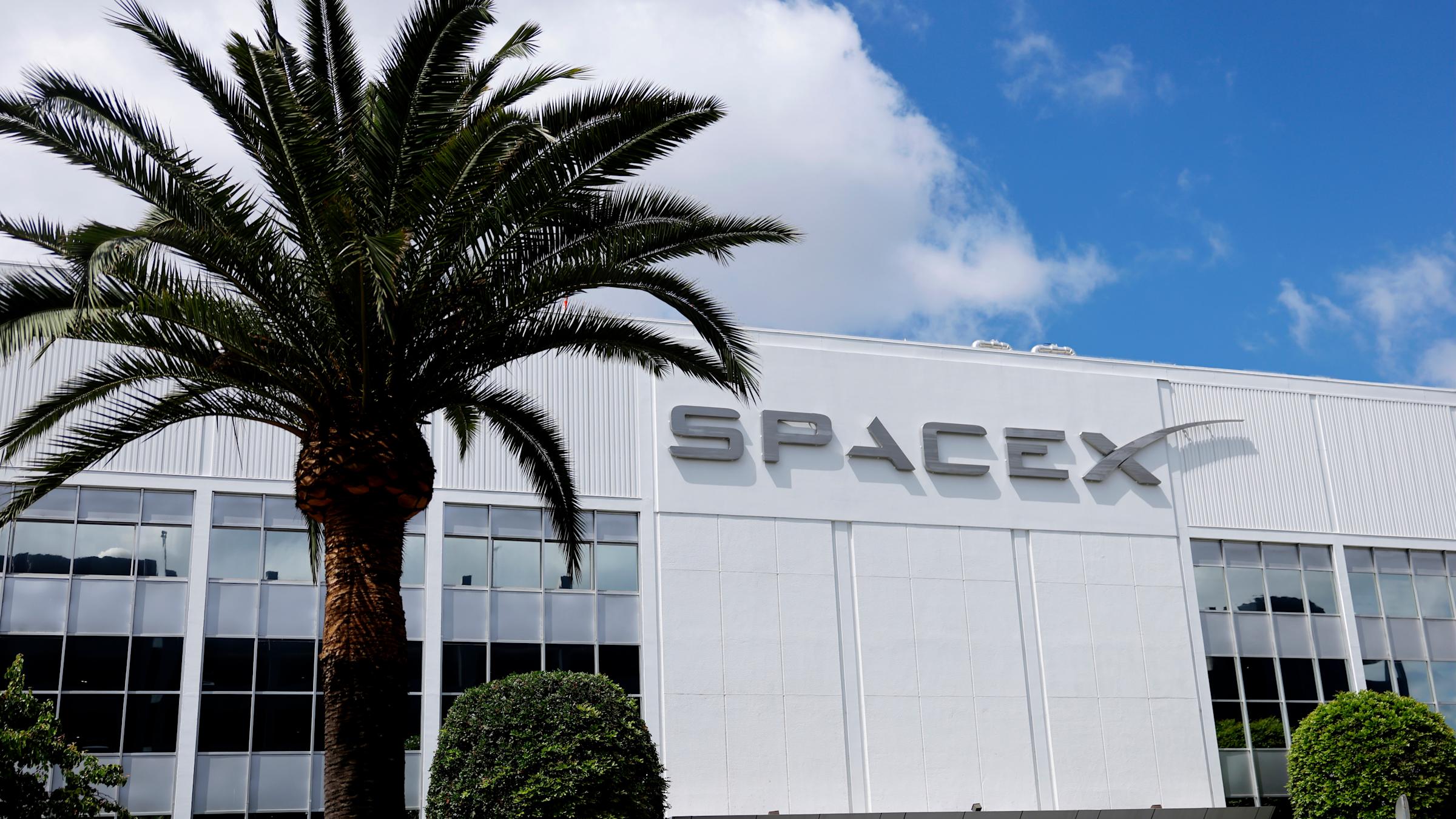
SpaceX (SPAX.PVT) is gearing up for what could be the largest IPO in history. It also just so happened to recently report nearly $5 billion in losses. Those two things can be true at the same time, and it tells you a lot about what you'd be buying into if you add SpaceX to your portfolio this summer.

On Thursday, The Information (1) reported Elon Musk's SpaceX lost almost $5 billion in 2025 (2) despite generating more than $18.5 billion in revenue. Reuters confirmed the report, though it noted it could not independently verify the numbers and SpaceX did not respond to a request for comment.

Thanks to Jeff Bezos, you can now become a landlord for as little as $100 — and no, you don't have to deal with tenants or fix freezers. Here's how

Robert Kiyosaki this 1 asset will surge 400% in a year and begs investors not to miss this ‘explosion’

Taxes are going to change for retirees under Trump’s ‘big beautiful bill’ — here are 4 reasons you can’t afford to waste time

Reuters reported in January that SpaceX generated roughly $8 billion in EBITDA (3) — earnings before interest, taxes, depreciation and amortization — on revenue of $15 billion to $16 billion in 2025. If true, the company went from being one of the most profitable aerospace businesses in history to posting one of the largest losses in its own history in the span of a single year.

The culprit, according to The Information's reporting, is xAI: Elon Musk's artificial intelligence company, which SpaceX acquired in an all-stock merger (4) in February 2026.

The financial figures for 2025 include xAI's costs, even though the merger wasn't finalized until this year.

Internal documents from January show that xAI spent $7.8 billion in just the first nine months of 2025 — burning through roughly $28 million a day on average (5) — with losses widening every quarter. By Q3 2025, xAI's net loss alone had reached $1.46 billion.

Elon spent that money building data centers, hiring engineers and developing AI software, with the ultimate goal of powering Tesla's (NASDAQ: TSLA) humanoid robot, Optimus. But for now, it's an expensive bet.

Read More: How to apply Dave Ramsey’s 7 Baby Steps to your own life

Investors are looking right past the losses and there's a logic to that even if the numbers seem unsettling.

SpaceX confidentially filed for a US IPO with the SEC (7) on April 1, 2026, targeting a June listing on the Nasdaq (8). The company is seeking a valuation of $1.75 trillion and aims to raise around $75 billion, which would make it the largest IPO in history by a wide margin — Saudi Aramco's $29 billion debut in 2019 currently holds that record.

The valuation is primarily anchored by Starlink, SpaceX's satellite internet business, which ended 2025 with 9.2 million subscribers (9) and more than $10 billion in revenue. Analysts project Starlink alone could generate between $15.9 billion and $24 billion in revenue by the end of 2026.

That's the growth story investors are bullish about. SpaceX also controls roughly 60% of all orbital launches globally and holds major contracts with NASA and the Pentagon, so there are losses, but the core business isn't broken.

The debts and liabilities from xAI are technically kept separate from SpaceX's core business through what's called a "triangular merger" (6) structure, which allows xAI to operate as a subsidiary and keep its debts, liabilities and contracts legally separate from SpaceX's business.

In theory, this means xAI's burn rate can't directly sink SpaceX — the two entities are legally distinct although they're operationally combined.

When xAI's losses are consolidated into SpaceX's results — as they were for the 2025 numbers — it looks like both entities are burning through cash. That's what's showing up in The Information's report and it's what potential IPO investors will need to sit with.

The market, at least so far, has decided the upside outweighs the risk. SpaceX's valuation has surged to $1.75 trillion, from $800 billion in December 2025 and $1.25 trillion after the xAI merger in February. The company added nearly a trillion dollars in paper value in under six months. That's remarkable.

If you're thinking about buying in when SpaceX goes public, a few things are worth keeping in mind.

First, access. SpaceX is reportedly allocating around 30% of IPO shares (9) to retail investors — roughly three to six times what is typical in Wall Street. On a $75 billion raise, that's about $22.5 billion worth of shares available to ordinary buyers through brokers like Robinhood.

Heads up though, demand's probably going to be way higher than supply and if the shares are 10-20x oversubscribed, you'll probably only snag a slice of what you want.

Second, the valuation math. At $1.75 trillion, you'd be paying about 56 times SpaceX's 2025 revenue (7) (over $18.5 billion) or 109 times its EBITDA, even if you are super-optimistic about its growth. That's a lot, considering that even Nvidia, at its wild AI peak, traded at 15-20x revenue, making SpaceX is even more aggressive with its ask. Retail folks could end up buying high into hype that crashes if Starlink or xAI stumbles.

Third, the losses don't disappear at listing. The $5 billion figure, whether it's attached to xAI or not, is still real. The subsidiary is still burning roughly $28 million a day. And until SpaceX can translate that spending into revenue, either through Grok's commercial growth or the orbital data center thesis, xAI is still dragging SpaceX.

SpaceX is a genuinely impressive company with a profitable core business. The $5 billion loss is a consequence of Musk betting big on AI at a time when the whole industry is spending aggressively to build infrastructure. Whether that bet pays off — and whether the IPO valuation leaves any room for the stock to grow after listing — is the question every prospective buyer will have to answer for themselves.

Dave Ramsey warns nearly 50% of Americans are making 1 big Social Security mistake — are you doing the same?

BlackRock warns buying and holding the S&P 500 isn’t enough for retirement. Why they’re saying this approach could provide a ‘paycheck for life’

Robert Kiyosaki issues grim warning for baby boomers: many could be ‘wiped out’ and homeless ‘all over’ the country

Turning 50 with $0 saved? Good news, you’re actually entering your prime earning years. Here are 6 ways to catch up fast

Join 250,000+ readers and get Moneywise’s best stories and exclusive interviews first — clear insights curated and delivered weekly. Subscribe now.

We rely only on vetted sources and credible third-party reporting. For details, see our ethics and guidelines.

The Information (1); Reuters (2,4); Yahoo Finance (3,8); TradingKey (5); LinkedIn (6); BNN Bloomberg (7); US Reporter (9)

This article originally appeared on Moneywise.com under the title: As investors await SpaceX's IPO, Elon Musk's aerospace company reportedly lost $5 billion last year over AI spending

This article provides information only and should not be construed as advice. It is provided without warranty of any kind.
Comments
You must be logged in to comment.