yahoo Press
Three Energy Stories That Actually Matter Right Now
Images
1 / 4
2 / 4

3 / 4

4 / 4
If you are looking for respite from news of bombings, threats to ancient civilizations, becalmed oil tankers, rising prices, disputes about who can go to which toilets, and sex scandals among the rich and famous, consider these stories that matter for energy folk who would have otherwise noticed but might have been distracted by all the other stuff.

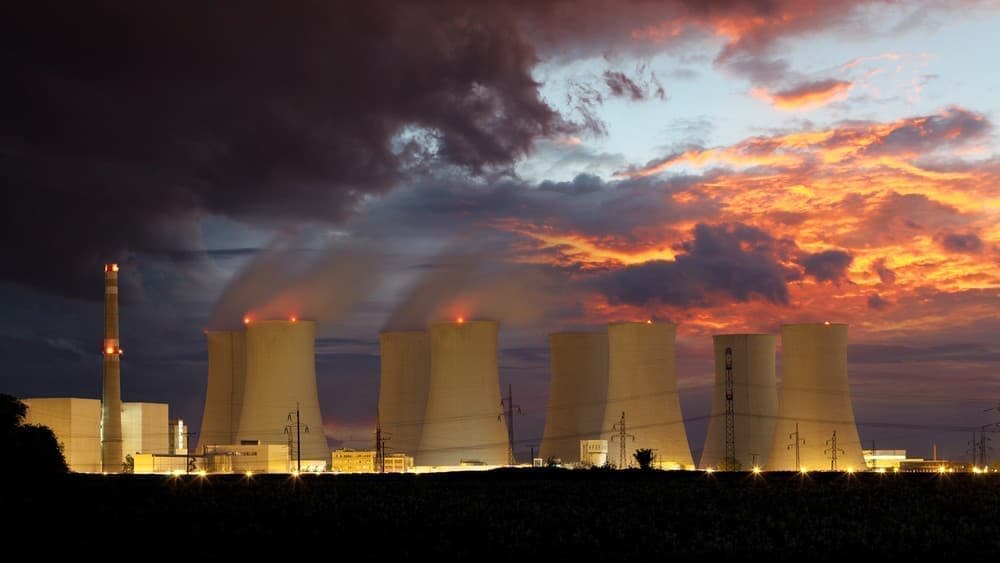
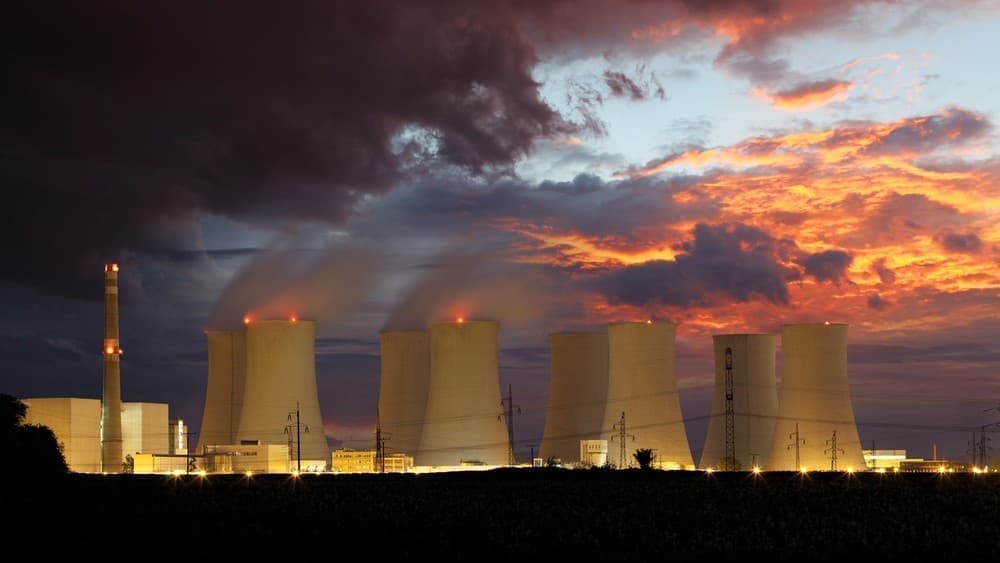
Nuclear reactor price—As part of the tariff dispute last year, Japan was strong-armed into announcing billions of dollars of new investments in the USA. As part of the deal, GE Hitachi will partner with the Tennessee Valley Authority, a federal government-owned utility, to build a small modular reactor (SMR) of 300 MW capacity that will cost, according to the press reports, $5.4 billion, or $18 million per MW. The giant Vogtle nuclear station, the last completed in the USA, cost $16.5 million per MW, making it the most expensive power station in the world, although the French and British are working together to beat that record at Hinckley Point. The press release reported by USA Today talked about “stabilizing electricity prices for the American people” through this effort. Raising prices inordinately for the American people might have been a more accurate characterization, but the fact checker might have been off for the day. Now, we know that this plant is only the first of a kind (FOAK), and later models should cost less,  but costs will have to decline by 30-40%, we suspect, to become competitive with other forms of generation. Assuming, of course, that there will be additional plants built when the administration changes.


AI costs—You may not know it, but AI work is measured in tokens. According to the Financial Times, as of recently, Chinese AI groups have overtaken American ones in sales of tokens. Why? For one, the Chinese models appear to be more efficient, and they get good electricity rates, according to the authoritative peach colored paper. As a result, Chinese models charge $2-3 per million output tokens vs a $15 price charged by US firms. Does this mean that the American industry will have a harder time selling its product where the Chinese are allowed to compete with it, or that American firms will adopt the Chinese model, compete with the big AI firms, and take the wind out of their sails? Will AI sales go up when it becomes cheaper, or will greater efficiency reduce electricity intake? One thing for sure: people won’t voluntarily pay $15 for what they can get for $2.


Perovskite efficiency— Solar cell efficiency continues to rise and more improvement is on the way, so when we received notice of a symposium offered by the American Association for the Advancement of Science (AAAS) and Westlake University we signed up. (You never heard of Westlake? Maybe that’s because it is located in China.) After all, the blurb said that efficiency levels for perovskite solar cell devices had already reached 27% for single junction devices and 35% for tandem (layered) devices. (The theoretical maximum efficiency for silicon is 33%.) One participant said that multi-layered perovskite devices could eventually reach 47% efficiency. However, researchers must find ways to increase the reliability, flexibility and durability of perovskites in order for them to reach full potential, with most of the symposium discussion on that topic. One scientist worried, though, that producers in a hurry to market could put out defective products and thereby ruin the product’s reputation. If this worldwide effort to improve perovskites succeeds, not only do big solar panels become dramatically more efficient, but we could wrap buildings in solar cells and even use them to keep our coats warm in the winter. This looks like a real game changer.

Now, we are simple investors, not politicians or geostrategists or technobros, so maybe we are missing something but…

We don’t understand the rationale for the government directing money into a project that will produce the most expensive electricity (nuclear) when so many secure alternatives exist. Can the developers really engineer a worldwide market to sell expensive electricity and thereby reap economies of scale for the modular construction process?

Will the American AI companies build up worldwide markets by selling an expensive product on the basis of the fact that it isn’t Chinese? Wouldn’t want the Chinese to learn our secrets, right? Or will AI prices fall, with unknown implications for power consumption and profits.

What are the implications for the structure of the electricity industry if those perovskite researchers (predominantly Chinese) reach their goals. They could drive a gaping hole through the electricity business model as they make the cheapest electricity even cheaper, and create more opportunities to disconnect from the grid —disruption that might even benefit consumers.

Okay, now back to mainstream media. How many ships traversed the Strait of Hormuz today?

By Leonard Hyman and William Tilles for Oilprice.com

More Top Reads From Oilprice.com

Gulf Producers Take First Steps Toward Resuming Hormuz Oil Flows

Russia-Flagged Supertanker Passes Through Hormuz

Saudi Arabia's SATORP Refinery Shut Down After Attack

Oilprice Intelligence brings you the signals before they become front-page news. This is the same expert analysis read by veteran traders and political advisors. Get it free, twice a week, and you'll always know why the market is moving before everyone else.

You get the geopolitical intelligence, the hidden inventory data, and the market whispers that move billions - and we'll send you $389 in premium energy intelligence, on us, just for subscribing. Join 400,000+ readers today. Get access immediately by clicking here.
Comments
You must be logged in to comment.