foxnews Press
Russia seizes control of US-linked firm as it pushes for renewed ties with Washington
Images
1 / 20
2 / 20
3 / 20
4 / 20
5 / 20
6 / 20
7 / 20
8 / 20
9 / 20

10 / 20
11 / 20
12 / 20

13 / 20

14 / 20

15 / 20
16 / 20
17 / 20

18 / 20

19 / 20

20 / 20
Former U.S. Ambassador to the U.N. Nikki Haley joins ‘America’s Newsroom’ to discuss President Donald Trump’s potential next moves in Iran, the impact of rising oil prices and more.

A Pennsylvania-linked manufacturer has been stripped of control over its Russian operations under a Kremlin order, raising fresh risks for Western companies as Moscow courts renewed economic ties with the United States.

CANPACK, a global aluminum beverage can manufacturer owned by a Pennsylvania-based holding company, operates in multiple countries across Europe and North America and said its Russian business — valued at roughly $700 million — was placed under state "external administration" by a Dec. 31, 2025, decree signed by President Vladimir Putin, effectively transferring control of 100% of its shares to state-appointed managers.

CEO Peter Giorgi said the company lost all operational authority after administrators arrived in mid-January.

"I'm only a nominal shareholder," Giorgi said in an interview with Fox News Digital. "I lose all control of the company."

BIPARTISAN SENATORS PROBE KREMLIN-LINKED DELEGATION'S MEETINGS WITH US OFFICIALS

The case underscores the risks facing Western companies that remained in Russia during the war, even as Moscow signals interest in rebuilding economic ties with Washington as part of potential peace negotiations.

Putin’s envoy for foreign investment, Kirill Dmitriev, is in the United States meeting with officials in President Donald Trump’s administration to discuss a potential Ukraine peace deal and future economic cooperation, according to Reuters.

Analysts say the move is part of a broader shift in Russia’s handling of foreign-owned assets since the Ukraine War.

"Let’s not be U.S.-centric about that," said Alexander Kolyandr, a fellow at the Center for European Policy Analysis. "CANPACK is not alone."

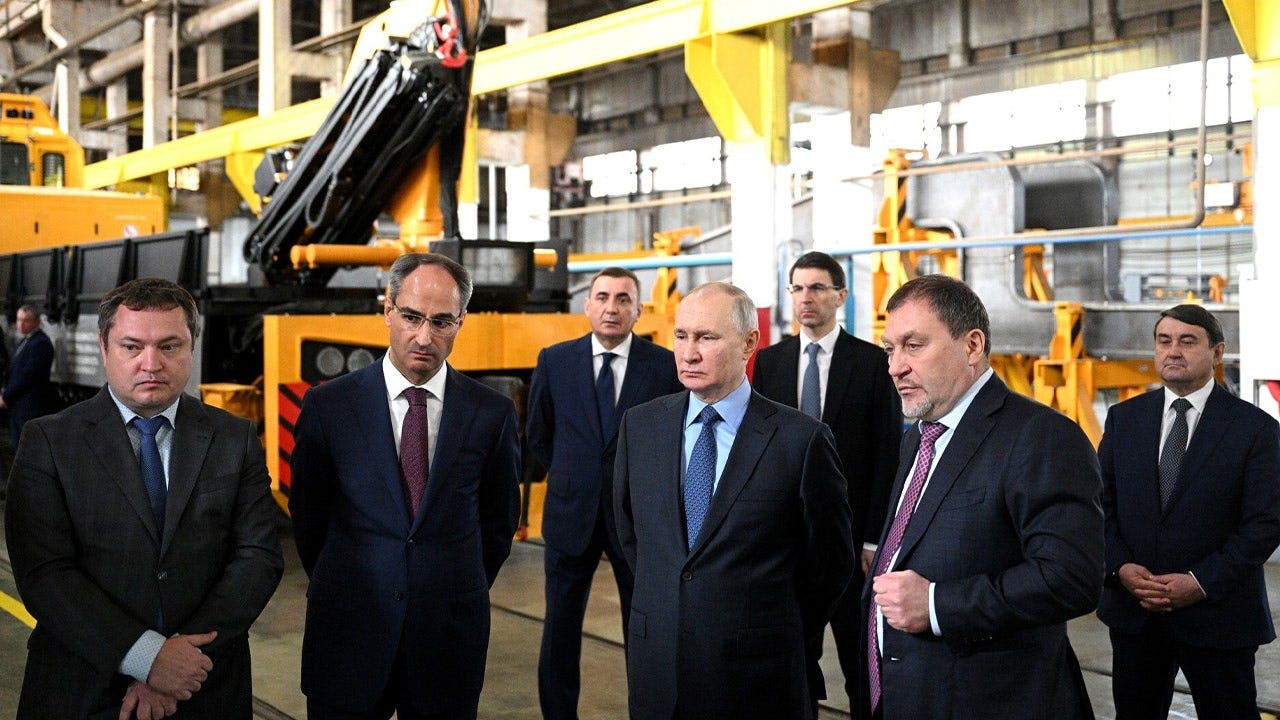
Russian President Vladimir Putin delivers a speech during a meeting of the Federal Security Service board in Moscow, Russia, on Feb. 24, 2026. (Mikhail Metzel/Sputnik/Pool/Reuters)

CANPACK has operated in Russia for nearly 30 years and held an estimated 35%–40% share of the country’s aluminum beverage can market, according to the company, underscoring the scale of the takeover.

The company has had no direct access to or communication with its Russian operations since the move, according to a person familiar with the matter, and several senior executives — including the general manager and chief financial officer — were removed following the takeover.

Company officials say executives in Russia have faced pressure from state-appointed administrators, including demands to approve financial decisions under threat of dismissal or other consequences.

The situation has not changed in recent months, according to the officials. The company’s Russian operations remain under external administration, with no restoration of control or ownership as of April.

The move falls under a legal framework introduced in 2023 allowing the Russian government to place certain foreign-owned assets under temporary state control.

The decree identified a company called Stalelement as the entity overseeing the assets, which company representatives describe as a shell entity with ties to the Russian government.

The company has raised the issue with U.S. officials, but no formal action has been taken.

The Kremlin has seized a U.S.-linked company operating in Russia under temporary external administration, barring its owners from access. (Kremlin Press Office / Handout/Anadolu Agency via Getty Images)

Russian business daily Vedomosti reported in February that CANPACK’s Russian division donated approximately 500 million rubles to a pro-Kremlin fund supporting Russia’s war effort in Ukraine.

The company believes roughly $18 million was directed to state-linked funds supporting Russian operations, with an additional approximately $6 million sent to a Russian Orthodox church, based on Russian media reports and information relayed by former executives. Fox News has not independently verified those claims.

The estimated transfers represent a small portion of the company’s overall value, but underscore how quickly financial control can shift under external administration.

The company continued operating in Russia after Moscow’s full-scale invasion of Ukraine in 2022, even as many Western firms exited the market.

Giorgi said the company considered leaving but faced challenges unwinding decades of investment and could not find a buyer at a fair price.

"We decided to stay the course," he said, adding that the company hoped conditions would eventually stabilize.

The same December 2025 decree also targeted the Russian subsidiary of Danish insulation manufacturer Rockwool. Other Western companies, including France’s Danone and brewer Carlsberg, have faced similar actions by Russian authorities in recent years.

"We are talking about dozens of companies," Kolyandr said.

Kolyandr said U.S.-linked companies have in some cases been treated more cautiously than their European counterparts.

"American companies fared much better than the European ones," he said, pointing to Moscow’s interest in preserving the possibility of improved ties with Washington.

He said the trend accelerated after Russia’s full-scale invasion of Ukraine in 2022, when Western companies began suspending operations or exiting the market.

"It all started in earnest with the beginning of the war," he said, adding that it became easier for authorities to take control of assets.

From the Moskva River, the Kremlin and the high-rise and business district of Moskva City (background) can be seen behind the bridge. (Ulf Mauder/picture alliance via Getty Images)

Kolyandr said the policy reflects a wider redistribution of property aimed at bringing profitable or strategic assets under closer state influence.

"It sends a signal across the system that if you do not toe the line, your property may be taken away," he said.

He added that while the process may generate some revenue for the state, funding the war is unlikely to be the primary driver.

CLICK HERE TO DOWNLOAD THE FOX NEWS APP

"On the one hand, it helps to generate a bit of cash for the budget," he said. "But I don’t think it’s the main reason."

The Russian Embassy in Washington and the Russian foreign ministry did not respond to requests for comment.

Get the latest updates from the 2024 campaign trail, exclusive interviews and more Fox News politics content.

By entering your email and clicking the Subscribe button, you agree to the Fox News Privacy Policy and Terms of Use, and
        agree to receive content and promotional communications from Fox News. You understand that you can
        opt-out at any time.

Subscribed

You've successfully subscribed to this newsletter!
Comments
You must be logged in to comment.