bbc Press
Fuel protests: Fuel tankers regain access to Irish oil refinery
Images
1 / 10

2 / 10
3 / 10
4 / 10
5 / 10
6 / 10
7 / 10

8 / 10
9 / 10
10 / 10
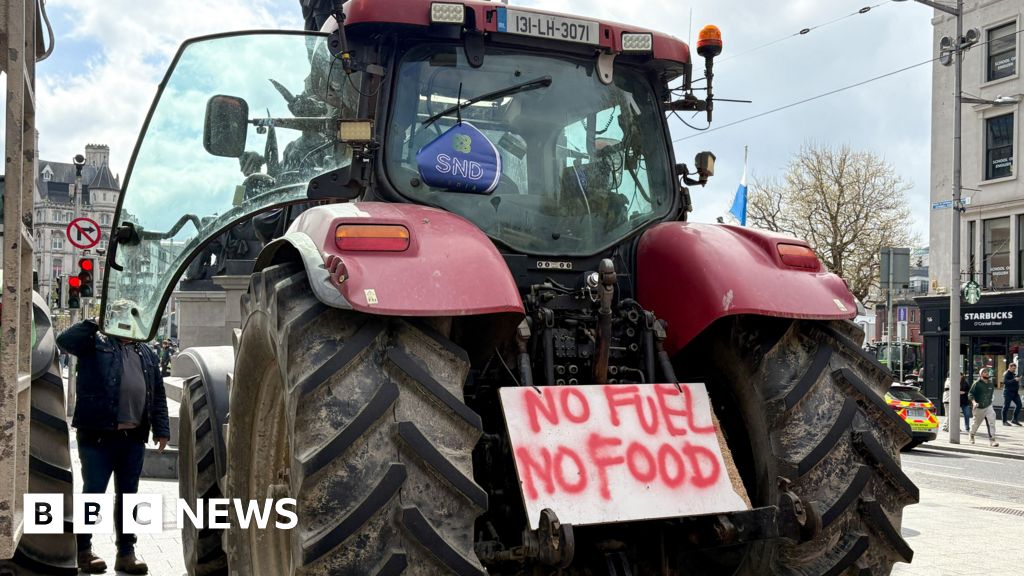
Fuel trucks have regained access to an oil refinery in the Republic of Ireland that had been subjected to a days-long blockade.

Earlier on Saturday, protesters at Whitegate Refinery in County Cork were pushed back by gardaí (Irish police) using pepper spray, in an operation supported by the Irish Defence Forces.

Gardaí were brought in to move large tractors that had been blocking the entrance and fuel tankers were once again able to access the site.

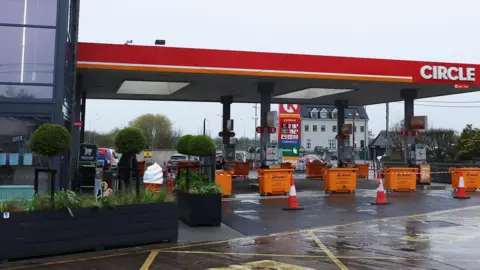
Hundreds of petrol stations in the country have run out of fuel as the protests - involving slow-moving convoys made up of vehicles including tractors - continue for a fifth day.

Blockades at fuel depots in counties Limerick and Galway are continuing.

Footage posted by gardaí on Saturday afternoon showed them escorting oil tankers leaving Whitegate after they restored access to the refinery.

An Garda Síochána (Irish police service) said it is aware of alleged intimidation and harassment of drivers of trucks and fuel tankers.

It added that such action is criminal activity and it will investigate all complaints.

Fuels for Ireland, which represents companies that import, distribute, and sell fuel, said warned two-thirds of petrol stations in Ireland would be out of stock by the end of Saturday if the blockades at the fuel-storage facilities continued.

The Irish government confirmed a fuel support package was being finalised after what it described as "constructive engagement" with representatives of the haulage and farming sectors.

The package will include a temporary Fuel Support Scheme aimed at the haulage, agri-business and contractor sectors.

Meetings between government ministers and representatives of farmers and hauliers to finalise a new government package of fuel supports are taking place on Saturday.

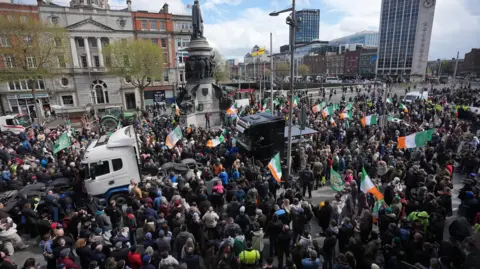
The blockade of parts of Dublin city centre is continuing, with O'Connell Street and South Quay closed to traffic.

Other disruption includes:

The harbour master at Rosslare Europort has told Irish broadcaster RTÉ that they may have to turn away ferries due to a road blockade outside the facility.

Tom Curran said the port will have reached capacity by Sunday afternoon with freight stuck and unable to move.

Protesters have set up a blockade at the nearby village of Kilrane about a mile from the port.

A spokesperson for Iarnród Éireann (Irish Rail) said the situation could come to a head late on Sunday night or early on Monday morning

Public transport has also been affected, with some services suspended and major disruption in Dublin.

Bus Éireann said it would try to serve Dublin Airport passengers where possible, while people travelling to Shannon and Dublin Airports are advised to allow extra time.

An Garda Síochána, has declared an "exceptional event" in response to the fuel protests, allowing it to double the number of officers available to work.

On Friday, Tánaiste (Irish Deputy Prime Minister) and Finance Minister Simon Harris said that there would be a "substantial and significant" package of support for "key sectors of the economy".

Harris said talks were "going well", adding that further "intensive engagement" into the weekend was likely.

However, he added: "The blockade has to end."

Taoiseach (Irish Prime Minister) Micheál Martin said the blockades meant the country was "on the precipice of turning oil away from the country" during a global oil supply crisis.

Speaking in Dublin on Saturday, Mary Lou McDonald the leader of Sinn Féin, said the Irish Government had allowed a "difficult situation" to escalate and urged it to engage with protesters to negotiate an end to the blockades.

On Friday, there were long queues on the M1, heading towards the border with Northern Ireland, due to protesters closing the motorway at Dundalk, with vehicles blocking both lanes at the Carlingford turnoff.

The National Emergency Coordination Group (NECG), which brings together government departments and state agencies to coordinate emergency response, said fuel supplies for emergency response vehicles, including the ambulance service and fire service, are under "increasing pressure".

The conflict in the Middle East has caused rapid price rises for both petrol and diesel.

Some 20% of the world's oil trade, the raw ingredient for producing both petrol and diesel, has been halted by the closure of the Strait of Hormuz.

Diesel in the Republic of Ireland has risen from about €1.70 (£1.48) a litre to €2.17 (£1.89) on many forecourts in recent weeks and petrol is now up to 25 cents more per litre at many pumps.

The protests started on Tuesday morning.

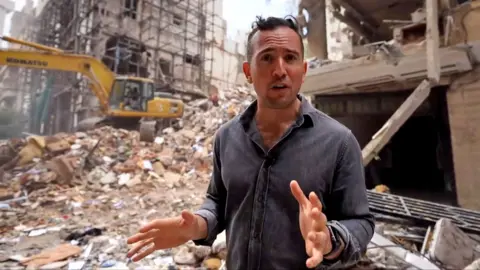
BBC Middle East Correspondent Hugo Bachega hears from people affected by this week's attacks.

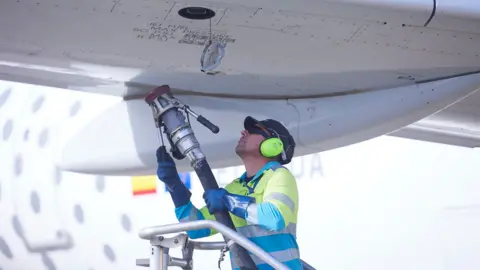
Airports Council International (ACI) Europe said its members had "increasing concerns" about the availability of jet fuel.

Christopher Kennedy-Barnard says he did not realise until he returned to land and saw missiles.

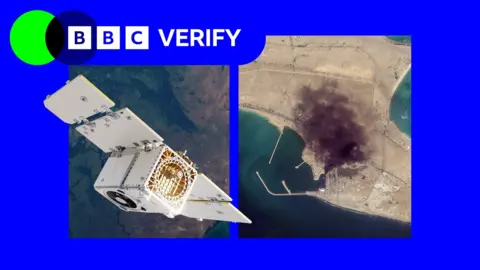
Planet Labs says it is restricting coverage of Iran and parts of the Middle East indefinitely.

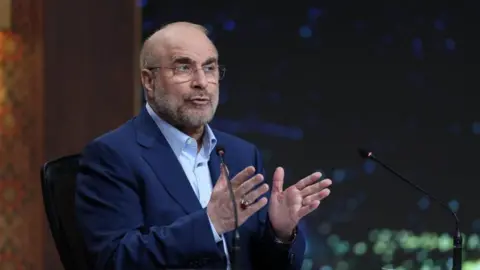
Face-to-face talks would mark the highest-level engagement between Iran and the US since the 1979 Islamic Revolution.
Comments
You must be logged in to comment.