yahoo Press
Wedbush says Burry's Palantir bear case is fictional as $23bn is wiped from stock
Images
1 / 5
2 / 5

3 / 5

4 / 5
5 / 5
The above button links to Coinbase. Yahoo Finance is not a broker-dealer or investment adviser and does not offer securities or cryptocurrencies for sale or facilitate trading. Coinbase pays us for certain activity generated through this link. Prices displayed are informational.

The "Big Short" investor's deleted post sent shares down 7%. Wedbush argues the Anthropic threat is overblown and the sell-off is a buying opportunity.

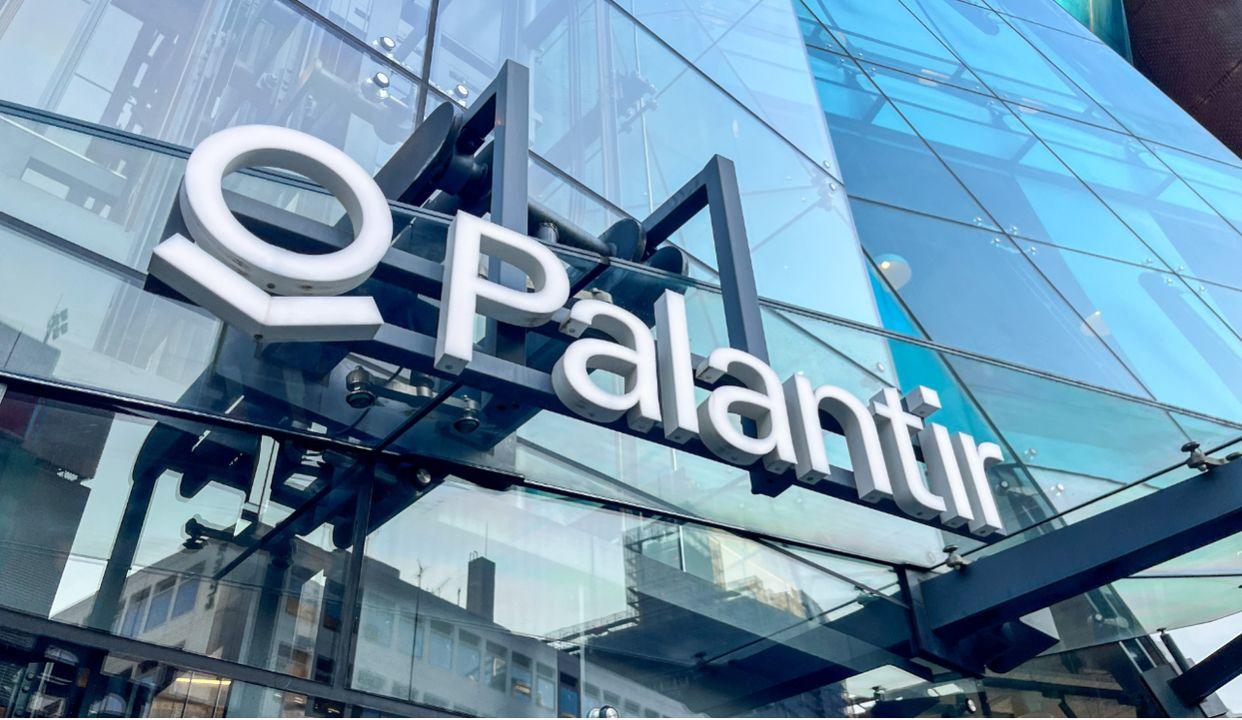
Palantir Technologies Inc (NYSE:PLTR) share price closed down 7.3% on Thursday in New York, shedding close to $23 billion in market value after a single post on X from Michael Burry, the investor made famous by the 2008 financial crisis bet depicted in The Big Short.

Burry has since deleted the post. Wedbush Securities has since pushed back hard.

What Burry said

The Scion Asset Management founder argued that AI startup Anthropic is effectively eating Palantir's lunch, pointing to Anthropic's growth from $9 billion to $30 billion in annual recurring revenue in a matter of months. Businesses, he said, are pivoting toward easier, cheaper and more intuitive solutions.

His sharpest line: "It took $PLTR 20 years to get to $5 billion."

This is not a new position for Burry. Around September 2025 he disclosed a significant short on Palantir through long-dated put options, and has been consistently bearish on the company since.

Why Wedbush disagrees

In a note to clients on Thursday, Wedbush analyst Dan Ives maintained his Outperform rating and $230 price target on Palantir, calling the Anthropic threat "way overblown" and the Burry narrative "fictional."

The core of the Wedbush argument is that Burry is misreading what Palantir actually sells. Its central product is not a chatbot or an API. It is an ontology, a system that acts as a digital twin of an organisation, integrating data across an entire business to automate complex decision-making. That, Wedbush argues, is not what Anthropic's Claude does, and it is not something Claude threatens.

"This is NOT being disrupted by Claude," the note said. "If anything, it's accelerated on the enterprise."

The three pillars of the bull case

Wedbush laid out three reasons it believes the bear thesis is wrong.

First, the ontology moat. Palantir's system translates raw organisational data into AI workflows. It is the layer that makes AI usable at enterprise scale inside complex institutions. That kind of deep integration takes years to build and is not easily replaced by an API, however capable.

Second, deal with momentum. Wedbush said it is hearing from customers that Palantir's AI bootcamps are shortening sales cycles and driving fast deployment. Total customer count grew 34% year-on-year, with US commercial customers growing closer to 50%. Deals worth more than $1 million grew 40% year-on-year. Deals worth more than $10 million grew 91%.

Third, government and commercial scale. US commercial revenue grew 137% year-on-year. US government revenue grew 66%. Wedbush argues that as governments look to cut headcount and increase efficiency through software, Palantir's proposition fits the moment precisely.

The structural argument Burry makes

Burry's case rests on how Palantir makes its money. The company sends its own staff, known as Forward Deployed Engineers, to work inside client operations for months at a time. Its 10-K categorises much of this under professional services, meaning it charges for human labour as much as software. Anthropic, by contrast, offers a plug-and-play API.

The argument was further complicated in early March when the Trump administration banned Anthropic from federal systems following a dispute over safety guardrails, forcing Palantir to remove Claude from its Maven Smart System used by the US military and rebuild parts of the platform.

That episode illustrated both how deeply embedded Anthropic had become inside Palantir's government contracts, and how quickly that position could unravel.

Palantir's next earnings report will be the real test of both cases. Until then, the gap between a $230 price target and a $130 share price is where the argument lives.
Comments
You must be logged in to comment.