yahoo Press
Chips are still where the AI trade's rubber meets the road
Images

1 / 7
2 / 7

3 / 7

4 / 7

5 / 7

6 / 7

7 / 7
The above button links to Coinbase. Yahoo Finance is not a broker-dealer or investment adviser and does not offer securities or cryptocurrencies for sale or facilitate trading. Coinbase pays us for certain activity generated through this link. Prices displayed are informational.

This is The Takeaway from today's Morning Brief, which you can sign up to receive in your inbox every morning along with:

What we're watching

What we're reading

Economic data releases and earnings

Investing in the hardware piece of the AI trade just got more validation.

For all the roundabout, sideways, and downstream ways for investors to get in on the AI transformation, the straightforward path still has some juice to it. Sure, investing in picks and shovels at the start of a gold rush is one way to get rich, but so is striking gold.

For the tech set, that means owning actual etched silicon.

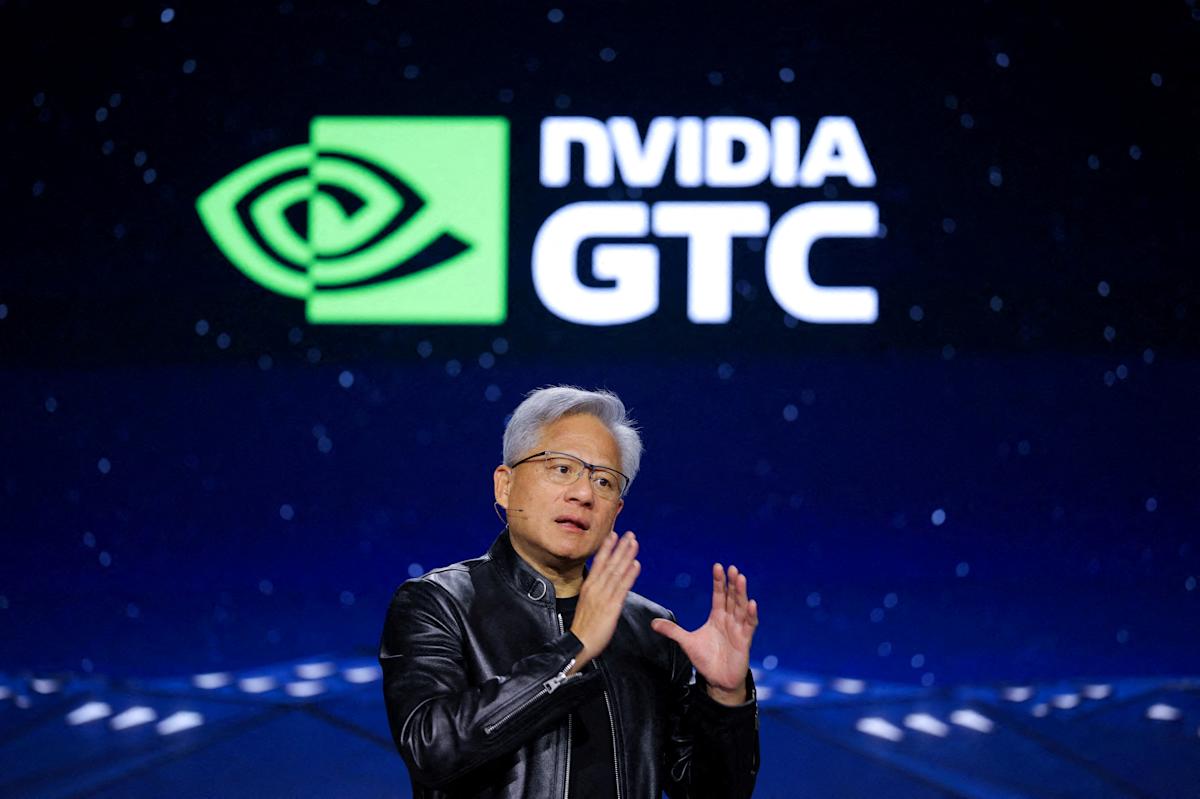
Bank of America analyst Vivek Arya upgraded the global semiconductor 2026 outlook to a revenue target of $1.3 trillion, powered by the advancement and growth of firms like Nvidia (NVDA), Broadcom (AVGO), and Marvell (MRVL).

"We continue to view AI/data center to drive the majority of gains (via compute, networking, memory)," Arya said.

In just four years, analysts expect the semiconductor market to hit $2 trillion, implying a compound annual growth rate of 20%.

Earlier this week, Gartner came out with its own bullish semiconductor forecast, echoing the $1.3 trillion figure for the year, which would give the industry its third consecutive year of double-digit growth, highlighting just how important the industry is to the AI boom.

As well as the contrast between these infrastructure investment trades and the evolving implementation of the actual AI functions they provide.

But contemplating the risks to chipmakers and networking firms is also a useful way of thinking through how the AI hype train might stall or even disintegrate.

For one, many of these firms count on the trillion-dollar tech platforms as their biggest customers. And as much as they are able, the tech giants integrate every element of their business. Why keep paying Nvidia for AI chips if they can make their own and, in turn, peddle them to others?

Amazon CEO Andy Jassy signaling on Thursday that the e-commerce giant is on its way to selling its own AI processors, putting it in direct competition with Nvidia and AMD (AMD), underscores that risk.

And Amazon being Amazon, Jassy brought the point home that his company could beat the chip leader on price too.

"Having our own hotly demanded AI chip opens up many possibilities, but perhaps none larger than the ability to lower costs for customers and secure better economics for AWS," he said in his annual letter to shareholders.

Meta (META) is seen as one of the better-positioned companies to monetize its AI prowess, thanks to its advertising machine, an easy plug-in for vertical integration. But this gambit from Amazon, integrating a different part of the AI supply chain, could certainly rival that.

Aside from the risk of their customers turning into rivals, the semiconductor leaders also face a spending challenge. Their growth relies on massive AI capex. Depending on the quarter and the company, every earnings season renews investor grumbling over exorbitant AI spending. And every subsequent report disclosing even higher capex without reciprocal returns seems to stretch the acceptability of how long this hype phase should last.

For the AI bears, that time has already passed. But for the semiconductor bulls, things are just getting started.

Hamza Shaban is a reporter for Yahoo Finance covering markets and the economy. Follow Hamza on X @hshaban.

Click here for the latest technology news that will impact the stock market

Read the latest financial and business news from Yahoo Finance
Comments
You must be logged in to comment.