yahoo Press
Property taxes increased by nearly 25% in recent years. Here are the states feeling it the most.
Images
1 / 12

2 / 12

3 / 12

4 / 12

5 / 12
6 / 12

7 / 12

8 / 12

9 / 12
10 / 12
11 / 12

12 / 12
U.S. homeowners paid about $633 more on average in property taxes in 2024 compared to 2019, according to the latest U.S. Census Bureau data. Here’s what’s driving the increase and which states are hit the hardest.

Property taxes are largely determined by a home’s assessed value and the local tax rate.

The assessed value is a dollar amount assigned to your home by your local county assessor to help determine the property tax. It’s not the same as the market value, but it incorporates it.

A higher home market value can mean a higher assessed value, which would directly increase its property taxes. And the average market value for a single-family home in the U.S. is $362,210 according to February Zillow estimates — a nearly 55% increase since 2019.

Higher property tax rates may also be behind an increase in real estate taxes. Local governments can raise the rate to cover increases in operational and service costs.

These shifts can leave homeowners with a larger tax bill, and you might feel it harder depending on where you live.

Read more: 8 tax deductions for homeowners under the One Big Beautiful Bill

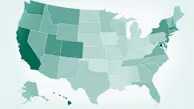
New Jersey, New Hampshire, and Connecticut are among the states with the highest property taxes in 2024 — well over the $3,211 national average.

Source: U.S. Census Bureau

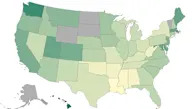
States like West Virginia, Alabama, and Arkansas paid property taxes well below the national average in 2024.

Source: U.S. Census Bureau

Several states have lower property taxes, but they’re rising. Here are 10 states with the most significant increases in property taxes since 2019 — especially compared to the national average, which increased by about 25%.

Source: U.S. Census Bureau

Learn more: Is home equity loan interest tax deductible? What homeowners need to know.

While property taxes are unavoidable for most homeowners, there are things you can do to try to lower your bill.

Check for assessment errors: Your home’s assessed value can be off for several reasons, such as incorrect property details or comparable sales that don’t match your property.

Consider an appeal: If you find errors on your assessment, you can file an appeal. Your county assessor may outline the process on its website, or you can enlist the help of a property tax attorney.

Apply for eligible exemptions: Property tax exemptions can lower your home’s assessed value and, ultimately, the real estate tax owed. Check your local county assessor’s website to see what exemptions you may be eligible for.

Learn more: Mortgage interest tax deduction for homeowners: Is it worth it?

Every state in the U.S. has a property tax. It can be a major source of revenue for local governments. While these taxes can consume a large chunk of your budget in high-cost markets, states like West Virginia, Alabama, and Arkansas have some of the lowest property taxes in the country.

Florida, Alabama, Colorado, and Georgia are among the states that saw the largest increases in the average property tax paid compared to 2019. This can be due to several factors, such as increases in home market values and local tax rates.

You may be able to reduce your property tax if you find errors in your assessment and file an appeal. You can also apply for eligible exemptions, which can lower your assessed value and ultimately your tax owed.

Property taxes are one of the many costs of homeownership that can be tax deductible. Learn if you’re eligible for this deduction and how much you can write off.

The amount you pay in property tax, or real estate tax, is set by your local government. Learn how property taxes factor into your monthly mortgage payments.

The state and local tax (SALT) deduction jumped to $40,000 this tax year. See who qualifies, how the new cap works, and whether itemizing could boost your tax savings.

Compare the median home price by state to understand what you can expect to pay. There are also strategies to lower your home-buying costs, no matter where you live.

How does your net worth compare to the rest of the country? Find out with this map that breaks down the average net worth by state.

A mansion tax is an additional transfer tax on properties that sell for above a specified price. Learn how mansion taxes work and if you'll need to pay them.
Comments
You must be logged in to comment.