huffpost Press
Iranian Americans Say This Is The 1 Thing You Can Actually Do For Them Right Now
Images
1 / 9

2 / 9
3 / 9
4 / 9
5 / 9

6 / 9
7 / 9

8 / 9

9 / 9
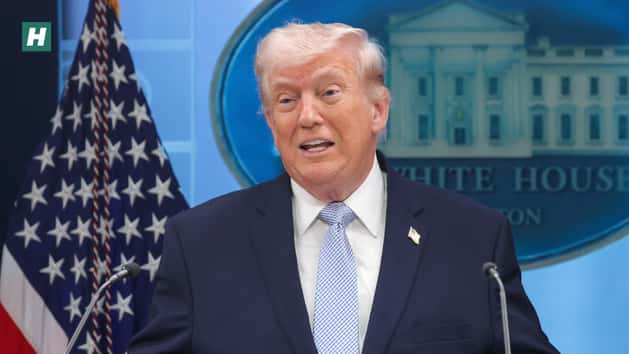
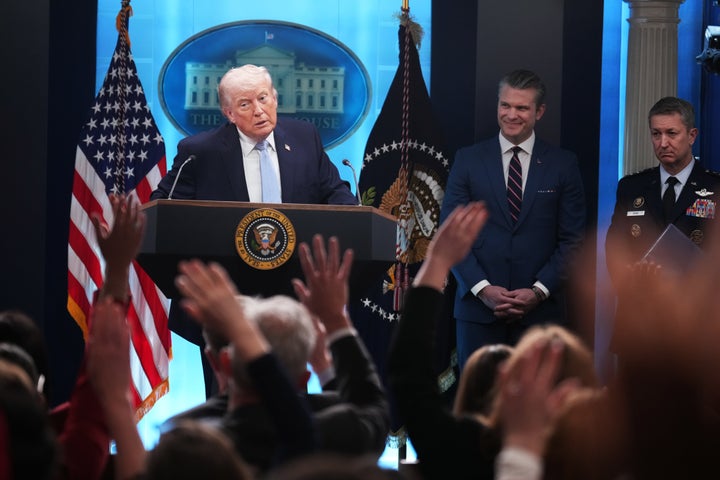
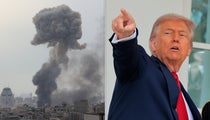
Every expletive-laced, hyperbolic social media post President Donald Trump has shared about Iran is staggering to read, especially ones where he’s threatening to wipe out the country’s whole civilization.

But for Iranian Americans closely monitoring a war that has already killed more than 2,000 Iranians, reading his Truth Social posts makes it hard to get through the day.

“Every tweet from Trump has felt like a new kind of fresh hell,” said Tara Grammy, an Iranian American that lives in Los Angeles.

When Trump threatened to take out Iran “in one night” if the country didn’t reopen the Strait of Hormuz, a critical global supply route, Grammy was petrified. (Such attacks would have amounted to war crimes under international law.)

“My close family are all there except my mom so all I can think about is the worst case scenario,” said Grammy, who left Iran at age 6. “Reading the news and his tweets makes my whole world slow down. This is honestly the most challenging time of my life.”

The U.S. and Israel agreed to a two-week ceasefire — an 11th-hour deal that appeared to avert Trump’s threat to launch a bombing campaign capable of devastating Iran’s civilization. Yet only hours after the announcement, Iran and Lebanon reported fresh attacks Wednesday, raising immediate questions about whether the strikes could unravel the fragile agreement.

For Grammy, following the news from afar in the safety of her Los Angeles home has been an emotional seesaw ― especially when other Americans seem to be checked out of the news (at least until this week and Trump’s threat). The one thing she wishes more friends would do is reach out and see how she’s faring ― a sentiment that other Iranian Americans we spoke to this week agreed with.

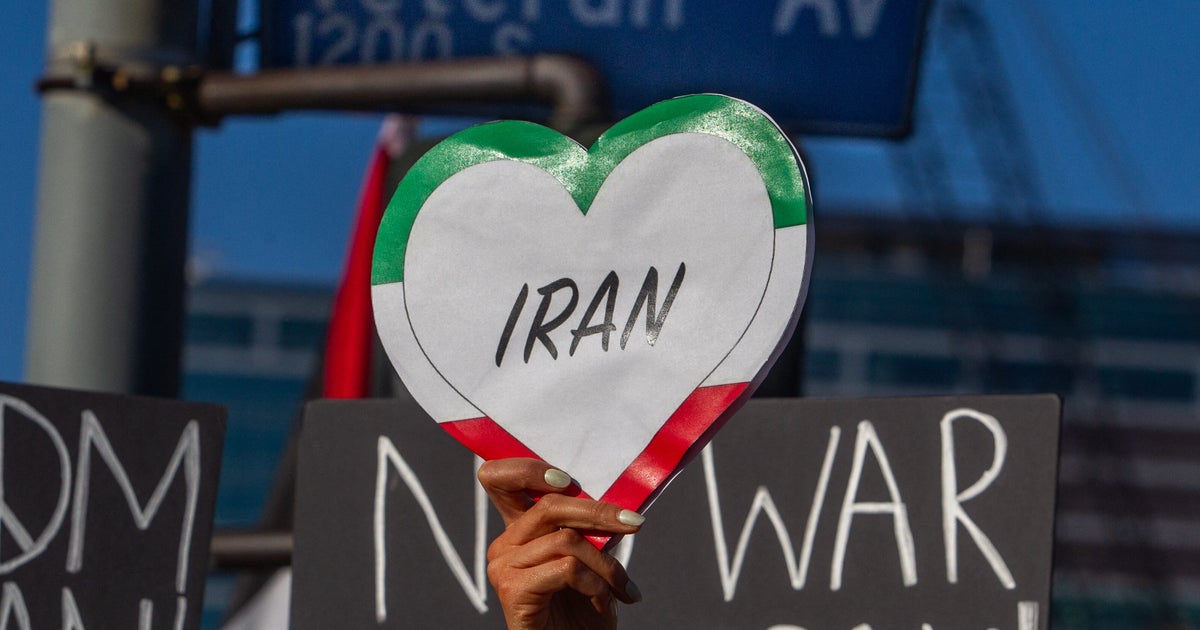
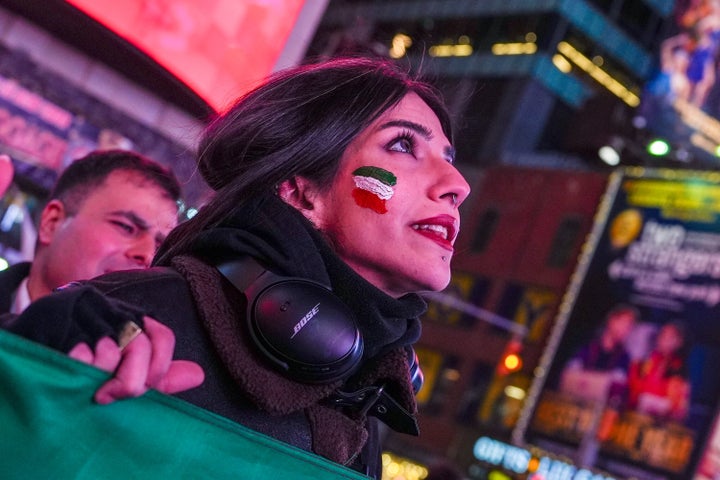
“I don’t expect non-Iranians to understand it fully, but I do expect people to ask questions, to show solidarity,” she said. “If you have Iranian friends, ask them questions, tell them you care, tell them you don’t know what to say but you love them, right?”

Grammy said she and her fellow Iranian friends are on the same page, but she’s even lost some friends this year over their indifference to what’s happening in Iran, starting when Iran’s security force carried out mass killings of protesters after nationwide protests escalated in January.

“Now with the war, I wish people would post about what’s happening,” she said. “Post your outrage, post not just about the war, but also about the murderous regime who has terrorized the people for over 47 years.”

To some extent, it’s not surprising that non-Iranian friends aren’t checking in. A recent Reuters/Ipsos poll suggests many Americans view the war primarily through the lens of how it affects life at home, from risks to U.S. service members to the financial strain of rising energy prices. While many also expect worsening stability in the Middle East and a decline in quality of life for people in Iran, those concerns often feel more abstract and distant.

“I do think many Americans are tuned out, not out of indifference, but because it feels far away or complicated. But for Iranian Americans, it doesn’t feel abstract ― it feels personal, cultural and emotional,” said Maia Moham, an Iranian American singer based in Southern California whose parents immigrated to the U.S. in the ’70s and ’80s.

“My mother’s side of the family still lives in Tehran, including my aunts, uncles and cousins,” she told HuffPost. “With the way the war has escalated, we are especially worried about the health and safety of my family there; one of my cousins is diabetic, and we’ve been unable to reliably send her medication.”

So while Moham worries about family in Iran, U.S. headlines around the war are largely fixated on how gas price spikes and disruption of oil shipments will affect the upcoming 2026 midterm election.

“It’s strange to watch something that affects your identity and family history be discussed in very abstract or, in the case of Trump’s tweets, extreme, outlandish terms,” Moham said.

On more than one occasion, Trump has said the U.S. plans to bomb Iran “back to the Stone Ages where they belong.” In a profanity-laced post on Truth Social he shared on Easter Sunday, he demanded that Iran open the Strait of Hormuz by Tuesday, “or you’ll be living in Hell — JUST WATCH! Praise be to Allah.”

“When rhetoric becomes that dehumanizing, it’s especially jarring,” Moham said. “It’s like he’s reducing an entire civilization and its people to a political talking point.”

Threatening to obliterate so much of a country’s infrastructure, technology and basic systems that daily life is forced into a primitive state is dehumanizing enough. But beyond the threat to effectively carpet-bomb their homeland, what many Iranian Americans also find deeply upsetting is Trump’s suggestion that Iran is somehow uncivilized to begin with — that the Stone Age is, in some sense, where it “belongs.”

“It’s difficult to hear a place tied to your heritage reduced to something disposable or backward, when in reality it’s a complex and deeply influential culture,” Moham said.

While Iran’s government has committed severe human rights abuses since the Islamic Revolution in 1979, that’s far from the country’s full story. Historically known as Persia, Iran is one of the world’s oldest continuous civilizations and the home of Cyrus the Great, whose rule more than 2,500 years ago is often linked to some of the earliest ideas about human rights and religious tolerance.

“I wish more people understood how rich and human Iran is beyond headlines — it’s a culture of poetry, music, humor, hospitality, and deep family ties,” Moham said. “The Iran I know through my family is full of warmth and resilience.”

Iranians are people just like every other nationality, and a country, its people, its government and its leader are all very different entities, said Paria Hassouri, a pediatrician and author in Los Angeles who lived in Tehran from age 3 to 10 in 1976 to 1983.

“Iranians are resilient and brave,” she told HuffPost. “They are artists and scientists. They value family and friends, culture and education. They have made great contributions to the world and will continue to do so.”

Hassouri said some of her friends have checked in on her, but not as many as she’d hoped would.

“Some have only checked in after I’ve posted something on social media, which makes me question if it is the war in Iran that’s not even on their radar, or do they really not know me enough to know how much I am personally affected by this, or both?” she said.

That said, she understands why people may be hesitant to reach out. Iranian Americans (and others in the Iranian diaspora) are not a monolith. While some support American and Israeli intervention to dismantle the current regime, others emphasize the need for organic change within Iranian civil society.

“As unbelievable as it is to me, here in Los Angeles, we still see some Iranian Americans who are pro this war with Iran and think that somehow Trump will save Iran,” she said.

“I think some people are confused because they see that divide among Iranians,” she said. But even if you don’t have any idea what to say, check in on your Iranian friends.

“Say, ‘Hey, I don’t really know what to say, but I am thinking of you, and I’m here to hear your thoughts if you are OK sharing them,’” she said. “It makes a difference.”

By entering your email and clicking Sign Up, you're agreeing to let us send you customized marketing messages about us and our advertising partners. You are also agreeing to our Terms of Service and Privacy Policy.
Comments
You must be logged in to comment.