yahoo Press
Delta knows people will simply grit their teeth and pay more
Images
1 / 5

2 / 5

3 / 5

4 / 5

5 / 5
The above button links to Coinbase. Yahoo Finance is not a broker-dealer or investment adviser and does not offer securities or cryptocurrencies for sale or facilitate trading. Coinbase pays us for certain activity generated through this link. Prices displayed are informational.

This is The Takeaway from today's Morning Brief, which you can sign up to receive in your inbox every morning along with:

What we're watching

What we're reading

Economic data releases and earnings

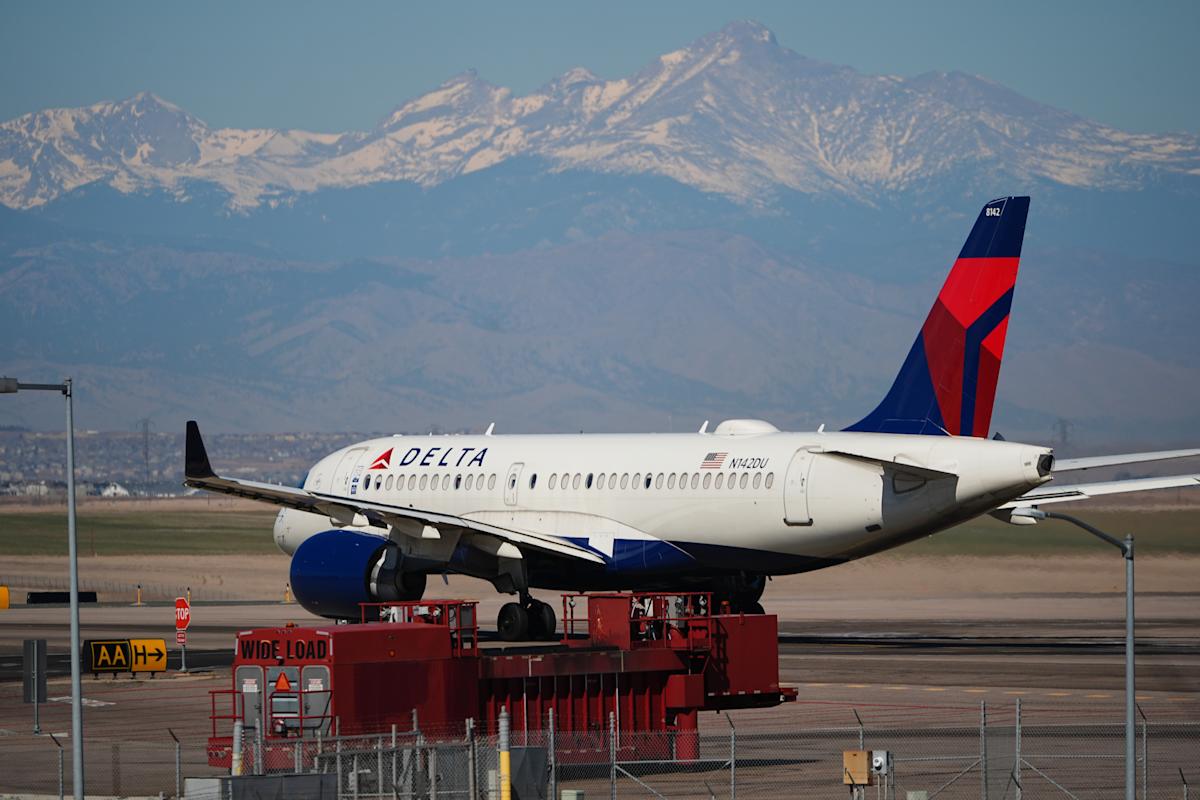
Delta's play for premium seating has proven so successful that it's leading the industry in profits, taking a key trait of the country's K-shaped economy and fashioning it into a business model.

But as the company's earnings report revealed on Wednesday, executives are feeling optimistic about every class. Did somebody say main cabin growth?

For the first time in more than a year, Delta recorded positive unit revenue growth in the main economy cabin. Sure, premium tickets, corporate trips, and loyalty rewards are driving most of the expansion. But even as airlines have jacked up fares and upped the baggage up-charging to offset rising fuel costs tied to the Iran war, CEO Ed Bastian said there's "broad strength across customer segments, geographies, and products."

It's not the most compelling sales pitch to say customers in an industry will grit their teeth and pay more for the same service.

But similar to the K-shaped economy, that may be a defining quality of this economic moment. And just as airlines sit at an important nexus of haves and have-nots, of affluence and price-sensitivity, carriers like Delta know that given limited consumer choice and inflation's omnipresence, it's hard for passengers to say no.

Delta's strength is even more remarkable because, putting aside the oil shock, airlines were already caught up in a miserable moment featuring a Washington funding battle that left TSA agents without pay for weeks, resulting in enormous security lines at airports, canceled flights, and customers avoiding air travel to get to their destinations.

Delta did not disclose the financial impact of the TSA disruptions. But whatever business travel slowed during the funding chaos has since been reversed, the company said. And it might get better: Recent corporate survey results cited by Delta show that 85% of respondents expect their corporate travel spend will increase or stay the same in the June quarter.

But what about the rising cost of fuel?

It's hard to know what the ceasefire will actually accomplish and when oil flows will return to pre-conflict levels.

"We woke up this morning with a very different set of fuel assumptions than we had when we went to bed," Bastian said on the earnings call Wednesday, referring to the US-Iran ceasefire. "Until we have better sense of structure of where oil lands, which we do think is higher for longer, we'll be in a better position to guide."

At least Delta has its own jet fuel refinery. The company's 2012 vertical integration bet is paying off big 14 years later.

But for all the uncertainty, it's a feature of the airline industry that many customers are still willing to pay to fly. For now, at least.

And as other airlines and companies report, one thing that will be on our minds (and the Fed's) is whether this willingness to wince and pay more extends to the entire airline sector — or even beyond.

Hamza Shaban is a reporter for Yahoo Finance covering markets and the economy. Follow Hamza on X @hshaban.

Click here for in-depth analysis of the latest stock market news and events moving stock prices

Read the latest financial and business news from Yahoo Finance
Comments
You must be logged in to comment.