yahoo Press
France pulls $15B of gold out of US vaults, and more EU member states may follow. How it could hit your bottom line
Images
1 / 4
2 / 4

3 / 4

4 / 4
Moneywise and Yahoo Finance LLC may earn commission or revenue through links in the content below.

France just pulled off a financial maneuver that turned old gold into billions.

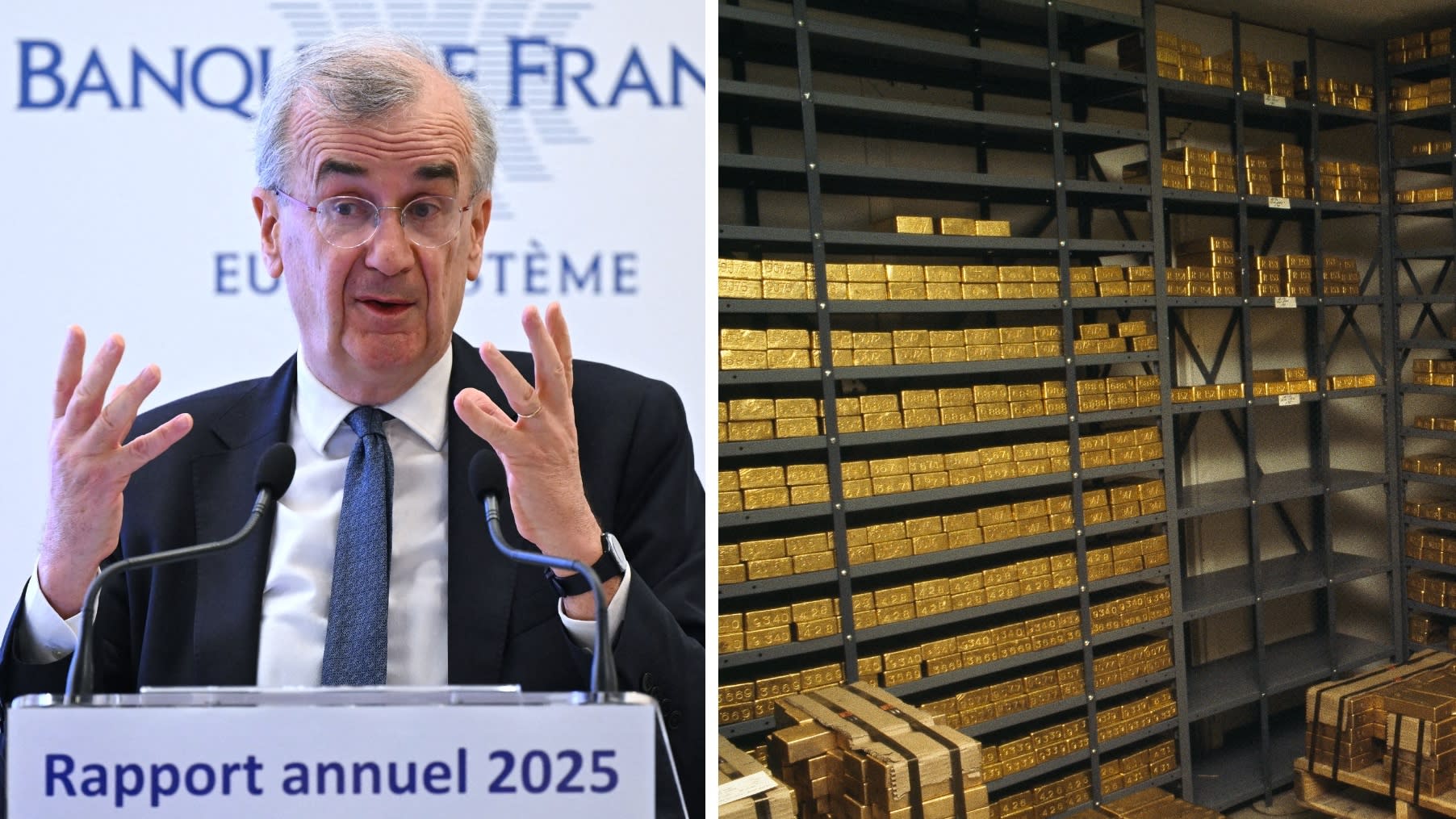
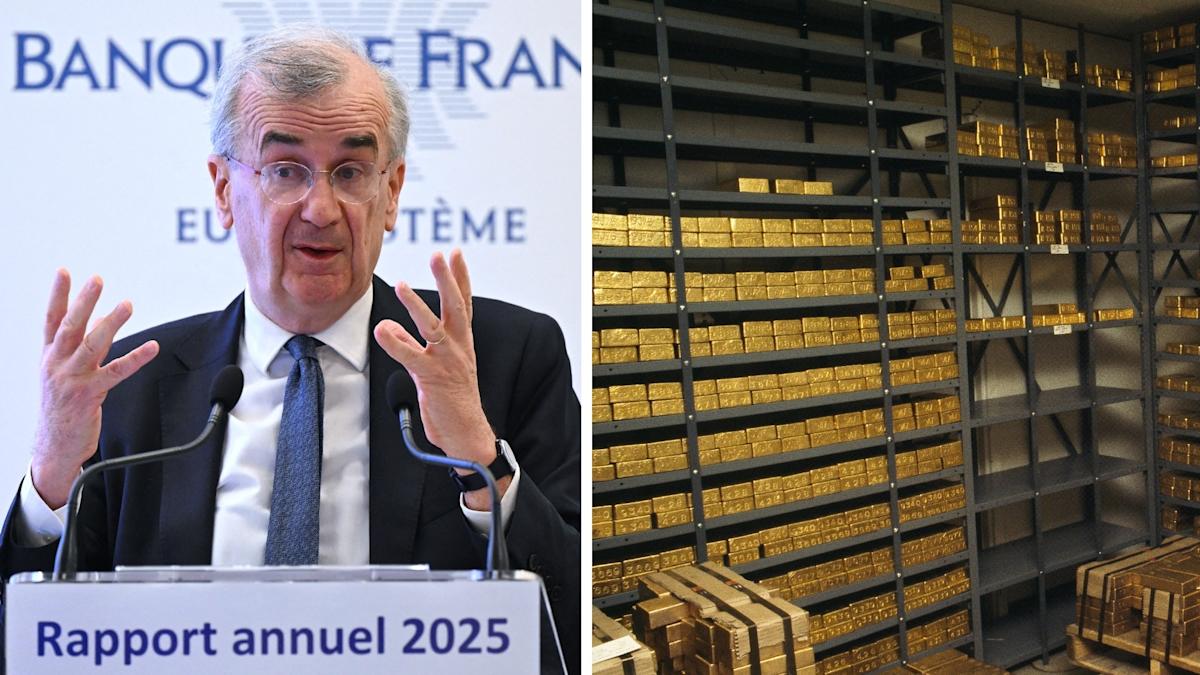
Since mid-2025, France’s central bank has sold 129 tonnes of gold it had stored in New York and replaced it with newer, high-quality bullion held in Paris. The result? A roughly €13 billion, or $15.1 billion, profit (1).

Thanks to Jeff Bezos, you can now become a landlord for as little as $100 — and no, you don't have to deal with tenants or fix freezers. Here's how

New 2026 IRA rules are here. See how to protect your nest egg from inflation before the next tax deadline with physical gold. Get your free guide from Priority Gold

Dave Ramsey warns nearly 50% of Americans are making 1 big Social Security mistake — here’s what it is and the simple steps to fix it ASAP

The Governor of the Bank of France Francois Villeroy de Galhau noted that the move "was not politically motivated." However, rather than replace the U.S.-held gold overseas, the bank instead decided to purchase European bullion for storage in Paris.

But France isn’t the first country to consider such a move, nor is it likely to be the last.

Some European member states, such as Germany, are debating repatriating gold amid rising geopolitical tensions and shifting trust in global institutions (2).

If that trend accelerates, it could signal something bigger: A shift away from the U.S. as the world’s default financial haven — with effects for the dollar, markets and everyday investors.

France didn’t reduce its gold holdings at all. Instead, it swapped older non-standard gold bars for new ones that are easier to trade globally, while prices were elevated.

The strategy worked because of one key factor: Timing.

Gold prices have surged in recent years, especially in 2025, amid inflation concerns and rising debt levels. The recent conflicts with Iran have also created market shocks, and during volatile times, many investors turn to gold for stability (3). This combo creates an opportunity for institutions to monetize their older holdings without shrinking reserves.

Today, central banks don’t rely on gold to back their currencies. However, they still rely on gold as a hedge against instability, just like retail investors. When inflation rises, currencies weaken, and markets become unpredictable. But gold tends to hold, and sometimes even increase, its value (4).

This was the case in early 2026, when gold struck a high-water mark of just under $5,600 per ounce in January.

Read More: I’m almost 50 years old and don’t have retirement savings. Is it too late?

France isn’t acting in isolation. Across Europe, there’s growing pressure to bring gold reserves back home, especially those stored in the United States (5).

In Germany, economists and politicians have recently called for the return of more than 1,200 tonnes of gold held in New York, citing concerns about the Iranian conflict and U.S. policy unpredictability.

The logic is simple: In times of uncertainty, governments want direct access to their reserves without relying on foreign institutions. Or, in other words, they want control.

If more countries follow through with a similar move, the implications could stretch far beyond gold.

For decades, the U.S. has been the world’s financial anchor — a place where countries store reserves, settle trade and rely on institutions like the Federal Reserve for stability.

But the repatriation of gold, at its core, is a signal. One that suggests that some governments are becoming less comfortable leaving strategic assets under U.S. control. Central banks themselves increasingly cite geopolitics as a top risk influencing reserve decisions (6).

This has played out in other areas:

Some countries are reducing their exposure to the U.S. dollar, whose share of global reserves has declined over time (7).

Central banks have been diversifying away from U.S.-linked assets for years now, in favor of gold (8).

Taken together, these moves point to a slow but meaningful trend: Less reliance on the U.S.-centric financial system.

Most investors probably aren’t managing a central bank, but they are exposed to the same driving forces behind banks’ decisions.

When governments start rethinking where they store wealth, it’s usually not about short-term gains. It’s about risk.

For everyday investors, that tends to show up in familiar ways. A weakening dollar can push up import costs and inflation. Market volatility can make stocks and bonds move unpredictably, and global instability can ripple into everything from interest rates to housing costs.

If too much of your wealth is tied to one currency, one market or one type of asset, you’re more vulnerable when conditions shift. The same way countries are when their reserves sit in a single place.

That’s why many institutions and retail investors are focusing on diversification not just across stocks and bonds, but across entirely different asset classes.

Gold has long been a go-to hedge in times of inflation, currency swings and geopolitical tension.

Priority Gold is an industry leader in precious metals, offering physical delivery of gold and silver. Plus, they have an A+ rating from the Better Business Bureau and a 5-star rating from Trust Link.

If you’d like to convert an existing IRA into a gold IRA, Priority Gold offers 100% free rollover, as well as free shipping, and free storage for up to five years. Qualifying purchases can also receive up to $10,000 in free silver.

To learn more about how Priority Gold can help you reduce inflation’s impact on your nest egg, download their free 2026 gold investor bundle. That way, you can see if gold is right for you and your portfolio.

But gold isn’t the only way investors are trying to anchor their assets in something tangible.

Real estate has historically offered a mix of income and stability, making it a popular alternative when public markets feel stretched or volatile.

Rental properties have long been a proven source of steady, passive income.

However, the time, effort, and costs involved in managing and maintaining multiple properties prevent many from investing. So unless you’re a hedge fund titan or an oil baron, you’ve been shut out of one of the most profitable corners of the market.

That’s where mogul comes in. This real estate investment platform offers fractional ownership in blue-chip rental properties, which gives investors monthly rental income, real-time appreciation and tax benefits — without the need for a hefty down payment or 3 a.m. tenant calls.

Founded by former Goldman Sachs real estate investors, the mogul team handpicks the top 1% of single-family rental homes nationwide for you. Simply put, you can invest in institutional-quality offerings at a fraction of the usual cost.

Each property undergoes a vetting process that requires a minimum 12% return even in downside scenarios. Across the board, the platform features an average annual IRR of 18.8% — their cash-on-cash yields, meanwhile, average between 10% to 12% annually. Offerings often sell out in under three hours, with investments typically ranging between $15,000 and $40,000 per property.

Getting started is quick and easy. You can sign up for an account and then browse available properties. Once you verify your information with their team, you can invest like a mogul in just a few clicks.

For those looking to take that real estate step further, some platforms offer access to larger, institutional-grade deals.

Owning a rental property sounds great, until something goes wrong. One bounced check, and your rental income disappears.

But institutional investors don’t face that problem. Their portfolios are diversified across hundreds — sometimes thousands — of units.

Now, accredited investors can tap into that same approach through platforms such as Lightstone DIRECT, giving you access to institutional-quality multifamily and industrial real estate — with a minimum investment of $100,000.

Founded in 1986 by David Lichtenstein, Lightstone Group is one of the largest privately held real estate investment firms in the U.S., with more than $12 billion in assets under management.

Over nearly-four decades, their team has delivered strong, risk-adjusted performance across multiple market cycles — including a 27.6% historical net IRR and a 2.54x historical net equity multiple on realized investments since 2004.

With Lightstone DIRECT, you gain access to the same multifamily and industrial deals Lightstone pursues with its own capital.

Here’s the kicker: Lightstone invests at least 20% of its own capital in every deal — roughly four times the industry average. With skin in the game, the firm ensures its interests are directly aligned with those of its investors.

Institutional investors have long used large-scale real estate portfolios to smooth returns, and now, individual investors are starting to access similar strategies.

For investors looking even further outside traditional markets, some are turning to assets that don’t follow real estate or equities at all. When markets become unpredictable, diversification sometimes means looking beyond financial assets altogether, particularly in categories with historically low correlation to stocks.

In 1999, the S&P 500 peaked, and it took 14 long years to fully recover.

Today? Goldman Sachs is forecasting just 3% annual returns from 2024 to 2034. It sounds bleak but not surprising: the S&P is trading at its highest price-to-earnings ratio since the dot-com boom. Vanguard isn’t far off, projecting around 5%.

In fact, nearly everything feels priced near all-time highs — equities, gold, crypto, you name it.

That’s why billionaires have long carved out a slice of their portfolios in an asset class with low correlation to the market and strong rebound potential: post-war and contemporary art.

It may sound surprising, but more than 70,000 investors have followed suit since 2019 — through Masterworks. Now you can own fractional shares of works by Banksy, Basquiat, Picasso, and more.

Masterworks has sold 27 artworks so far, yielding net annualized returns like 14.6%, 17.6%, and 17.8%.

Moneywise readers can get priority access to diversify with art: Skip the waitlist here.

Note that Past performance is not indicative of future returns. Investing involves risk. See important Regulation A disclosures at Masterworks.com/cd.

Most Americans earn a dismal 0.39% APY on their cash at big banks. Unlock 4.05% APY and pay $0 in account fees instead with a Wealthfront Cash Account

Vanguard reveals what could be coming for U.S. stocks, and it’s raising alarm bells for retirees. Here’s why and how to protect yourself

Robert Kiyosaki begs investors not to miss this ‘explosion’ — says this 1 asset will surge 400% in a year

Taxes are going to change for retirees under Trump’s ‘big beautiful bill’ — here are 4 reasons you can’t afford to waste time

Join 250,000+ readers and get Moneywise’s best stories and exclusive interviews first — clear insights curated and delivered weekly. Subscribe now.

We rely only on vetted sources and credible third-party reporting. For details, see our editorial ethics and guidelines.

Reuters (1), (6), (8); The Guardian (2), (7); Reel Financial (3); World Gold Council (4); American Alternative Assets (5)

This article provides information only and should not be construed as advice. It is provided without warranty of any kind.
Comments
You must be logged in to comment.