yahoo Press
Economic Outlook Still Foggy As Iran Ceasefire Leaves Key Questions Unresolved
Images
1 / 5
2 / 5

3 / 5

4 / 5
5 / 5
Stock markets rose, and oil prices fell on Wednesday after President Donald Trump announced a two-week ceasefire in the Iran war.

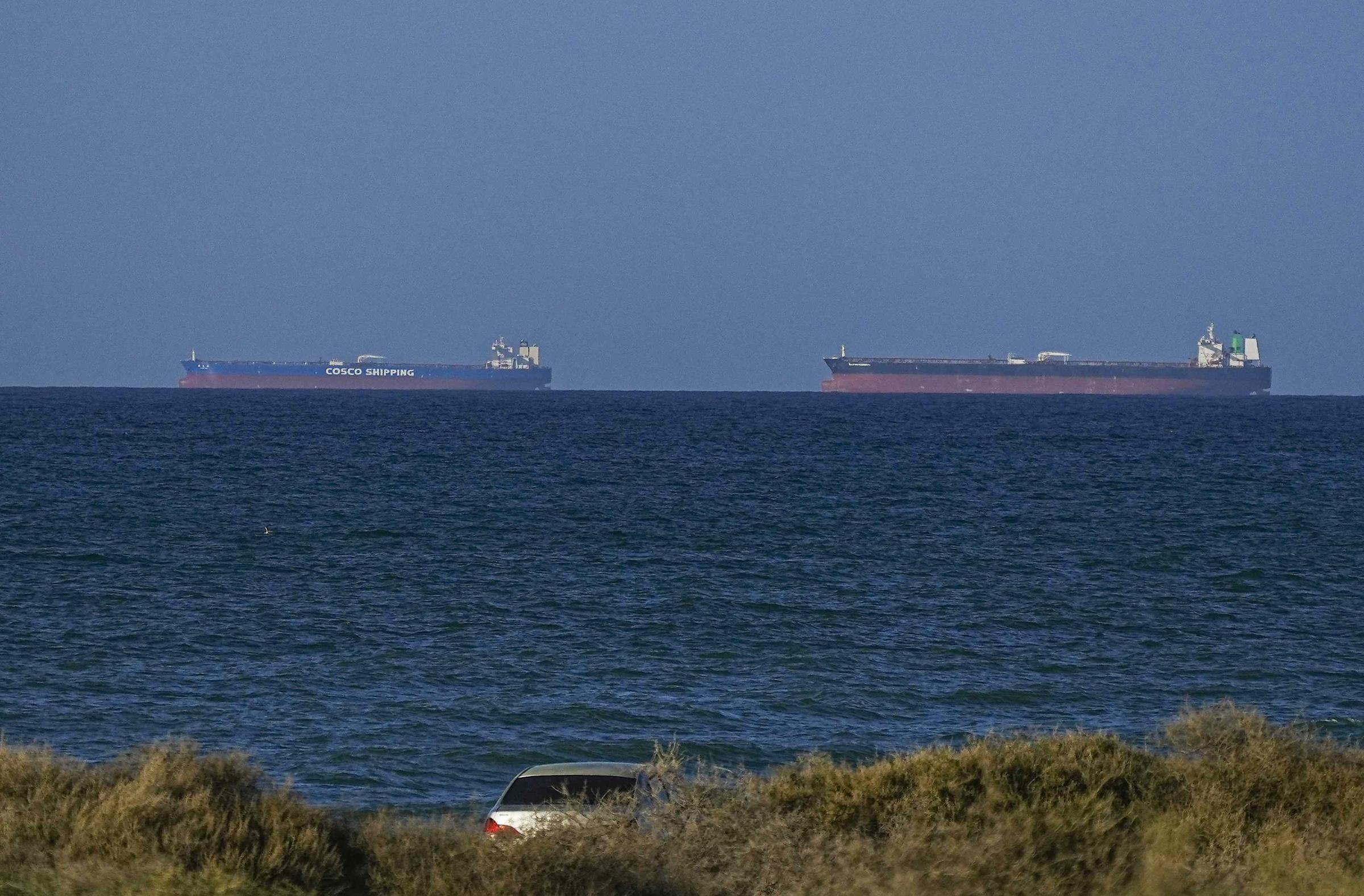
Further improvements in the economic outlook depended on whether ships could safely navigate the crucial Strait of Hormuz between Iran and Oman.

Motorists can expect gas prices to fall a few cents a gallon each day if the situation stays stable, one expert said.

The outlook for energy prices and the economy hinges on whether a two-week cease-fire holds and shipments of energy and other supplies resume from the Persian Gulf.

Traders breathed sighs of relief Tuesday night after President Donald Trump said he and Iranian leaders had agreed to stop fighting for two weeks to negotiate an end to the five-week old Iran war. The conflict has pushed up energy prices, raised recession risks, and stoked economic uncertainty, in addition to the lives lost on both sides.

The popular S&P 500 stock index was up 2.4% Wednesday afternoon, still short of its prewar highs. Brent crude oil, the international benchmark price, was down 13% to $94 a barrel on hopes that Iran would allow petroleum shipments to resume through the Strait of Hormuz, the crucial waterway through which 20% of the world's crude supply usually flows. That was still above its prewar price of around $70 in late February, but well below the $130-$140 range that some economists consider high enough to threaten sending the U.S. economy into a recession.

The ceasefire is welcome news for an economic outlook that's been shaken up by the war against Iran, which has spiked energy prices and raised the possibility of a recession.

The developments could begin to reverse the surge of energy prices that has plagued U.S. household budgets in the last month. With oil prices falling, gasoline prices should follow suit, Patrick DeHaan, head of petroleum analysis at GasBuddy, posted on the X social media platform.

Motorists can expect price drops to begin gathering momentum over the weekend, falling 1 to 3 cents per gallon each day if the situation doesn't change. Prices for gas and diesel have risen by more than a dollar a gallon since the war began, potentially sending an inflation shockwave across a wide range of products due to higher transportation costs.

The ceasefire was an about-face in the trajectory of the war. Just hours before, Trump threatened to escalate the fighting by blowing up bridges and power plants in Iran, and warned that "a whole civilization will die tonight" if the Iranians did not agree to a truce.

The situation is still volatile and could easily turn in a different direction just as quickly. The progress risks being derailed if the truce does not hold, or traffic through the strait does not resume. Ship traffic through the strait was still mostly blocked on Wednesday, Bloomberg reported, citing tracking data compiled by the outlet.

Trump stoked further uncertainty Wednesday when he said the U.S. would impose a 50% tariff on countries that sold weapons to Iran.

The social media announcement did not specify which countries would have to pay the new import tax or provide any other details. Since Trump took office for the second time last year, frequent tariff announcements and policy changes have fueled uncertainty among business leaders, causing companies to put hiring and expansion plans on hold and creating a major headwind in the job market.

Read the original article on Investopedia
Comments
You must be logged in to comment.