yahoo Press
Wall Street Turns Bullish on Twilio With 22% Upside This Year
Images
1 / 4
2 / 4

3 / 4

4 / 4
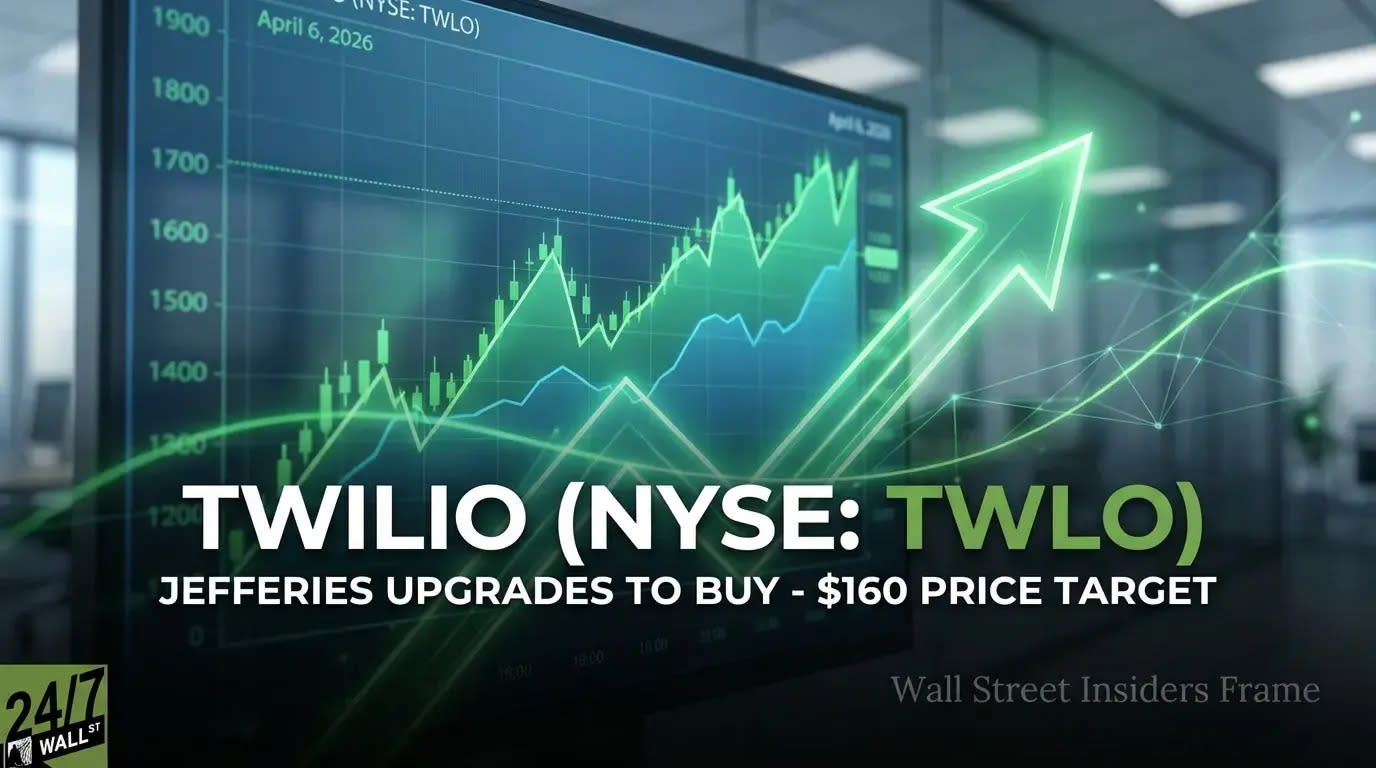
Jefferies upgraded Twilio (TWLO) to Buy from Hold with a new $160 price target, citing strong free cash flow growth of 44% year-over-year to $945.4 million in 2025 and the company’s emerging role as AI infrastructure, marking a meaningful shift from the firm’s cautious Hold stance maintained through February 2026.

Twilio’s financial transformation — including improved dollar-based net expansion at 109% and 2026 free cash flow guidance of $1.04–$1.06 billion — provides concrete support for the bull thesis, though the stock’s 8% year-to-date decline and analyst consensus of $143.37 suggest the market has not yet fully priced in the company’s turnaround momentum.

If you're focused on picking the right stocks and ETFs you may be missing the bigger picture: retirement income. That is exactly what The Definitive Guide to Retirement Income was created to solve, and it's free today. Read more here

Jefferies has upgraded Twilio (NYSE:TWLO) to Buy from Hold, setting a new price target of $160. The move marks a meaningful shift from the firm's prior stance, which as recently as February 13, 2026 carried a Hold rating and a $125 price target. For investors who have watched Twilio rebuild its financial profile over the past year, this analyst upgrade arrives with a backdrop of accelerating free cash flow and a strengthening AI positioning narrative.

Ticker

Company

Firm

Action

Old Rating

New Rating

Old Target

New Target

TWLO

Twilio

Jefferies

Upgrade

Hold

Buy

$125

$160

Jefferies analyst Samad Samana had maintained a cautious Hold through much of Twilio's turnaround. The upgrade to Buy with a $160 price target suggests the firm now sees the risk/reward as sufficiently tilted in favor of bulls. The case rests on Twilio's demonstrated financial transformation: free cash flow of $945.4 million in full-year 2025, up 44% year over year, and non-GAAP operating income of $255.57 million in Q4 2025 alone. The company's positioning as AI infrastructure also appears central to the bull thesis, with CEO Khozema Shipchandler stating that "Twilio is quickly becoming a foundational infrastructure layer in the age of AI."

If you're focused on picking the right stocks and ETFs you may be missing the bigger picture: retirement income. That is exactly what The Definitive Guide to Retirement Income was created to solve, and it's free today. Read more here

Twilio operates a cloud communications platform serving more than 402,000 active customer accounts across 180+ countries. Full-year 2025 revenue reached $5.07 billion, growing 14% year over year. The dollar-based net expansion rate improved to 109% from 106% a year earlier, signaling that existing customers are spending more. Moody's upgraded Twilio's credit rating following the Q4 results, adding institutional credibility to the turnaround story. A $2.0 billion share repurchase program authorized through December 2027 has approximately $1.1 billion remaining.

Twilio stock trades around $131 as of early April 2026, well below the new Jefferies target. The Street's consensus price target sits at $143.37, with 18 analysts carrying Buy ratings and 9 at Hold. Jefferies' $160 target now sits above that consensus, reflecting a more aggressive view on the company's free cash flow trajectory. For 2026, management guided for free cash flow of $1.04 billion to $1.06 billion, a step up from last year's already strong result. The stock is down 8% year to date, which may have contributed to Jefferies' view that the entry point has improved.

This analyst upgrade carries weight given Jefferies' prior skepticism on Twilio. The combination of free cash flow growth, customer expansion, and AI infrastructure positioning gives the bull case a concrete foundation. That said, Twilio's forward guidance calls for 8% to 9% organic revenue growth in 2026, a deceleration from recent reported rates, and competitive pressure in cloud communications remains real. The improving financial profile and AI infrastructure positioning give the bull case a concrete foundation, though the valuation still prices in significant execution on the 2026 guidance.

Most investors spend years learning how to pick good stocks and funds. Far fewer have a clear plan for turning those investments into a reliable retirement paycheck. The truth is, the transition from “building wealth” to “living on wealth” is one of the most overlooked risks facing successful investors in their 50s, 60s and 70s.

That is exactly what The Definitive Guide to Retirement Income was created to solve. It’s a free guide that outlines the straightforward math and strategies you need to convert your investments to income. Learn more here.
Comments
You must be logged in to comment.