yahoo Press
A tax economist bet his entire life savings against DOGE — and walked away with $128,000 in profit
Images
1 / 4
2 / 4

3 / 4

4 / 4
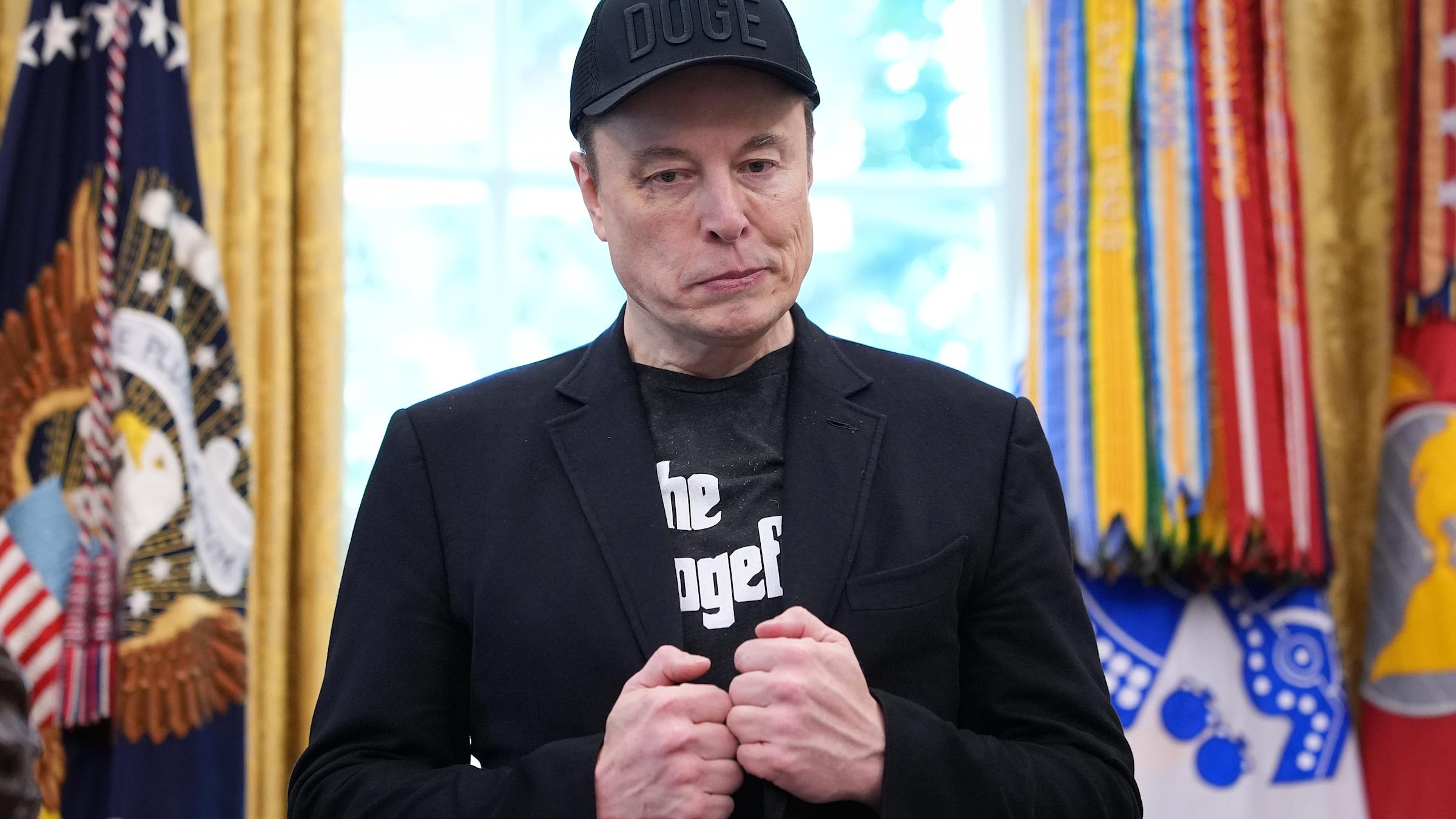
Investing in risky ventures isn’t typically Alan Cole’s cup of tea. The self-proclaimed “normal, conventional Wall Street Journal-reading adult” (1) generally sticks to a traditional brokerage account. But when Elon Musk’s Department of Government Efficiency (DOGE) kicked off its operations in Washington last year, Cole spotted an opportunity.

In the growing arena of prediction markets, people bet the world’s richest man would succeed in shrinking U.S. government spending. But as the Wall Street Journal reports, Cole, a tax economist, understood government spending better than most and decided to take the opposite position.

Thanks to Jeff Bezos, you can now become a landlord for as little as $100 — and no, you don't have to deal with tenants or fix freezers. Here's how

Dave Ramsey warns nearly 50% of Americans are making 1 big Social Security mistake — here’s what it is and the simple steps to fix it ASAP

Robert Kiyosaki begs investors not to miss this ‘explosion’ — says this 1 asset will surge 400% in a year

Cole put all $342,195.63 of his life savings into a position he didn’t see as a gamble at all: If federal spending in all four quarters of 2025 outpaced spending in Q4 2024, he’d win big. Cole didn’t take the position lightly; in addition to his own knowledge, he spoke with several fiscal policy experts and budget analysts, as well as his wife, before making the bet.

All in, Cole walked away with $470,300 — a profit of more than $128,000 — which is about a 37% increase from his original bet. While he’ll pay taxes on his winnings, that profit is a tidy sum. As Cole proved, betting on prediction markets can be lucrative, but it’s important to understand the dangers of chasing big wins on such a platform.

Prediction markets are essentially stock exchanges for real-world outcomes. Instead of buying shares in a company, you’re buying a contract that pays out if a specific event happens — or, in Cole’s case, doesn’t happen. Polymarket and Kalshi are popular prediction markets right now.

Kalshi, the platform Cole used, is one of the largest regulated prediction markets in the U.S. It received federal approval (2) from the Commodity Futures Trading Commission (CFTC) to operate legally. Users can place bets on everything from what Kristi Noem will say in an oversight hearing to Texas Senate election results to, yes, government spending levels.

Recently, prediction markets have exploded in popularity. Kalshi reported over $23 billion in trading volume in 2025 (3), up dramatically from prior years, driven in part by interest around the presidential election and later policy drama under the new administration.

Part of the appeal is that the more people trade on an outcome, the more accurately the price tends to reflect the real odds. Cole’s edge wasn’t insider information—he simply understood federal budget mechanics better than the people betting against him.

However, not every bet has that kind of clarity. Many prediction market wagers are closer to sports gambling, where you’re competing against sharp bettors who have as much or more information than you. Others involve outcomes that are completely unpredictable, no matter how well-informed you are, such as what MrBeast will say in his next YouTube video (4).

Read More: 5 essential money moves to make once you’ve saved $50,000

While Cole’s story has a happy ending, this isn’t an approach that everyday investors should look to replicate. He won big because he identified a rare situation: a bet that was based on information he knew wasn’t accurate. If you’re considering investing in the predictions market, here are a few things to keep in mind:

Cole’s wager was built on hard economic data: federal spending figures that get published on a regular schedule. But many prediction market bets aren’t so clean. Read the fine print on how a contract is settled and what metrics decide who wins before placing a bet.

Prediction markets aren’t FDIC-insured and can be highly volatile. Putting your entire life savings into any single position, no matter how confident you are, is a massive risk if something goes sideways.

Cole noted he’ll owe capital-gains taxes on money he moved from investments to fund the bet, and he missed out on stock market gains during that period. A 37% gross return sounds great, but the net win is lower once you account for those costs.

If prediction markets interest you, treat them the way you’d treat any high-risk, high-reward asset. Keep exposure small, understand exactly what you’re buying, and make sure a total loss won’t derail your long-term financial plan.

Cole’s bet worked, but it’s not a repeatable strategy for most casual investors.

Turning 50 with $0 saved? Good news, you’re actually entering your prime earning years. Here are 6 ways to catch up fast

Taxes are going to change for retirees under Trump’s ‘big beautiful bill’ — here are 4 reasons you can’t afford to waste time

Vanguard reveals what could be coming for U.S. stocks, and it’s raising alarm bells for retirees. Here’s why and how to protect yourself

Here are the 3 net worth milestones that change everything for Americans (and what they say about you)

Join 250,000+ readers and get Moneywise’s best stories and exclusive interviews first — clear insights curated and delivered weekly. Subscribe now.

We rely only on vetted sources and credible third-party reporting. For details, see our editorial ethics and guidelines.

The Wall Street Journal (1); Kalshi (2); National Law Review (3); Kalshi (4)

This article provides information only and should not be construed as advice. It is provided without warranty of any kind.
Comments
You must be logged in to comment.