yahoo Press
Workers Building a Railroad Found a 1,000-Year-Old Altar—Surrounded by Human Skulls
Images
1 / 10
2 / 10

3 / 10

4 / 10

5 / 10

6 / 10
7 / 10

8 / 10

9 / 10

10 / 10
Here’s what you’ll learn when you read this story:

Crews working to extend a passenger train line in Mexico discovered a 1,000-year-old sacrificial altar.

Excavation of the three-tiered stone monument uncovered four skulls and several femurs.

Artifacts associated with the altar are likely connected to to a palace at the site.

Passengers traveling on the planned Mexico City to Queretaro rail line will likely cruise right past the Tula Archaeological Monuments Zone in Hidalgo oblivious to the presence of an altar that was once used for human sacrifices.

During construction of the still-unfinished railway, crews uncovered the remains of a 1,000-year-old monument altar a stone’s throw from the heritage site’s perimeter wall, according to a translated statement from Mexico’s Ministry of Culture specialists at the National Institute of Anthropology and History (INAH).

The three-tiered stone structure measures roughly 3 by 3 feet and was built from decorative blocks of andesite stone. The altar’s middle tier includes modular slabs, giving it a unique shape, while the top tier is capped with a layer of river cobbles and basalt rock, as reported by Victor Francisco Heredia Guillén, the coordinator of the archaeological salvage project.

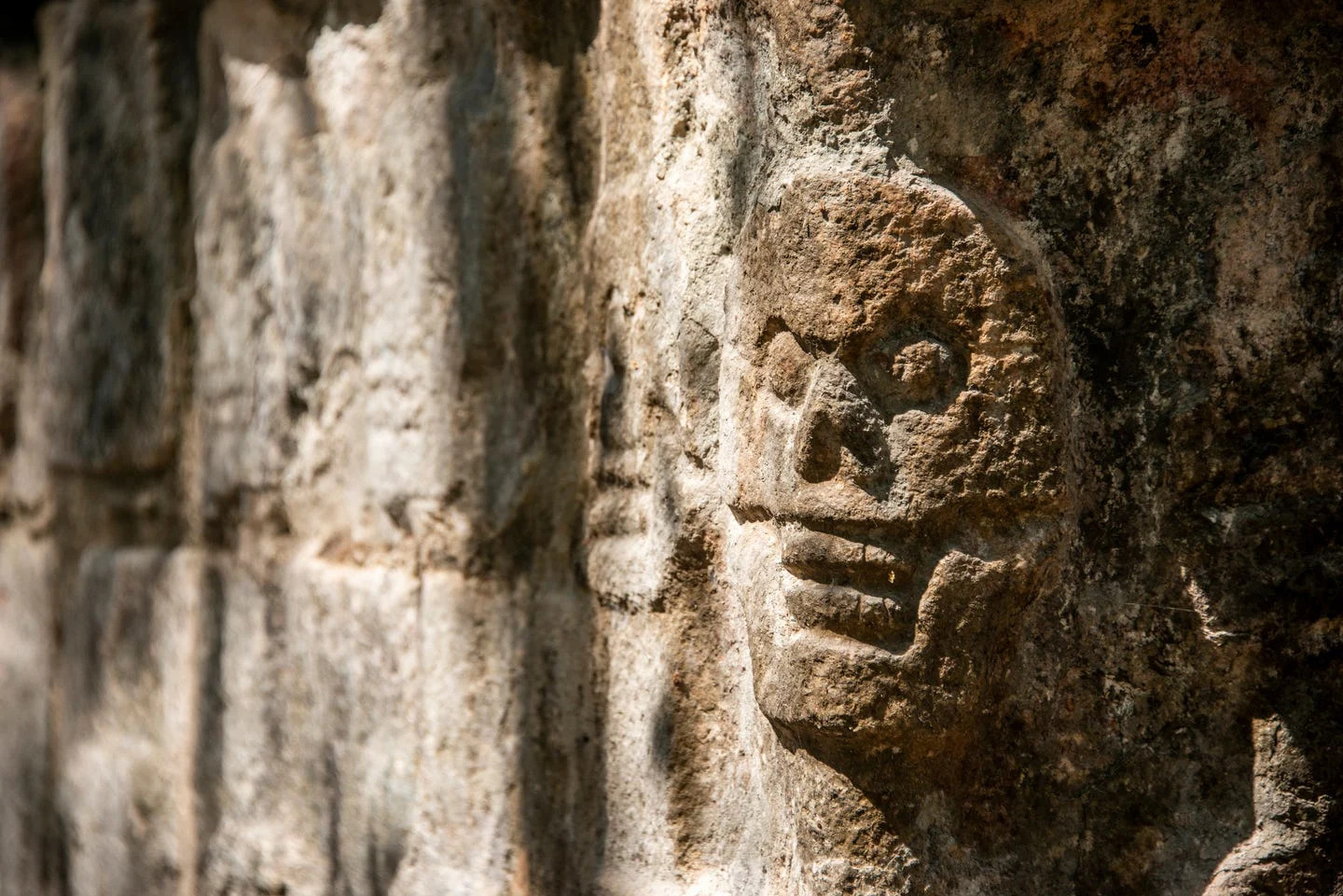
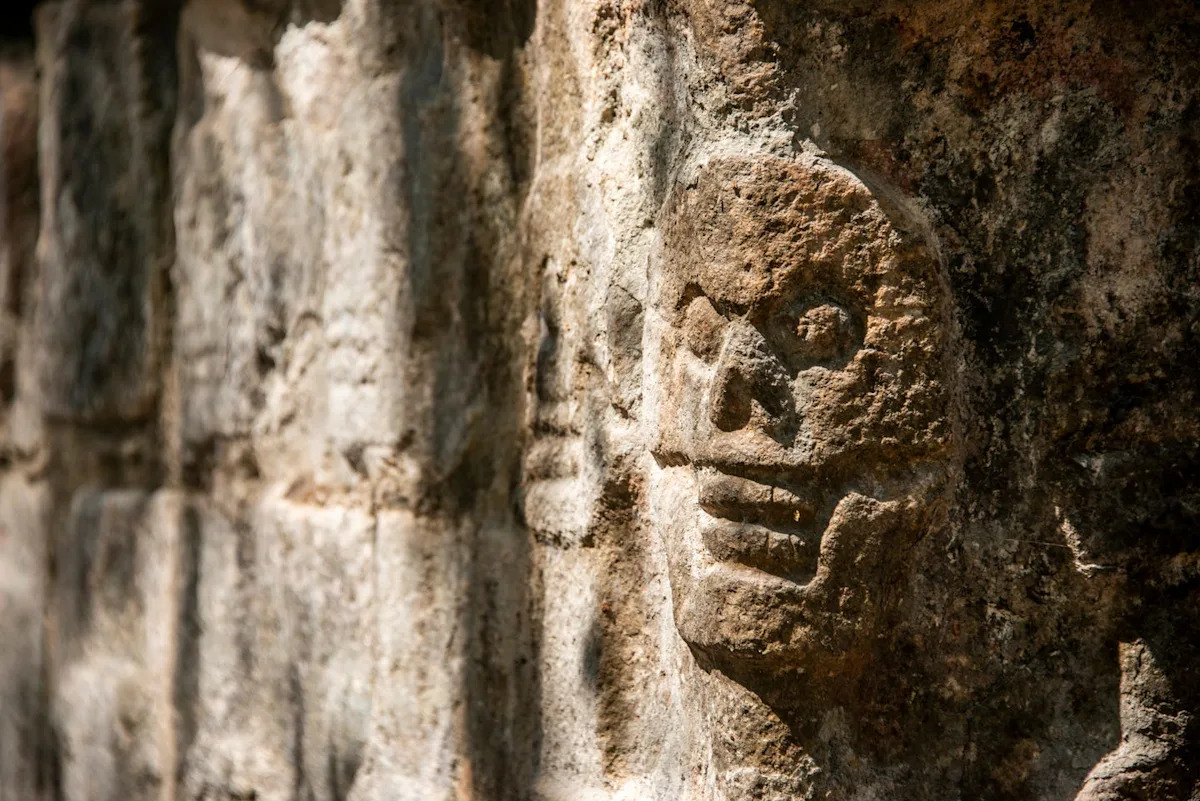
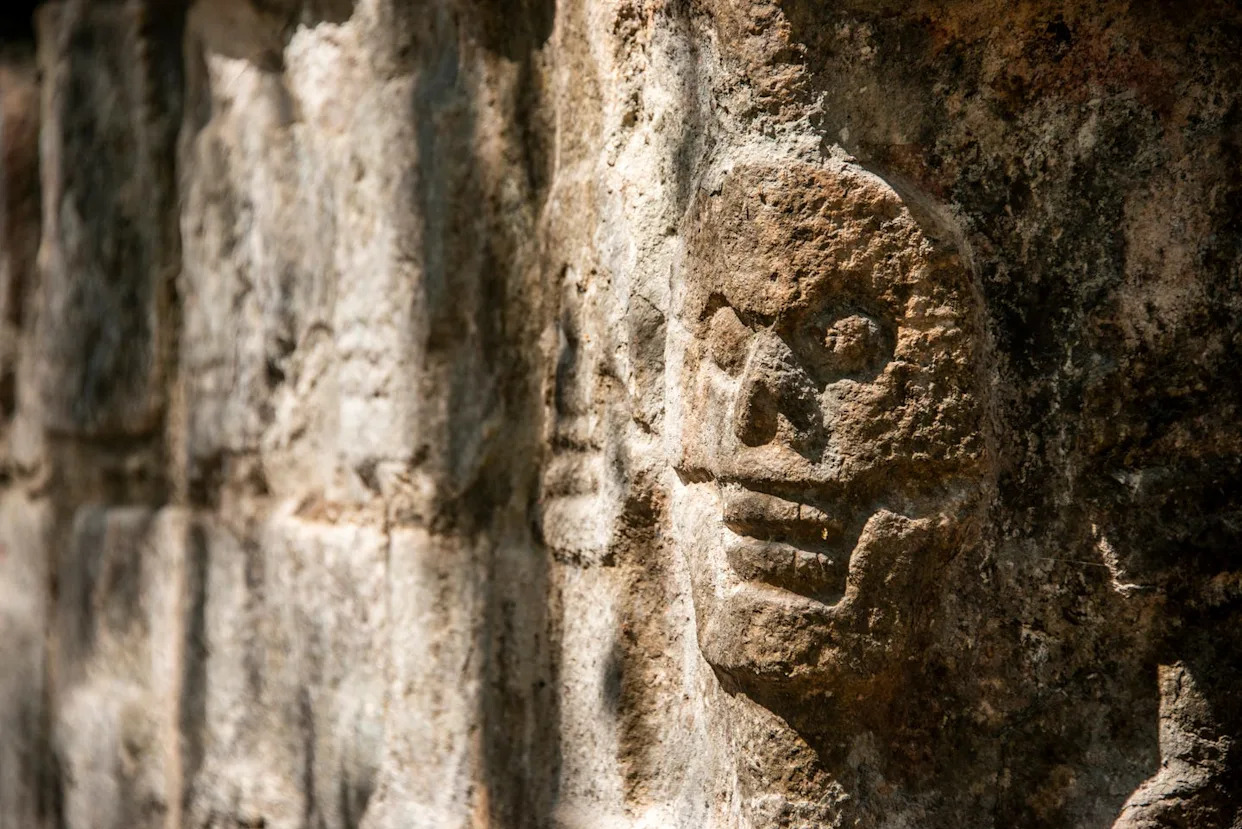
But the discovery included more than just the altar—archaeologists also made intriguing finds in the space around the altar’s base. As crews dug around three of its four sides, they discovered human skeletal remains, including four skulls and several bones, likely femurs. All the remains were discovered within the altar’s bottom tier, and archaeologists believe more remains could still lie undiscovered on the fourth side of the altar.

As crews excavated the base of the altar, they first found two skulls, one facing upward and the other toward the southwest. The excavation proceeded deeper through a layer of rammed earth finished with stucco made of lime and sand, and beneath that layer, the archaeologists unearthed two incomplete sets of human remains along with several vessels.

Heredia Guillén believes there’s a low probability of finding complete skeletons, since it’s likely that only specific parts of individuals were offered as sacrifices at the site. Experts plan to send the project’s findings to a state laboratory to determine the age and sex of the remains, as well as to identify any bone pathologies and even to learn whether the individuals were decapitated, given that one of the skulls is still attached to the spinal column.

“In this instance—although metalworking was already being practiced during the Postclassic period—we know that there, decapitations were still carried out using obsidian or flint knives, which left cut marks on the bones,” Heredia Guillén said.

Along with the remains, the team found ceramic vessels—specifically a black bowl with another vessel nested inside—obsidian fragments, small blades, spindle whorls, bone awls, and other daily-use items.

The altar wasn’t a stand-alone monument, though. As excavations proceeded, the team uncovered walls with foundations and a floor layer, meaning the altar may have been situated within a palace courtyard. “We hypothesize that these structures served either as living quarters or as an elite context—belonging to high-ranking groups—representing the remains of palaces that may have once stood on this site,” Heredia Guillén said. “We know that on the outskirts of Tula, there were neighborhoods inhabited by the upper and middle classes, while the districts for common people were located much farther afield.”

The altar and the possible palace offer a deeper understanding of the urban layout of the Toltec capital. “Every discovery such as this expands our knowledge of one of the great civilizations of Mesoamerica and reinforces a central tenant of our cultural policy: Mexico’s archaeological heritage constitutes the memory of our peoples,” said Claudia Curiel de Icaza, Mexico’s secretary of culture, “and the state assumes the responsibility of researching, safeguarding, and transmitting it to present and future generations.”

You Might Also Like

20 Cars That Were Massively Improved by a Redesign

Going on Vacation? These Appliances Need to Be Unplugged Before You Leave the House

Roborock Reigns Supreme for Robot Vacuums, but We Also Loved These Other Models
Comments
You must be logged in to comment.