yahoo Press
Sunken warship found off Danish coast after 225 years in ‘remarkable’ discovery
Images
1 / 14
2 / 14

3 / 14

4 / 14

5 / 14

6 / 14
7 / 14
8 / 14
9 / 14
10 / 14

11 / 14

12 / 14

13 / 14

14 / 14
A warship that sunk after it was attacked by Adm. Horatio Nelson and the British fleet 225 years ago has been found off the coast of Denmark in what’s been called a “remarkable” discovery.

Maritime archaeologists from the Danish Viking Ship Museum found the ship, which was sunk during the the Battle of Copenhagen in 1801, while surveying the site on the seabed of Copenhagen Harbor ahead of the construction of an artificial island.

The archaeologists, who have been working on the excavation of the shipwreck since the end of last year, found the remains of the vessel 15 meters (almost 50 feet) below the water’s surface, where visibility is virtually zero, according to a press release from the museum published Thursday.

“We have found Dannebroge and the remains of those who never made it ashore after the battle,” Otto Uldum, maritime archaeologist at the Danish Viking Ship Museum, said in the release.

Uldum said that the ship’s dimensions “correspond exactly” to surviving drawings of it, adding: “The area is littered with cannonballs and bar shot. And yes, we have found two cannons.”

The team of archaeologists had been sent to survey the scene ahead of plans to develop a controversial infrastructure scheme.

Lynetteholm is intended to be a 271-acre man-made peninsula devised to shield Copenhagen from rising sea levels. There has been considerable protests about the potential impact on the environment.

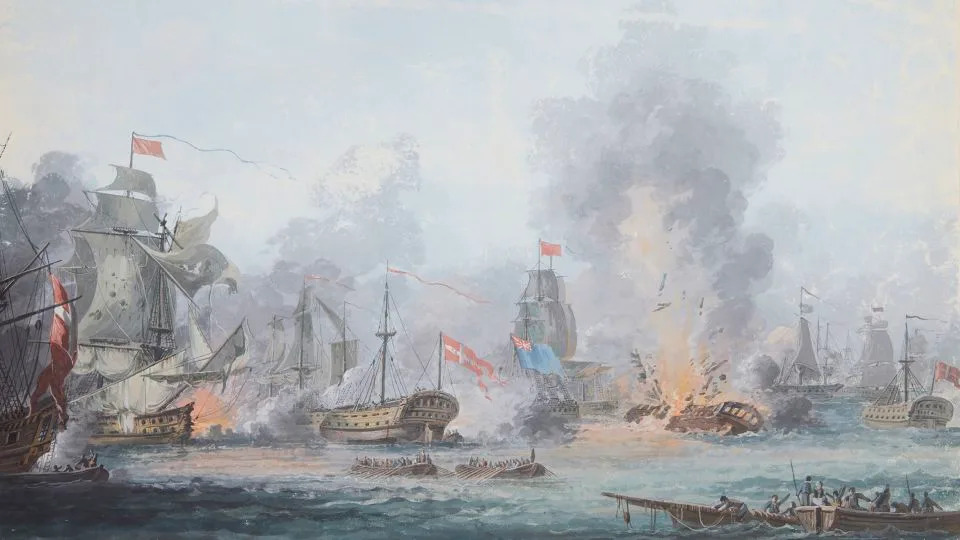
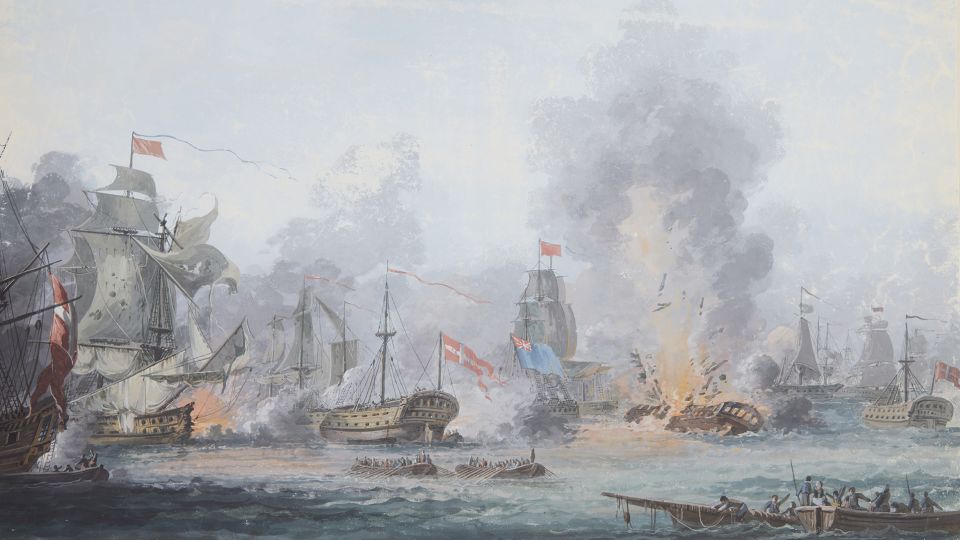
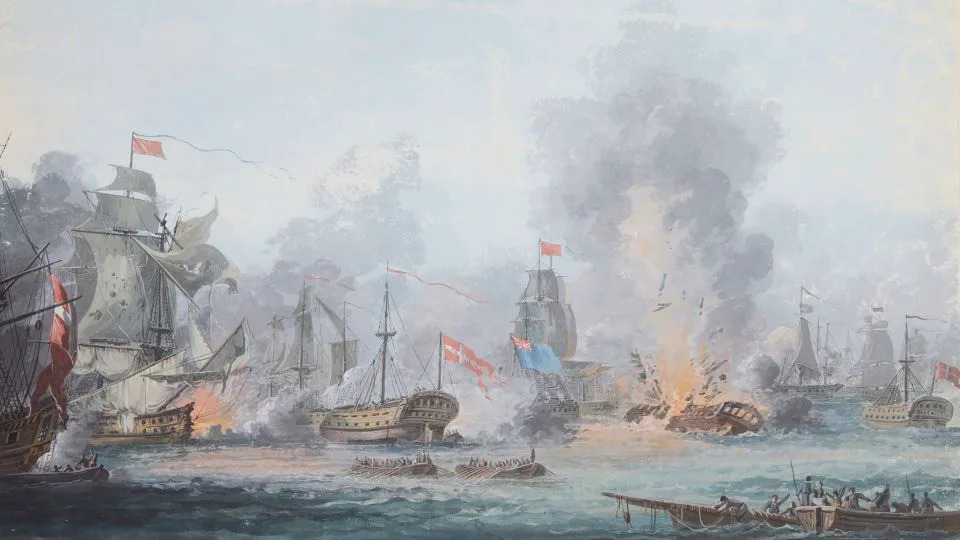
The museum said that the sunken ship is the Dannebroge, which on the morning of April 2, 1801 was anchored in the harbor as part of the Danish-Norwegian defense against British naval commander Nelson’s fleet.

But that day, the Battle of Copenhagen broke out.

Danish sailors spent four hours battling the superior British forces but were ultimately defeated, according to the museum. Heavily hit, the Dannebroge caught fire and then exploded. A ceasefire was declared soon afterwards.

The battle is well documented in the country’s history books but this is believed to be the first time that archaeological investigations in connection with it have been undertaken, according to Uldum.

“Although the battle is a central event in Danish history, no one, to my knowledge, has examined it archaeologically until now. That is actually quite remarkable,” Uldum said in the release.

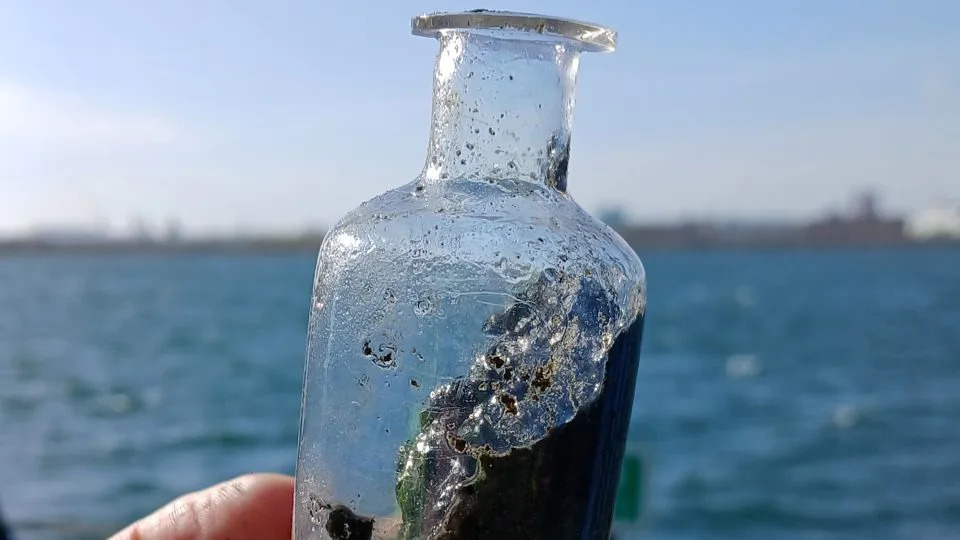
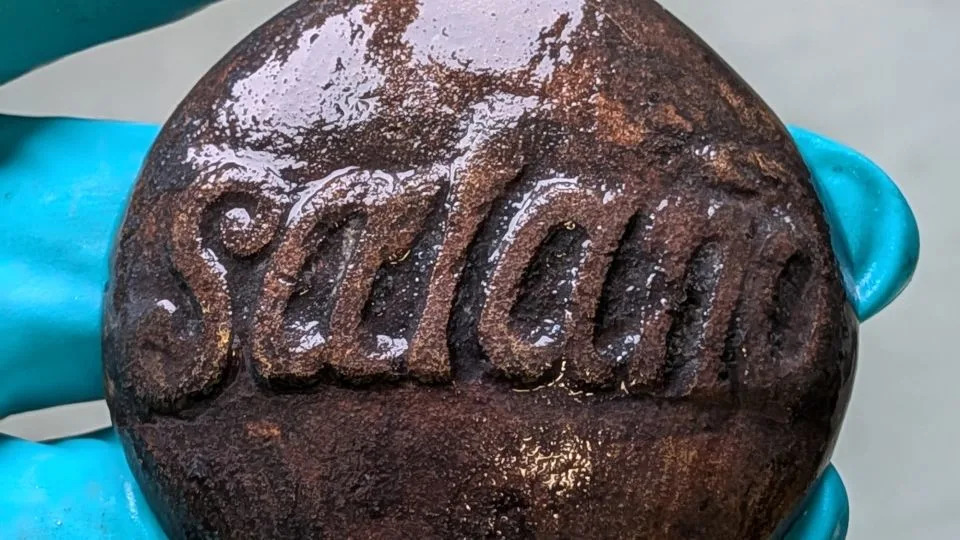
As well as evidence of the battle, Uldum and his colleagues also discovered a host of objects linked to the Dannebroge’s crew, including shoes, fragments of clothing, clay pipes and uniform insignia.

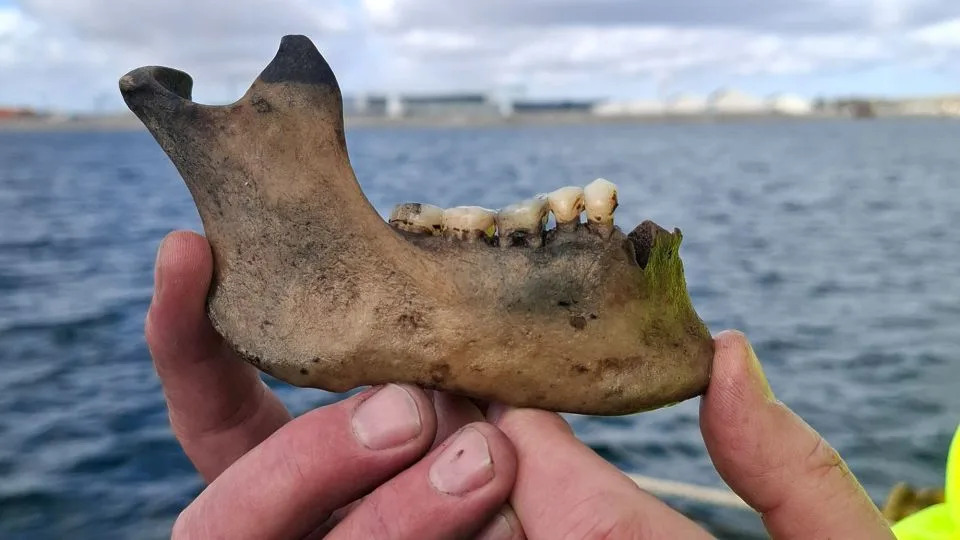
Archaeologists also discovered the remains of one of the recorded missing crew members.

“We have found a lower jaw that is without doubt human, as well as several other bones, including ribs, which could very well be human. We are far from finished sorting and analysing the material, but we are bringing everything up,” said Uldum.

Nelson’s fleet comprised 39 vessels armed with heavy guns. The Dannebroge was at the center of the Danish defense line, led by commander Olfert Fischer. It was the prime target for the British and was bombarded by two of Nelson’s vessels, according to the museum.

Although it only lasted a few hours, the battle resulted in a huge number of casualties. The museum said that records show that 56 people from the Dannebroge ultimately died and more than 40 were wounded.

During the Battle of Copenhagen, the British lost about 255 men, while more than 700 were wounded. For the Danish, the losses were even greater. Some 370 men died in battle and 665 received medical treatment, with more than 100 later dying of their injuries. Even today, the total death toll remains unknown as at least 200 Danes were recorded as missing, the museum said.

Extensive maritime surveys at Copenhagen Harbor have been underway since 2020.

Other shipwrecks have been found at the site, including the world’s largest 15th century cog.

The archaeological investigations are due to be completed this spring. All material recovered at the scene is being photographed and scanned in 3D.

CNN’s Leah Dolan contributed to this report.

For more CNN news and newsletters create an account at CNN.com
Comments
You must be logged in to comment.