yahoo Press
Oil trader loses $17 million after Trump's primetime Iran speech
Images
1 / 5
2 / 5

3 / 5

4 / 5
5 / 5
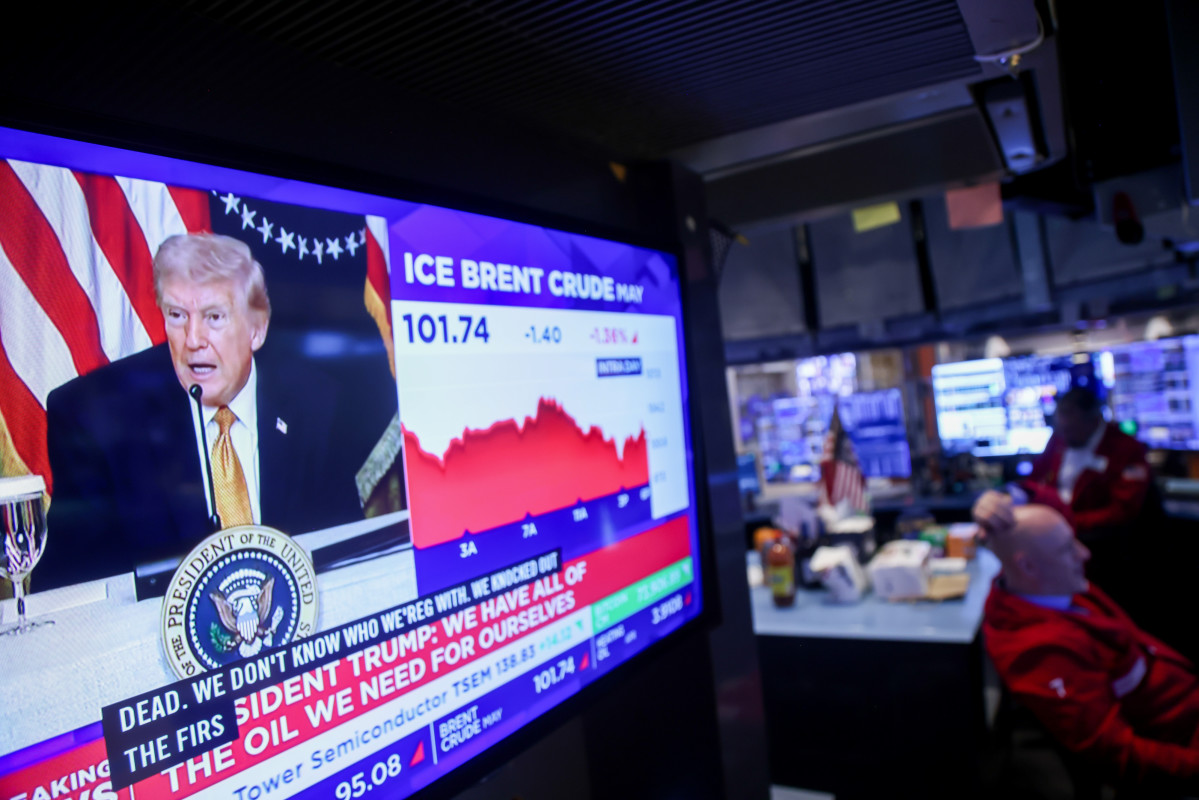
An oil trader lost more than $17 million after U.S. President Donald Trump didn't indicate any path to de-escalate the war in his primetime speech on Apr. 1.

Instead, the president threatened to hit Iran "extremely hard" over the next 2-3 weeks and bring the country back to the Stone Age. He also threatened strikes on Iran's power plants if there is no deal within the next few weeks.

Related: Mysterious trader buys $53 million ahead of Trump's 9 PM Iran address, key takeaways

When Trump didn't lay out a de-escalation plan as expected, the markets tanked and trading activity hiked sharply on the decentralized crypto trading exchange, Hyperliquid.

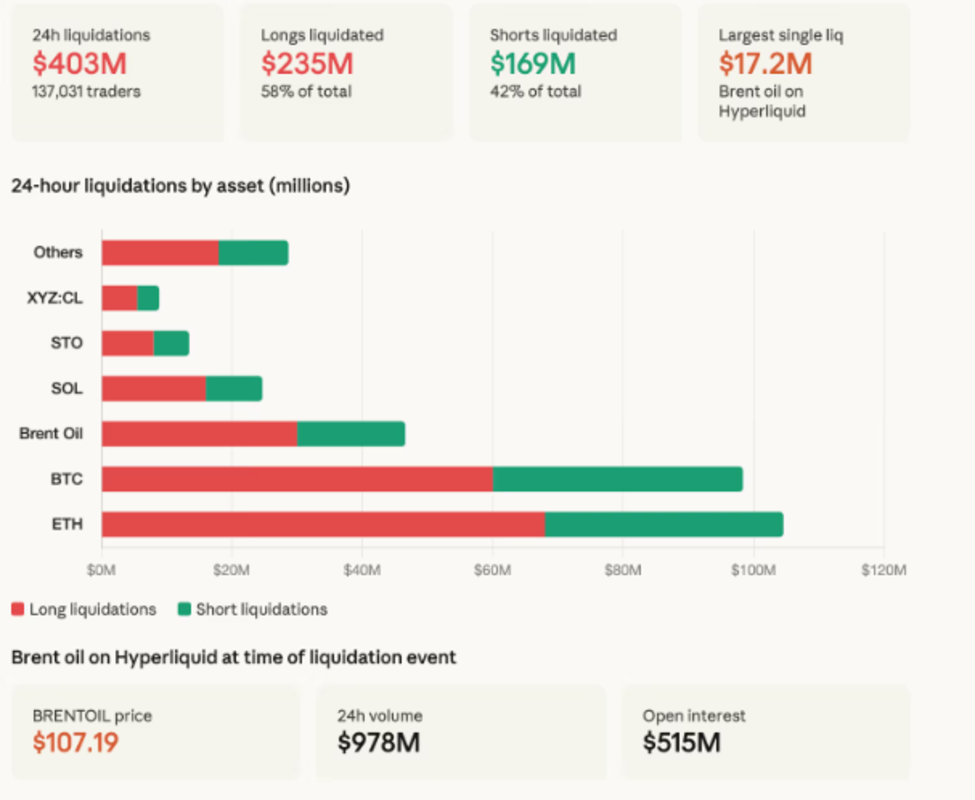
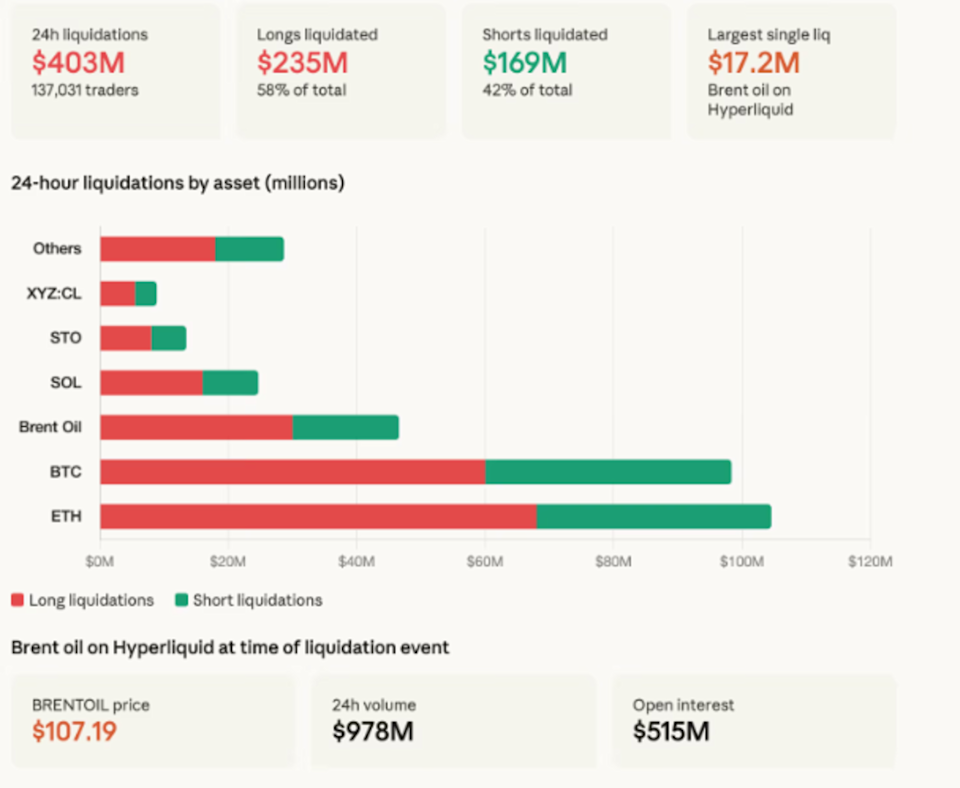
After Ethereum (ETH) saw $104.5 million in liquidations and Bitcoin (BTC) $98.3 million, tokenized Brent crude oil futures ranked third with $46.6 million over the past 24 hours on the exchange. The contract is a perpetual product linked to the price of a barrel of Brent crude oil.

A Brent oil position worth $17.2 million was the largest liquidation across all assets on Hyperliquid.

Ripple CEO predicts new timeline for historic crypto legislation

Google warns quantum attack could crack Bitcoin in 9 minutes

Warren Buffett offers $350B rescue plan amid market uncertainty

Hyperliquid has witnessed a sharp surge in oil trading during the Iran war. Built mainly for perpetual futures trading, the exchange lets users trade asset derivatives with high leverage.

After Bitcoin ($2.78 billion) and Ether ($1.49 billion), the WTI crude oil contract ($934.89 million) and the Brent oil contract ($733.64 million) were the most-traded assets over the last 24 hours on Hyperliquid.

The WTI crude oil contract has surged 10% over the last 24 hours, trading at $109.83 a barrel. The Brent crude oil contract has surged more than 6.5% to trade at $108.85 a barrel.

HYPE, the native token of Hyperliquid, also rose around 7% over the last 24 hours to trade at $34.71 at the time of writing.

Related: Oil becomes second-most traded asset on popular crypto exchange

This story was originally published by TheStreet on Apr 2, 2026, where it first appeared in the MARKETS section. Add TheStreet as a Preferred Source by clicking here.
Comments
You must be logged in to comment.