yahoo Press
The Hidden Idle Asset Trap: A New Era of BESS Optimization in Europe
Images
1 / 5
2 / 5

3 / 5

4 / 5

5 / 5
Record battery deployments across Europe are masking a growing crisis: assets that are grid-connected but financially idle, stranded by saturated markets and outdated optimization strategies. After five years of relentless growth, Europe’s battery energy storage system (BESS) market has hit a wall of its own success. In 2025, the continent added a record 27.1 GWh of capacity, bringing the total fleet to more than 77 GWh. But as we move deeper into 2026, a paradox is emerging: while the grid needs more flexibility than ever, the business models that funded the first wave of batteries are failing. The era of the capacity race is, to an extent, over. The era of utilization intensity has begun.

The industry is currently obsessed with physical delays. A recent analysis from the International Energy Agency (IEA) estimates that more than 600 GW of storage projects worldwide are currently languishing in connection queues. In developed hubs such as the UK and Germany, wait times are stretching beyond five years. These “idle” assets represent billions in trapped capital, waiting for transformers and permits.

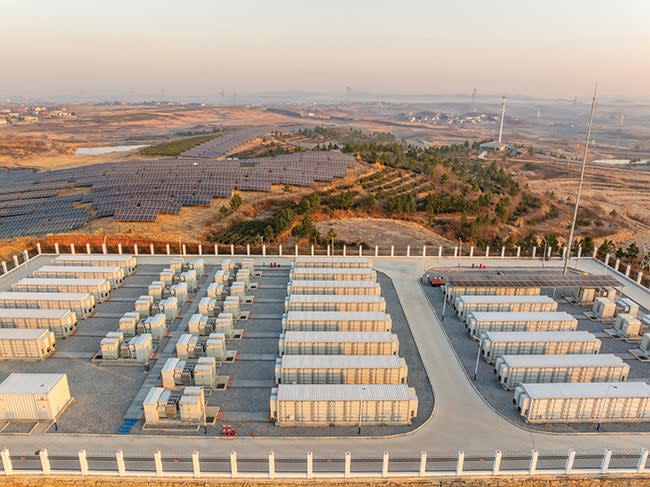
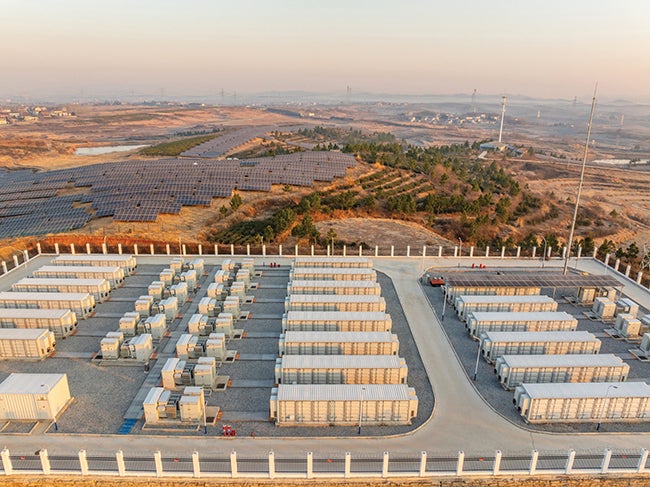
1. Across Europe, a growing number of grid-connected battery energy storage system (BESS) assets are financially idle, tethered to saturated markets by software that can’t keep up. Courtesy: Sympower/iStock

In addition, a more insidious form of inactivity is appearing: assets that are fully connected to the grid but remain financially idle. These are batteries tethered to saturated markets, managed by software that lacks the agility to pivot. This creates a critical inflection point for existing projects (Figure 1). Many current owners are realizing their internal teams or trading and optimization partners are fundamentally unequipped for the current rapidly transitioning market. Reliance on small, non-specialized internal desks or legacy partnerships has become a primary driver of underperformance. Whether an asset is waiting for a cable or waiting for a bid that will never clear, the result for the investor and the grid is the same: zero.

For the early pioneers of European storage, the strategy was simple: build a battery and bid into ancillary services like Frequency Containment Reserve (FCR). These markets paid well for the battery to operate exclusively to balance the grid’s frequency. However, these are “shallow” markets that require a fixed, relatively small amount of capacity. As the installed base of batteries grew manyfold between 2021 and 2025, the supply of frequency response quickly outstripped demand. The same phenomenon happened first in Australia and Great Britain, where ancillary revenues plummeted by 80% in just two years. By early 2026, similar saturation has reached the Nordics and Germany. The safe haven of predictable, capacity-based income has vanished, leaving assets that rely solely on these services idle, not because they aren’t working, but because they are no longer earning. This is not the case everywhere, but the exception proves the rule. In emerging markets like Greece and Poland, which have so far built limited capacity, often for regulatory reasons, a Gold Rush for early movers will occur. Early movers are reaping “super profits” by capturing high frequency-response prices and wide arbitrage spreads simultaneously. However, investors must view these markets as a temporary reprieve rather than a permanent strategy. History shows this window is narrow, and leading market analysts have continuously failed to accurately predict saturation rates. In a market where 1 GW of demand can be met by 1 GW of supply in a single construction cycle, saturation typically occurs within 24 months of the first major utility-scale deployments.

As ancillary prices bottom out, the industry is seeing a distinct shift in what defines a top-tier asset. In the early 2020s, success was defined by execution—securing equipment and delivering projects through engineering, procurement, and construction (EPC) deals. In 2026, this is no longer enough: success is now defined by intelligent operation. The revenue stack has migrated from static grid services to dynamic wholesale trading. This transition represents a fundamental change in both the requirements for software to operate and trade the batteries, and in the physical operational intensity and corresponding hardware requirements. A battery trading in the wholesale market must react to price signals, weather shifts, and grid imbalances in real time. This is no longer a job for human traders or simple rule-based algorithms. It requires AI-driven optimization that can forecast volatility and execute thousands of trades across different time horizons simultaneously.

In 2026, the wholesale frontier is no longer a single destination, but a multi-layered environment where value is stacked across different timescales. The most advanced operators have moved beyond simple buy-low/sell-high cycles and are instead treating their BESS (Figure 2) as a financial instrument that can pivot between the day-ahead (DA), intraday (ID), and balancing markets.

2. In 2026, the most advanced operators are treating BESS assets as financial instruments, stacking value across day-ahead, intraday, and balancing markets. Courtesy: Sympower/iStock

The DA auction is typically the baseline of the trading strategy, during which an operator might commit a portion of the battery, say 40%, to lock in a baseline spread. This provides a guaranteed floor for the day’s revenue, which is also the simplest step. The real challenge is improving on this floor, constantly re-optimizing up to seconds before activation through additional markets. As weather forecasts shift or wind production ramps up unexpectedly, ID prices often diverge significantly from DA prices. A smart software platform will re-optimize the battery’s position: if the ID spread is wider than the one locked in during the DA auction, and there is sufficient liquidity, the software may effectively sell its DA position back to the market and take a new, more profitable ID position. The complexity intensified in late 2025 with the European shift to 15-minute Market Time Units (MTUs). By breaking the trading day into 96 windows instead of 24, the market unlocked roughly 14% more revenue potential for flexible assets. This also increased micro-cycling stress: modern optimization must be degradation-aware, weighing quick profit against the risk of voiding a warranty. An aggressive software strategy might capture a high-value price spike today, but could shorten its life by years. That’s why the battery’s health status should be continuously monitored, and the trading strategy adjusted accordingly to ensure battery longevity isn’t shortened and profitability isn’t at risk. More complexity and more value in the markets can be unlocked through high-frequency financial activity. Because an ID market is “continuous,” with trades happening every second rather than in a single big auction, an operator can trade a single megawatt-hour multiple times before it is ever physically delivered. Operators can earn significant revenue through pure financial trading, buying a 15-minute position when they predict prices will rise and selling it an hour later to another participant, all without actually moving a single electron in or out of the battery. This “virtual” trading generates profit while saving the physical battery from the wear and tear of a physical cycle. Beyond the wholesale markets lies the manual Frequency Restoration Reserve (mFRR) energy activation market. While ancillary markets provide availability payments that pay participants to stand by, the mFRR energy market pays for actual activation. Leading into 2026, the European MARI (Manually Activated Reserves Initiative) platform is making mFRR activations more automated, efficient, and lucrative. BESS assets are uniquely suited for this market because they can ramp up to full power almost instantly. By holding back a fraction of the battery’s state of charge, an operator can wait for an “emergency” spike in the mFRR market, where prices can surge to €10,000/MWh, to deliver extremely high-value activations and support critical grid needs. Success will be defined by dynamic stacking, the ability to constantly weigh the certain profit of a DA hedge against the potential of ID spikes and mFRR activation, all while managing the physical health of the asset.

The “idle asset trap” is real. Across Europe, gigawatts of capacity are stuck in the multi-year connection queue, or experiencing pre-qualification delays, but just as real are assets currently tethered to saturated markets because their management software lacks the agility to pivot. As we look toward the 2030 energy targets, the difference between a profitable project and a stranded asset will not be the chemistry of the cells or the name on the inverter. It will be the sophistication of the digital brain managing it. For developers and investors, the most critical hardware decision you make in 2026 might actually be a software one.

—Daniel Trueman is BESS program manager with Sympower.
Comments
You must be logged in to comment.