huffpost Press
Judge Questions Pentagon's Latest Press Restrictions: 'How Weird Is That?'
Images
1 / 8

2 / 8

3 / 8

4 / 8
5 / 8

6 / 8

7 / 8

8 / 8
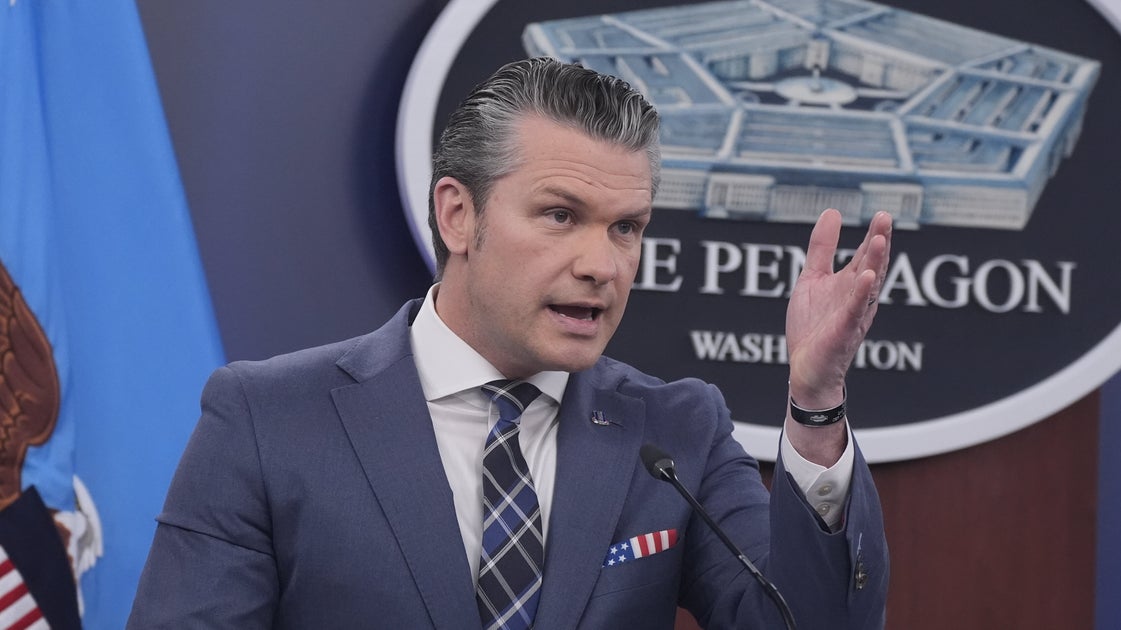
A federal judge questioned the Pentagon’s new press restrictions during a hearing on Monday.

Earlier this month, Judge Paul Friedman of the U.S. District Court for the District of Columbia blocked the Pentagon’s latest press restrictions. However, according to a complaint from The New York Times, the Pentagon did not simply follow the order. Instead, it limited reporter access by shutting down the Correspondents’ Corridor and granting journalists access to another area that the press cannot reach without being escorted.

“How weird is that?” Friedman reportedly said at a hearing on Monday. “Is it ‘Catch-22’? Is it Kafka? What’s going on? That hardly seems consistent with right of access and the First Amendment.”

“Nothing will stop them. Not a court order. Not an injunction,” Theodore J. Boutrous Jr., a lawyer representing the Times, reportedly said.

“They’ve made the press credentials that we fought so hard to get back a meaningless piece of plastic. They’ve violated the First Amendment,” he added.

Boutrous also pointed out that cutting off press access to the Pentagon limits the public’s ability to know about the U.S.-Israel war on Iran.

“There is a war going on and the American people are being shut down from information,” Boutrous said.

Although the judge did not issue a ruling, he gave government lawyers until the end of Tuesday to respond in writing to the Times’ complaints, Politico reported.

After the hearing, Commander Timothy Parlatore told reporters that the new policy was meant to stop leaks about confidential information.

“This policy, honestly, has been effective,” he said, per Politico. “A year ago, there was constant leaks and constant reports about classified things, and that has largely stopped. Venezuela, Iran, we’ve been able to execute those missions perfectly without, without the same worry of the classified leaks.”

The Pentagon’s latest media restrictions, announced in October, required the department to approve all information reporters used in their work, even if it was unclassified. Reporters also would lose press credentials inside the Pentagon for “unauthorized access, attempted unauthorized access, or unauthorized disclosure” of classified or “controlled unclassified information.”

The new press policy prompted many journalists, including those from HuffPost and The New York Times, to turn in their press badges. The New York Times filed its lawsuit against the Pentagon and Defense Secretary Pete Hegseth on Dec. 4, 2025.

“The policy, in violation of the First Amendment, seeks to restrict journalists’ ability to do what journalists have always done – ask questions of government employees and gather information to report stories that take the public beyond official pronouncements,” the complaint, obtained by HuffPost, said.

The judge discarded the entire policy in a ruling on March 20, saying that “openness and transparency allows members of the public to know what their government is doing in times of peace and, more important, in times of war and upheaval.” Friedman also ordered that the press passes of the seven New York Times Pentagon reporters be reinstated.

After Friedman’s ruling, a New York Times spokesperson said that it “reaffirms the right of The Times and other independent media to continue to ask questions on the public’s behalf.”

“Americans deserve visibility into how their government is being run, and the actions the military is taking in their name and with their tax dollars,” the statement continued.

By entering your email and clicking Sign Up, you're agreeing to let us send you customized marketing messages about us and our advertising partners. You are also agreeing to our Terms of Service and Privacy Policy.
Comments
You must be logged in to comment.