yahoo Press
A Woman Walked Into an ER With Trouble Breathing. Then the Entire Hospital Started Collapsing.
Images
1 / 10

2 / 10

3 / 10

4 / 10

5 / 10

6 / 10
7 / 10

8 / 10

9 / 10

10 / 10
Here’s what you’ll learn when you read this story:

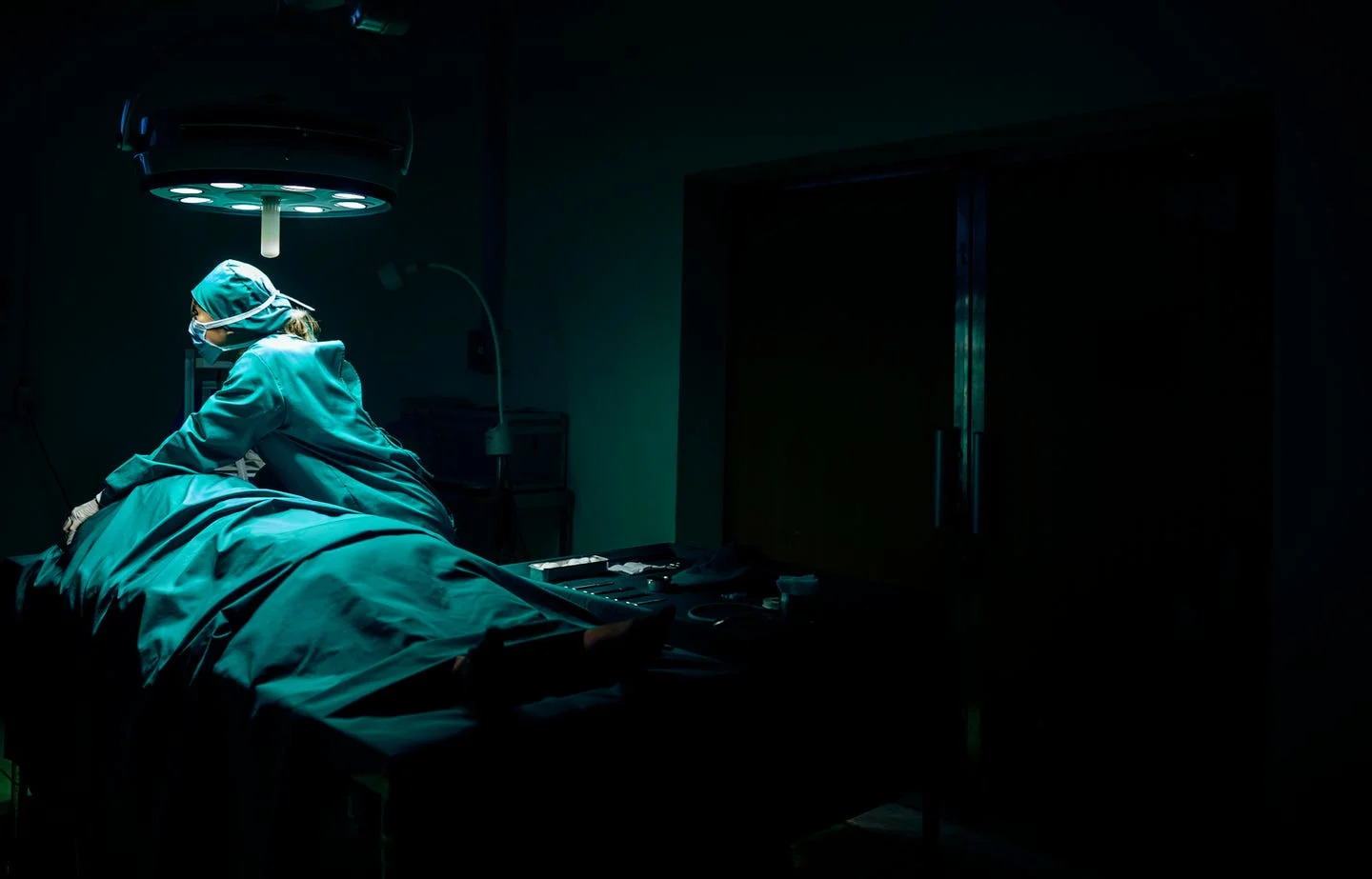
On February 19, 1994, a woman brought to the emergency room at Riverside General Hospital somehow sickened nearly two dozen emergency room staff members during attempts to save her life.

There are many competing explanations of this strange event, including mass hysteria or poor hospital maintenance.

A leading theory suggests that dimethyl sulfoxide from a pain-relieving cream reacted with emergency supplemental oxygen to produce the deadly gas that impacted the emergency room staff.

At approximately 7:50 p.m. on February 19th, 1994, Riverside Fire Department responded to a woman in distress. The woman, 31-year-old Gloria Ramirez, had by all accounts lived a quiet life until this moment, but her death would become one of the most well-documented medical investigations in history, transforming her from a well-loved mother of two into what national news headlines dubbed “the toxic lady.”

When fire and ambulance crews initially arrived at the home, Ramirez—who weeks earlier received a terminal diagnosis for cervical cancer—was experiencing severe nausea, vomiting, and tachycardia (an abnormally fast heartbeat) and was soon rushed to nearby Riverside General Hospital in Riverside, California. Upon arrival, staff responded to the emergency with textbook effectiveness, administering drugs for sedation and trying to reduce Ramirez’s rapid heartbeat. It wasn’t until one registered nurse named Susan Kane inserted a catheter and attached a syringe that things went sideways.

Kane smelled the undeniable scent of ammonia while Julie Gorchynski, a medical resident, noticed strange, manila-colored particles in Ramirez’s blood. Then, suddenly, Kane nearly collapsed to the floor, as Gorchynski did a moment later, followed closely by respiratory therapist Maureen Welch, who’d been trying to force air into Ramirez’s lungs with a rubber bladder (Welch later reported completely losing control of her limbs). Sadly, Ramirez died only one hour after ambulances initially arrived at her residence.

While the story of Ramirez’s tragically short life was over, an absolutely confounding medical mystery was only beginning. According to a final count, 23 of 37 emergency medical staff experienced symptoms tied to this strange event, and in the following weeks, the search for answers led to three separate autopsies carried out in a specially designed room with HAZMAT suits. Initially, the California Department of Health Services released a report that the event was possibly the result of mass hysteria among the medical staff, but physicians like Welch argued against this characterization in light of the severity of her symptoms. Needless to say, this mass-hysteria explanation didn’t stick.

Ramirez’s family also suggested that the hospital was at fault. Shorty after Ramirez’s death, The Washington Post reported a series of failed inspections in the months and years leading up to the incident, including evidence of sewer gas leaking into the emergency room.

However, once patient files and biological materials were sent to the Forensic Science Center at Lawrence Livermore National Laboratory (LLNL) in California, another plausible alternative began to take shape. LLNL scientists determined that the culprit was likely the organosulfur compound dimethyl sulfoxide (DMSO), which followed an incredibly strange chemical journey that ultimately generated a toxic concoction.

According to the theory, Ramirez, who was suffering from late-stage cervical cancer, used a DMSO-laden product to ease pain and eventually absorbed an unknown accumulation of the chemical in her blood. When Ramirez received oxygen in the ambulance on the way to the hospital, oxygen molecules combined with the high accumulation of DMSO and formed dimethyl sulfone, a chemical compound that’s only a few steps away from being the poisonous nerve agent dimethyl sulfate. What likely happened next is that some of the dimethyl sulfone in Ramirez’s blood broke apart and bonded with common sulfates in her body. When her blood was drawn at the hospital, a small amount of dimethyl sulfate evaporated in the syringe and poisoned the emergency room staff. Dimethyl sulfate is a highly toxic nerve agent, and many of the symptoms of exposure to it match the symptoms of the people inside Riverside Hospital’s emergency room that night.

But while those matching symptoms are compelling, other scientists have said that this explanation is highly unlikely—bordering on impossible—and it’s likely we’ll never know for certain what happened on that February evening.

On April 19, 1994, exactly two months after the beginning of the bizarre tale, the family and loved ones of Gloria Ramirez held a memorial for their friend, sister, and mother. Ceaseless reporting and public interest had dubbed her the “toxic lady,” but on this day she was just a cherished person and a painful loss. At the memorial, Ramirez’s 12-year-old Evelyn and 9-year-old Angel stood by her flower-flanked casket as Ramirez’s sister read a poem written by Evelyn herself:

“Roses are red, violets are blue…The next time I find a red rose, it will be just for you. When the stars shine, it will remind me of you.”

You Might Also Like

20 Cars That Were Massively Improved by a Redesign

Going on Vacation? These Appliances Need to Be Unplugged Before You Leave the House

Roborock Reigns Supreme for Robot Vacuums, but We Also Loved These Other Models
Comments
You must be logged in to comment.