bbc Press
Video shows US missile likely used in deadly strike on Iranian town, experts say
Images
1 / 12

2 / 12
3 / 12
4 / 12
5 / 12
6 / 12

7 / 12
8 / 12

9 / 12
10 / 12
11 / 12
12 / 12
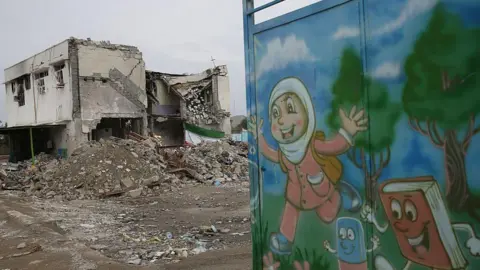
State-of-the-art US missiles were likely used in a deadly strike on a residential area of Iran last month, according to an analysis of footage by weapons experts.

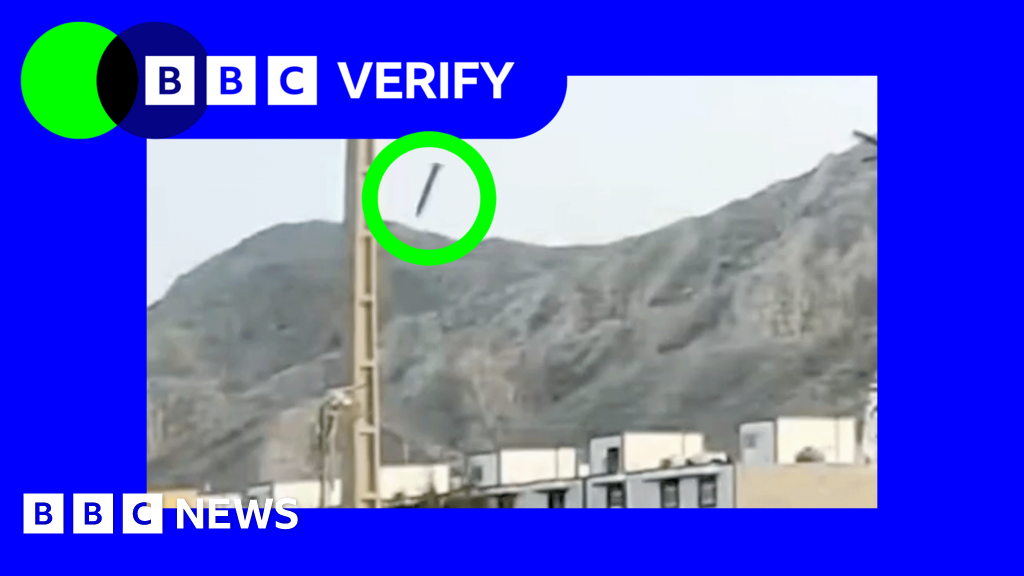
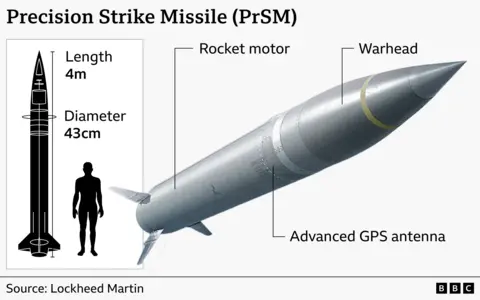
The analysts said a projectile visible in footage of the strike on residential buildings in the southern town of Lamerd was likely a Precision Strike Missile (PrSM). The munition is a new long-range weapon operated by the US military.

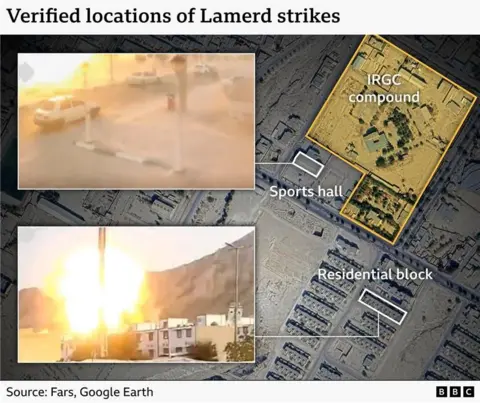
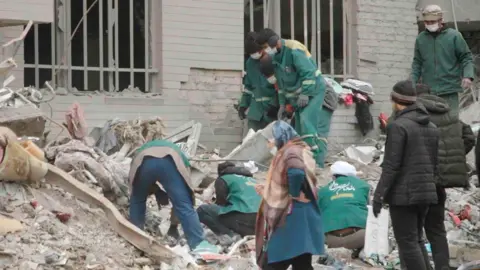
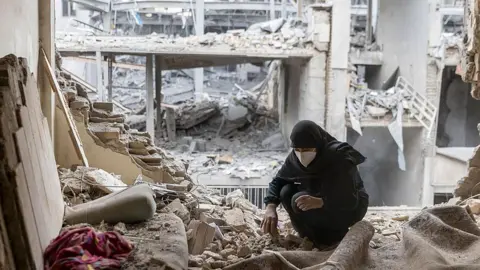
According to Iranian state media at least 21 people were killed in at least two strikes on the town that day that hit residential buildings and a sports hall about 300 metres apart.

Centcom - which oversees US military operations in the Middle East - declined to comment.

Lamerd is a town in the Fars province of about 30,000 people, according to the 2016 census. Surrounded by rugged mountains, it is around a 14-hour drive from the capital, Tehran.

CCTV footage published by Iranian state media - which was authenticated and geolocated by BBC Verify - shows what experts identify as a likely US munition in flight, moments before it explodes above the target area.

Three analysts at the defence intelligence company Janes and an expert at McKenzie Intelligence said the projectile's shape, length and size of the blast created, and lack of visible nose-mounted controls, indicate the weapon in the verified footage is likely to be a PrSM.

Amael Kotlarski - an analyst with Janes - said based on those characteristics and the distance from potential US launch sites in the Middle East, the PrSM is likely the only munition in the American arsenal that could have hit the town.

McKenzie Intelligence also observed that Lamerd was "within the extended range" of the missile. "US Central Command has admitted to using PrSM in strikes from the desert of an unnamed Gulf country against Iran in the early phases of the conflict," it noted.

The intended target of the strike may have been an Iranian Revolutionary Guards Corps (IRGC) base located adjacent to the sports hall. While no on-the-ground footage has emerged of the base to show the impact, the building appeared to be undamaged on high-resolution satellite imagery on 9 March.

The strike, which took place on the opening day of the war, came just hours after an attack on a school in Minab which Iranian authorities say killed at least 168 people, including about 110 children. US Defence Secretary Pete Hegseth said the incident was under investigation and insisted US forces "never target civilian targets".

The conflict marks the first time the weapon, which is manufactured by Lockheed Martin and entered service in 2023, has been used by the US military, according to the Department of Defense.

Little is publicly disclosed about this new generation of long-range ballistic missile that can reach distances of up to 500km (310 miles).

It is the successor to ATACMS - a surface-to-surface ballistic missile with a range of up to 300km (186 miles), which has been used by Ukraine against Russia.

Chairman of the Joint Chiefs, Gen Dan Caine, hailed his troops' use of the system in a press conference on 13 March, saying they had "made history" and carried out their operations with "the precision and determination that comes from relentless training and trust in each other and in their weapon systems".

Videos and photos reviewed by BBC Verify suggest the missile may have also been used in a near simultaneous strike on a sports hall about 300m away from the residential buildings.

One video showed a main road with cars passing by, with the sports hall visible in the background. Moments later, a bright yellow fireball erupts on the sports hall. While the angle of the video does not show the missile, shockwaves appear to shatter the windows of the building across the street and a man is seen running away in panic.

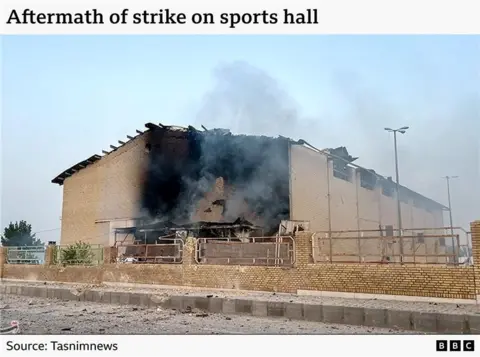
Footage of the aftermath shows the entire side of the building blackened with soot with a plume of smoke rising into the air. Damage could also be seen to the roof and blast fragments surrounded the area.

An analyst from Janes said although it is not possible to identify the munition used on the sports hall from the video alone, photos of the aftermath point to evidence consistent with a PrSM warhead.

"This is the first time we are seeing the PrSM in action, so we have nothing to compare it to. The fragmentation pattern and density visible on the building does support the analysis on the nature of the PrSM warhead," Kotlarski said.

Publicly available images paint a picture of daily life in the town's sports hall, where schoolchildren played volleyball tournaments and students sat exams.

Among the children killed that day was a 12-year-old girl, Elham Zaeri, according to multiple Iranian state media outlets. Her father described her as an avid volleyball player, who would always turn up to the sports hall 20 to 25 minutes early.

The youngest victim was reportedly two years old.

Days after the strikes a mass funeral procession took place in the city. Footage from the IRGC-affiliated Tasnim news agency, showed hundreds of mourners bowing their heads in front of a group of at least 18 coffins draped in the flag of the Islamic Republic of Iran. Another clip appeared to show that a young child was among those buried.

The Open Source Munitions Portal - a database that records footage and images of munitions used in conflicts - also identified footage of a PrSM in a video published by Centcom on 1 March, the day after the war began.

On its website Lockheed Martin describes the missile as "mature, proven, affordable and low-risk". The company declined to comment on the strike, referring questions to the US government.

On Wednesday, the company said it had signed an agreement with the US Department of Defense to "quadruple" production of the munition.

What claims do you want BBC Verify to investigate?

One month since the US and Israel launched strikes on Iran, Tehran residents tell the BBC their lives have been devastated.

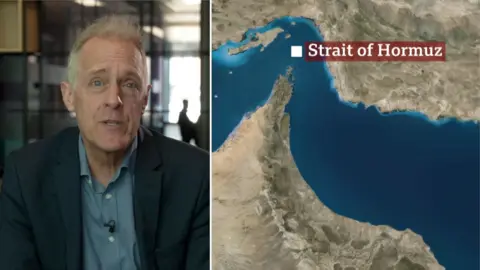
Marco Rubio said US allies were open to helping escort ships through the Strait of Hormuz, which Iran has closed and threatened to charge fees for.

Conflict has spread across the Middle East since the US and Israel launched strikes on Iran on 28 February.

Paul Adams explains why it is so dangerous to navigate the strait, one of the world's busiest oil shipping channels.

The strike - which killed at least 168 people, mostly children - "evoked a visceral horror", Volker Türk said.
Comments
You must be logged in to comment.