bbc Press
Silicon Valley reeling from social media addiction trial verdict
Images
1 / 10

2 / 10
3 / 10
4 / 10

5 / 10
6 / 10

7 / 10

8 / 10

9 / 10

10 / 10
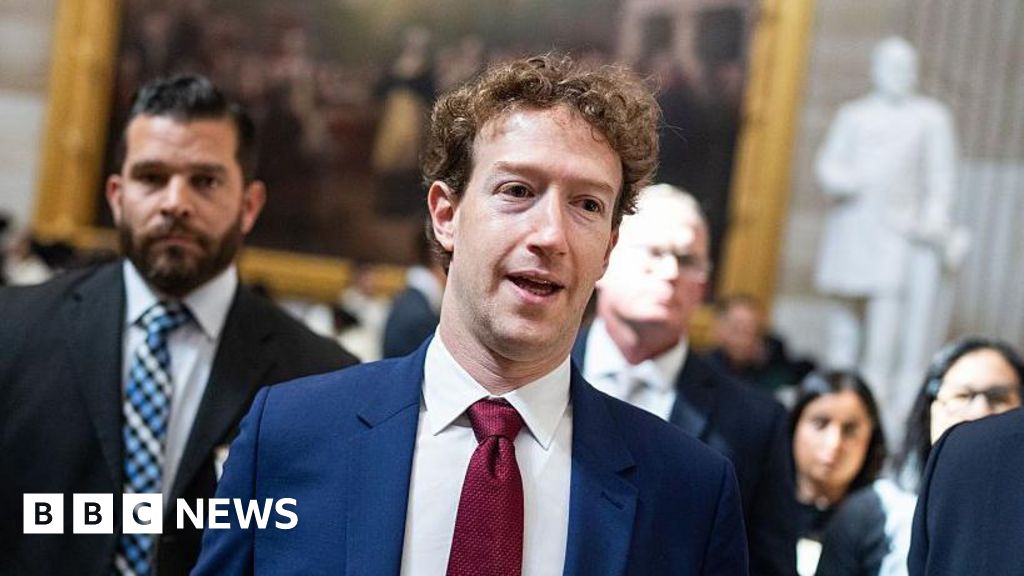
Silicon Valley is reeling from the seismic verdict delivered by an LA jury on Wednesday.

Tech giants Meta and YouTube were found to be liable for designing their platforms to be addictive, which harmed a 20-year-old's mental health.

The plaintiff at the heart of the case was only known by her first name Kaley, and after nine days of deliberation, the jurors agreed with her on all counts.

Some in the tech world have sought to downplay this case's impact, while others fear it's the beginning of a public reckoning that poses a threat - potentially an existential one - to US social media companies.

As one insider who asked not to be identified told the BBC, "we're having a moment".

The verdict has forced those inside the companies to grapple with the fact that many outsiders do not view them as favourably as they have come to view themselves.

That realisation has been difficult for companies that a decade ago were hailed as critical to connecting and entertaining people, and even helping to spread democracy around the world.

Meta, and YouTube owner Google, have both said they will appeal the jury's verdict, which included $3m (£2.3m) in compensation and an additional $3m in damages intended to punish the companies.

Inside Meta, the verdict is viewed as a disappointment. Going into the trial, the company was confident in the strength of its position.

Its argument involved laying out Kaley's struggles with her family and challenges in school, which they said preceded her use of Meta's Instagram starting at the age of nine.

Kaley claimed the platforms amplified her personal issues and left her with body dysmorphia, depression and suicidal thoughts.

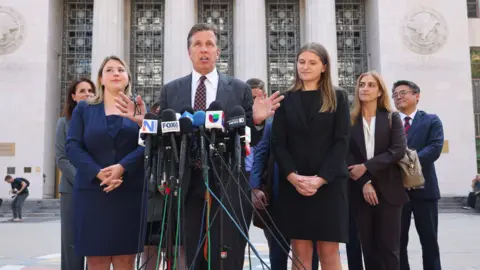
"It was a clean sweep with respect to liability against both Google and Meta," case attorney Jayne Conroy told the BBC after the verdict. "It will matter."

"I bet there's a lot of math going on in boardrooms at Meta, Google, Snap and TikTok as they evaluate what that means if they know thousands of cases are coming their way," she added.

TikTok and Snapchat's parent company Snap Inc had been defendants in the case but settled before the trial started.

But they are not off the hook yet, as they will be defendants in several upcoming bellwether trials.

Those cases will continue to test a new legal theory that social media companies caused personal injuries by designing their products to be addictive in the pursuit of profit.

For now, Meta hasn't given any indication it will change its posture, or will be more likely to settle future cases.

"We will continue to defend ourselves vigorously as every case is different, and we remain confident in our record of protecting teens online," the company said on Wednesday.

A Meta spokesperson told the BBC that reducing something as complex as teen mental health to a single cause risks leaving the many, broader issues teens face today unaddressed.

"Many teens rely on digital communities to connect and find belonging," Meta said.

A Google spokesperson told the BBC its video platform YouTube had been misunderstood in the court case.

YouTube is "a responsibly built streaming platform, not a social media site," the company said.

It's clear these companies won't take the ruling lying down.

Former Twitter executive Bruce Daisley said most big tech firms derive their value from growing faster than the rest of the stock market.

Played out over 20 years, that means "effectively you've got a business which is just geared for trying to force people to spend more and more time [on their apps]".

Any sort of regulation - or in this case lawsuit - which jeopardises that becomes a problem that needs to be dealt with.

"The tech firms spend more on lobbying and more on PR than any other sector in the world," Daisley told the BBC's World Business Express.

"They are very intent on trying to win the soft influence battle to try and persuade politicians to go easy on them."

In arguing his case for punitive damages, Kaley's attorney Mark Lanier - a folksy Texas litigator - had shown the jury a jar of M&Ms.

Each M&M stood for $1bn of the company's worth, he said, in a bid to illustrate the depth of the company's wealth.

Currently, Meta's market capitalisation is at around $1.4tn, or 1,400 M&Ms.

"I would've thought it was likely we would have gotten a bigger number," Lanier told reporters outside the courthouse after the $6m damages had been announced.

But the mere fact that the jury agreed with Lanier's arguments is a considerable win to the personal injury lawyers involved in the case.

They believe the outcome bodes well for the eight bellwether trials set to follow in the months ahead.

Meta is also reeling from a separate $375m verdict delivered on Tuesday.

New Mexico prosecutors convinced a jury the company enabled child exploitation on its platforms.

In its wake, Meta spokesman Andy Stone posted to social media that the New Mexico penalty was "just a fraction of what the State sought".

State prosecutors had asked for more than $2bn.

In addition to the size of the damage judgement in Los Angeles, defenders of Meta have noted the fact that the jury decision was not unanimous - and that deliberations dragged on for nearly two weeks.

"Let's not draw any big conclusions," one observer said.

"It makes sense to downplay the overall financial exposure so investors don't leave," Eric Goldman, an associate dean and professor at Santa Clara University School of Law in Silicon Valley, told the BBC.

"I don't think any of the social media services can afford to pay $6m per injured user," he added - saying he views the social media addiction cases as a potentially existential threat.

But, Goldman said, there's no guarantee the jury verdicts of the past week will stand on appeal.

As the companies face an onslaught of liability claims, evidence and testimony heard in Kaley's case could be recalled in upcoming trials.

All parties will have an opportunity to refine their legal arguments as cases brought by individuals, school districts and states wind through the courts.

Sign up for our Tech Decoded newsletter to follow the world's top tech stories and trends. Outside the UK? Sign up here.

Oil markets have been sensitive to Donald Trump's comments on the war. But are traders growing less responsive?

The planned vote is unlikely to end the funding impasse as long security lines at US airports continue.

More than a thousand miles from Washington, the conflict was a dominant topic of conversation at CPAC.

Attendees at the annual CPAC conference in Texas are conflicted about Operation Epic Fury, which was launched by the US and Israel on 28 February.

Rachel Grady says years of hiding her addiction and debt left her "completely broken as a person".
Comments
You must be logged in to comment.