huffpost Press
The Reason So Many Americans Support Policies That Hurt Them Comes Down To A Simple Tactic
Images
1 / 11

2 / 11
3 / 11
4 / 11

5 / 11
6 / 11

7 / 11

8 / 11

9 / 11
10 / 11

11 / 11
Our attention spans are shot ― and to the surprise of no one, politicians are not above taking advantage of that.

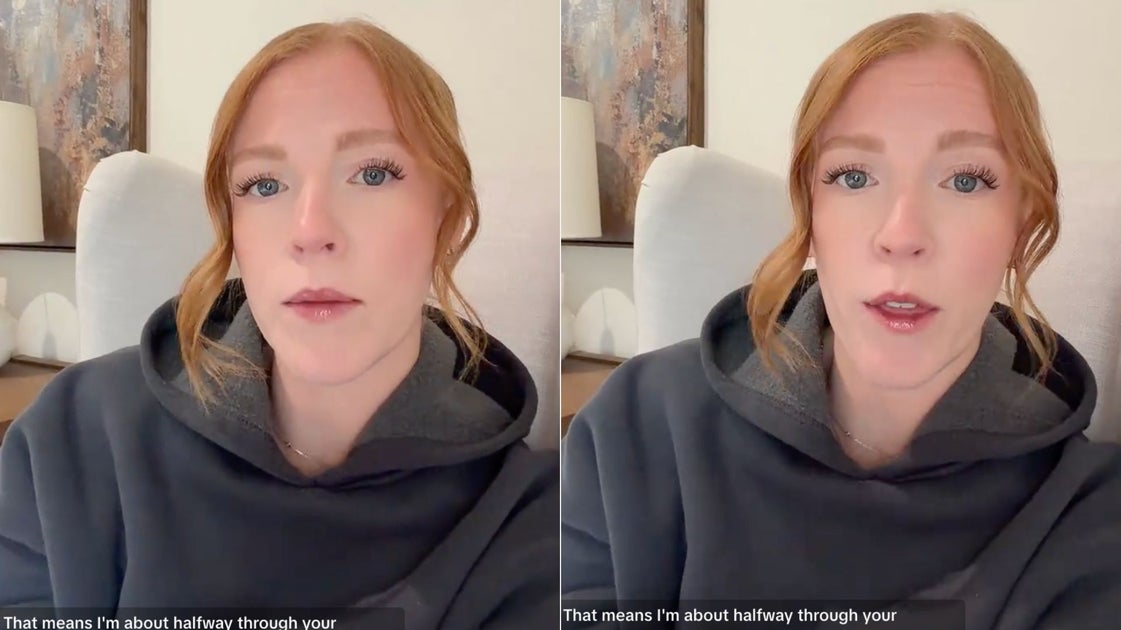
In a viral TikTok video posted this week, content creator Elizabeth Houlihan, who goes by @mamahouli online, shared how our inability to focus has given politicians on both sides of the aisle an opportunity to sway public opinion in their favor.

In 2004, researchers at the University of California, Irvine, found that the average attention span on any screen was about two and a half minutes, Houlihan explained in the clip. By 2012, it had shrunk to 75 seconds.

In the last 10 years or so, the average attention span has plummeted to an abysmal 47 seconds, with the median being roughly 40 seconds.

“That means, I’m about halfway through your attention span right now,” Houlihan said after recounting those findings. “You’re about to tap out.”

Curious how many people watched this on 2x? 🤣

“Bad actors in American politics are taking advantage of this flaw in the American consciousness to give you short digestible clips of information,” she explained.

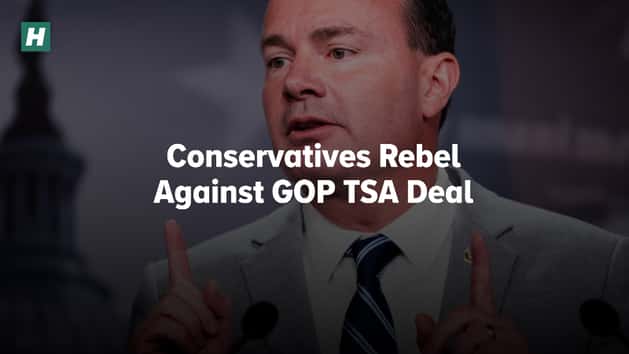
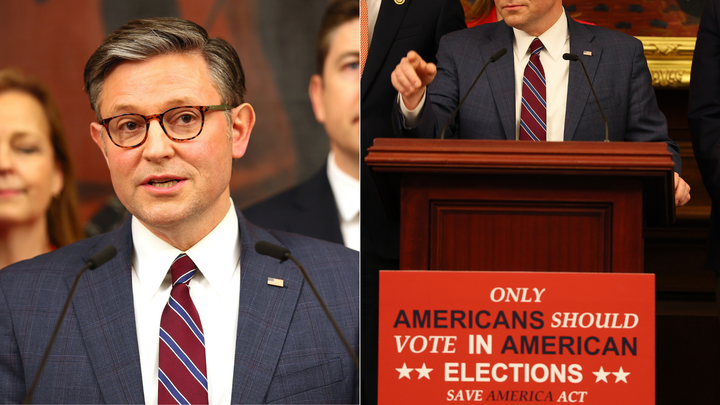
Houlihan pointed to how Republicans in Congress are pitching the Trump-backed SAVE Act ― a sweeping voter ID proposal that critics say could significantly reduce voter participation, especially among voters of color.

“They will say something like, ‘you should have to show your ID to vote, and 84% of Americans agree with that,’” Houlihan said, referencing a Pew Research Center poll from August that many Republicans have parroted on social media and in sound bites.

But then a politician might twist that, Houlihan continued, and offer something like, “actually, 84% of Americans agree with the SAVE Act.”

She continued, “And because you don’t have an attention span longer than 40 seconds, you may not have actually looked at what the SAVE Act does, except that they’ve told you it’s about voter ID. It’s about having to show ID to vote, and you agree with that.”

Explaining the context of what could happen if the Senate follows the House of Representatives and passes the SAVE Act — discussing how rare in-person voter fraud is; how many elderly, low-income, and voters of color lack government-issued photo ID; and how married women who changed their names would likely face additional requirements ― would take considerably longer than 40 seconds.

These days, many voters are unable ― and unwilling ― to process large amounts of political news. So when a topic feels more “cognitively demanding,” they’re quick to grab onto shortcuts they’re offered, Dona-Gene Barton, an associate professor of political science at the University of Nebraska–Lincoln, told HuffPost.

“It’s easier for voters to turn to trusted political elites to condense the information for them,” Barton, whose research looks at the lifespan of political information and voters’ waning attention spans.

In her study of the 2016 election, Barton found that a flood of election news can actually push people ― especially Democrats ― to tune out political coverage. When such a voter encounters a memorable line or an easy-to-digest stat coming from them, they’re likely to latch on.

Each side has its own patented sound bites they run with for each policy issue: Sen. Bernie Sanders’ (I-Vt.) “Medicare for all” refrain, for instance.

“All politicians do this,” Barton said. “Depending on who you hear from, ICE activity is framed as violating human and legal rights vs. removing the worst of the worst from U.S. soil. Medicaid is framed as a program designed to protect the vulnerable vs. deserving of cuts to combat massive fraud, waste and abuse.”

Politicians are responding to shrinking attention spans by creating content designed to grab ― and hold ― attention. That means micro, even AI sloppish. There’s little room to explain policy in our brainrot speed culture; most TikTok viewers likely won’t stick around for that. (Though maybe they’ll view some of that, if it’s sped up to 1.5x or 2x.)

“I think this is politicians responding to the information environment in a way that is rational, rather than engaging in some sort of trickery or acting in a nefarious way,” Todd Belt, professor and political management program director at the Graduate School of Political Management at George Washington University, told HuffPost.

Belt said it mimics what happened when broadcast news became a profit center for the major networks during the 1980s. (It had previously been run at a loss, out of civic duty.)

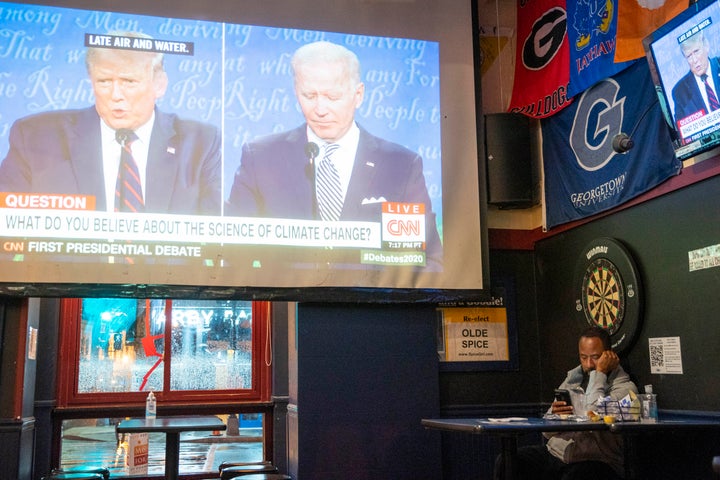
“In order to make the news profitable ― to keep people watching so they could get ratings ― they reduced the amount of time presidential candidates spoke in their own voice on average from 43 seconds to 9 seconds,” Belt said. “Candidates responded with short slogans. The same thing is repeating now, just on social media.”

In her viral TikTok video, Houlihan suggested that Americans need to learn to grow their attention spans.

“Without learning to digest nuanced concepts and ideas, you are going to be tricked by bad actors who act in bad faith to serve their own interests against the better interests of the American people,” she said.

Belt agreed with that. (Though he also finds it ironic that this advice is coming from a TikTok video, when TikTok is arguably one of the most pernicious causes of dwindling attention spans.)

“Absolutely, we need to read more,” he said. “Reading keeps the mind engaged and provides the context and nuance missed by brief videos and slogans.”

And though it might pain you to do so, Barton recommended tuning into the other side’s cable news network of choice sometimes, too, to glean more context.

By entering your email and clicking Sign Up, you're agreeing to let us send you customized marketing messages about us and our advertising partners. You are also agreeing to our Terms of Service and Privacy Policy.
Comments
You must be logged in to comment.