huffpost Press
Here’s What You Should Do If You Encounter ICE Agents At The Airport
Images
1 / 10

2 / 10
3 / 10
4 / 10
5 / 10

6 / 10
7 / 10
8 / 10

9 / 10

10 / 10
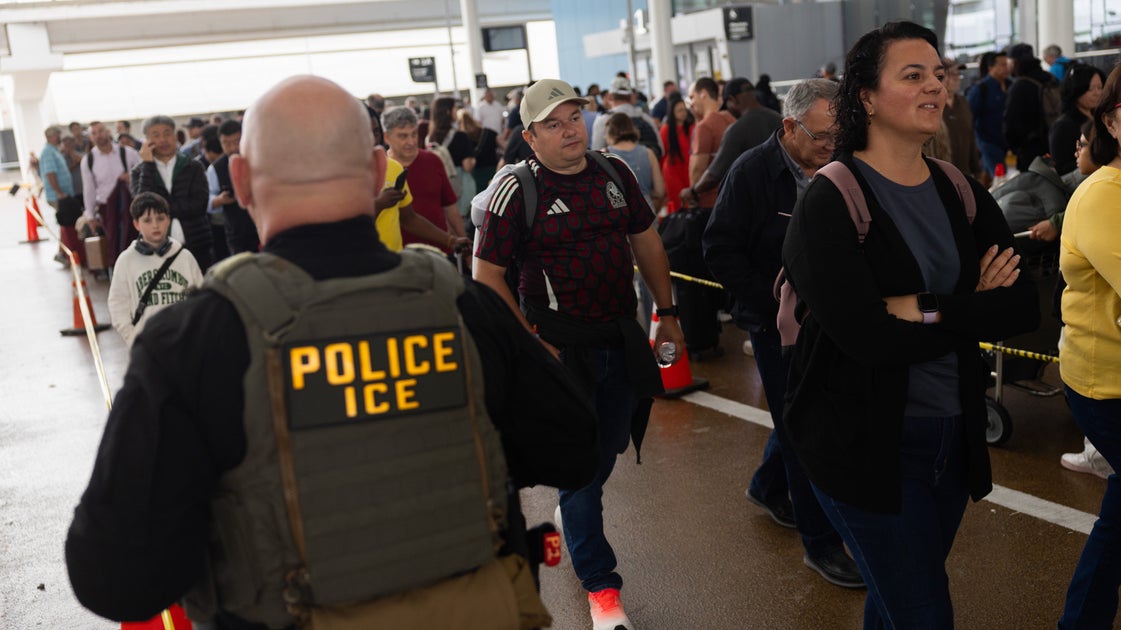
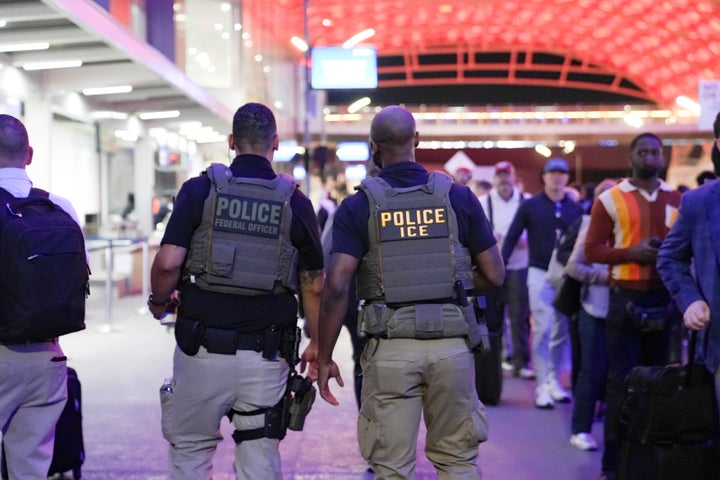
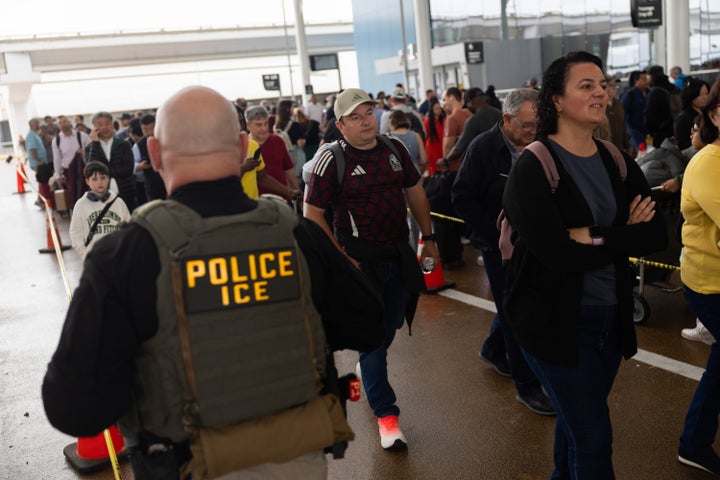
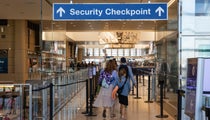
Airport travelers in the U.S. are braving chaotic crowds and long security lines, and now, under President Donald Trump’s orders, they must also deal with the presence of armed immigration enforcement officers while flying, too.

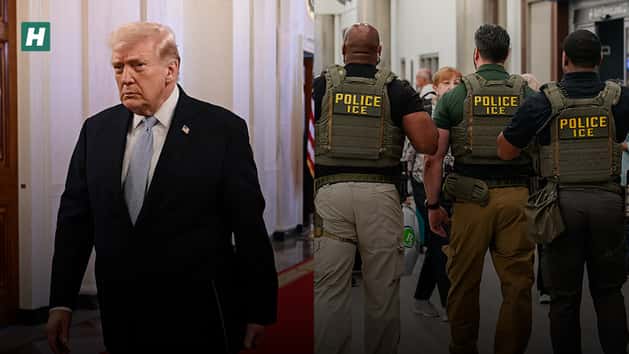
This week, Trump deployed Immigration and Customs Enforcement agents to U.S. airports in order to pressure Democrats to end the government shutdown and address the shortage of Transportation Security Administration employees. TSA officers have been working without pay for more than a month, causing staff to call out of work and quit in record numbers.

Lauren Bis, a spokeswoman for the Homeland Security Department, told HuffPost in a statement that ICE’s deployment “will help bolster TSA efforts to keep our skies safe and minimize air travel disruptions,” but did not answer questions about what duties ICE will be handling at the airport or confirm the location of officers.

Multiple outlets have reported that ICE is in at least 14 different airports, including John F. Kennedy International and La Guardia Airports in New York, Chicago-O’Hare International Airport, Luis Muñoz Marin International Airport in Puerto Rico, Louis Armstrong New Orleans International Airport, and Philadelphia International Airport. This number could grow. On Monday, border czar Tom Homan told reporters ICE will be in “more” airports.

There have not been reported airport arrests related to Trump’s ICE deployment, but Trump has said on social media that he wanted ICE’s duties at airports to include “the immediate arrest of all illegal immigrants.”

That’s why travelers flying domestically and internationally should be aware of their rights in U.S. airports if they encounter ICE.

“The Trump administration is doing this to scare people,” said Heidi Altman, vice president of policy at National Immigration Law Center. People who are not U.S. citizens need to do “an individual risk assessment” before traveling to the airport, she said.

People who are not U.S. citizens must show immigration papers when an immigration agent requests to see them.

If you are undocumented or are not a U.S. citizen, you should “be ready and anticipate that you may be subject to extra screenings or questions from any of these officers,” said Naureen Shah, director of policy and government affairs for immigration at the ACLU. Have your documentation on hand and carry your green card and proof of pending immigration applications, and share copies with trusted family members, she said.

Even before Trump’s new orders, Altman said his administration has already been targeting people who are in the immigration court system and have temporary status.

Last December, documents obtained by The New York Times showed that ICE and TSA were sharing the names and birth dates of travelers believed to have deportation orders, and this collaboration led to the arrest of a college student who got detained at Boston Logan Airport last November, then deported to Honduras shortly after.

With ICE’s presence, the risk of arrest may be “heightened,” Altman said. “People who we understand to be at greater risk of arrest now are people who have a deportation order, even if it’s very old, even if they are regularly checking in with ICE — people who have some sort of temporary status that the government has the discretion to terminate” like Deferred Action for Childhood Arrivals (DACA) recipients.

For people with the highest risk, Altman recommends either considering alternatives to air travel or preparing for the scenario of your arrest with loved ones, especially if you are a caregiver to a child or an elder. And “have the phone number of a loved one and a lawyer with you, not in your electronic device, but actually on your person, or even written on your hand,” she said.

On Sunday, a woman was filmed being detained and arrested by federal immigration officers at a San Francisco airport, and this viral video is what led to national reporting on her arrest.

“What a lot of the bystanders did here in terms of filming was a good instinct to do ... in order to shed light on what was happening,” said Saira Hussain, a senior staff attorney at Electronic Frontier Foundation.

Recording ICE doing their official duties at an airport is a protected activity under the First Amendment because the airport is a public location, Hussain said.

ICE may tell you to back up if you’re too close to a scene, “but they can’t stop you from recording, and they’re not supposed to be able to take your device in order to stop you from exercising that right,” she said. Ideally, you should take off biometrics from your electronic devices, so that it’s harder for an agent to access your phone recording without your permission, Hussain added.

Could ICE seize and look through your phone at the airport if they decide to act like Customs and Border Patrol agents? The U.S. government asserts that it has the right to lawfully inspect phones, laptops and electronic devices that cross U.S. borders. But this “border search exception” does not apply “merely because you’re in the airport,” Hussain said.

“When you’re traveling domestically, you’re not at the border,” Hussain said. “You’re only at the functional border if you’re coming back from overseas, back into the United States.” So if ICE does try to search your device while you’re at the airport, it “could be a violation of the Constitution and also the government’s own asserted authority around searching of devices,” she said.

So far, ICE does not appear to be carrying out aggressive arrest quotas at assigned airports that agents had in Minneapolis, which led to “powder keg” situations, Shah said. But nonetheless, an ICE agent’s presence can have a “profound impact” on travelers, she said.

While you are walking through the terminals of an airport, it may be unnerving to see an ICE agent right next to you. “It’s wrong that the administration has done this, because it is leading people to be afraid to go out on their spring break trips,” Shah said.

But ICE might be here to stay in airports since there is no end to the government shutdown in sight. Democrats are demanding ICE reforms, such as preventing ICE agents from wearing masks and imposing stronger use-of-force standards, in order for them to vote to fund DHS. Meanwhile, Trump has rejected compromises and has been making new demands to overhaul election procedures as part of any bill to reopen DHS.

But you still have protected rights at an airport, including the right to remain silent if an ICE agent questions you about your citizenship status and the right to ask to speak to a lawyer if you believe you are under arrest by ICE.

“The airport is not a Constitution-free zone, so it’s not the case that they can just racially profile or single people out based on their apparent religion or national origin, without any consequence,” Shah said. “They can’t just pull people over randomly because they are brown.”

People who are undocumented or with less secure immigration status have the highest risk of being detained by ICE while flying right now. But even U.S. citizens should be prepared to know and assert their rights.

Shah said she wouldn’t advise citizens or naturalized citizens against traveling, but they should be prepared for an ICE encounter, too. Shah said that if she were advising her own mother, who is a naturalized citizen, she would tell her to “be calm and to have the phone number of a lawyer, to not be making any sudden movements,” Shah said. “That’s our best advice in these really difficult times.”

By entering your email and clicking Sign Up, you're agreeing to let us send you customized marketing messages about us and our advertising partners. You are also agreeing to our Terms of Service and Privacy Policy.
Comments
You must be logged in to comment.