bbc Press
Northern Lights forecast to reappear across UK on Saturday
Images
1 / 20
2 / 20
3 / 20
4 / 20
5 / 20
6 / 20
7 / 20
8 / 20
9 / 20
10 / 20
11 / 20

12 / 20

13 / 20
14 / 20
15 / 20

16 / 20

17 / 20
18 / 20

19 / 20

20 / 20
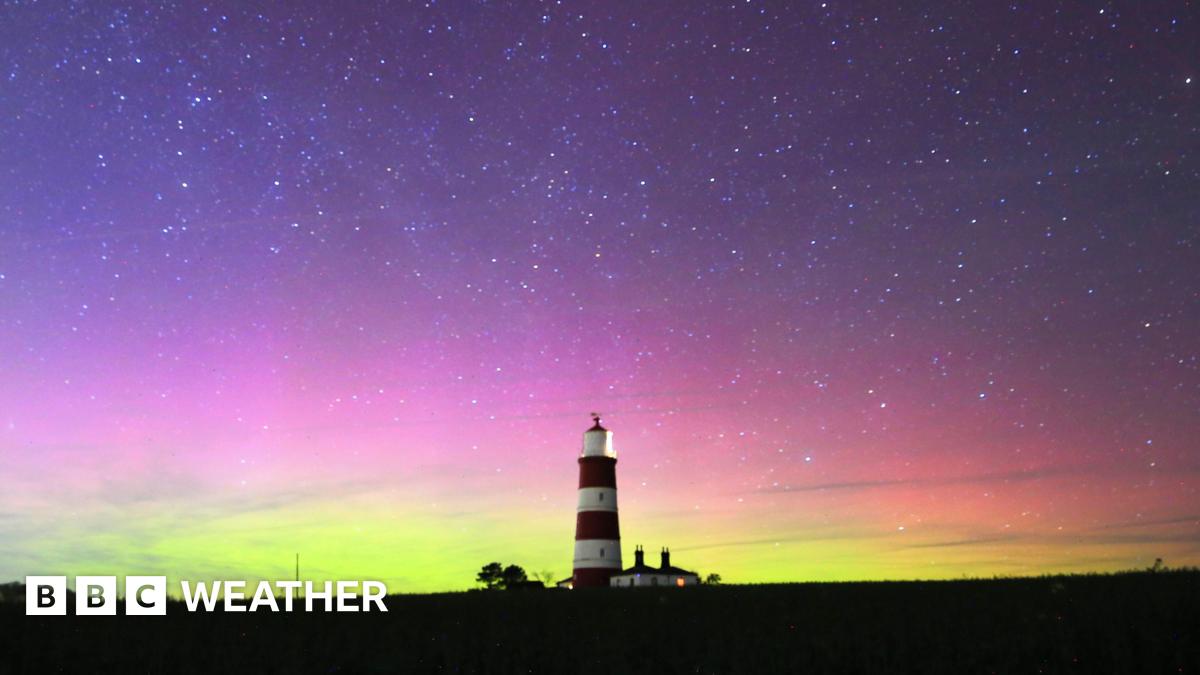
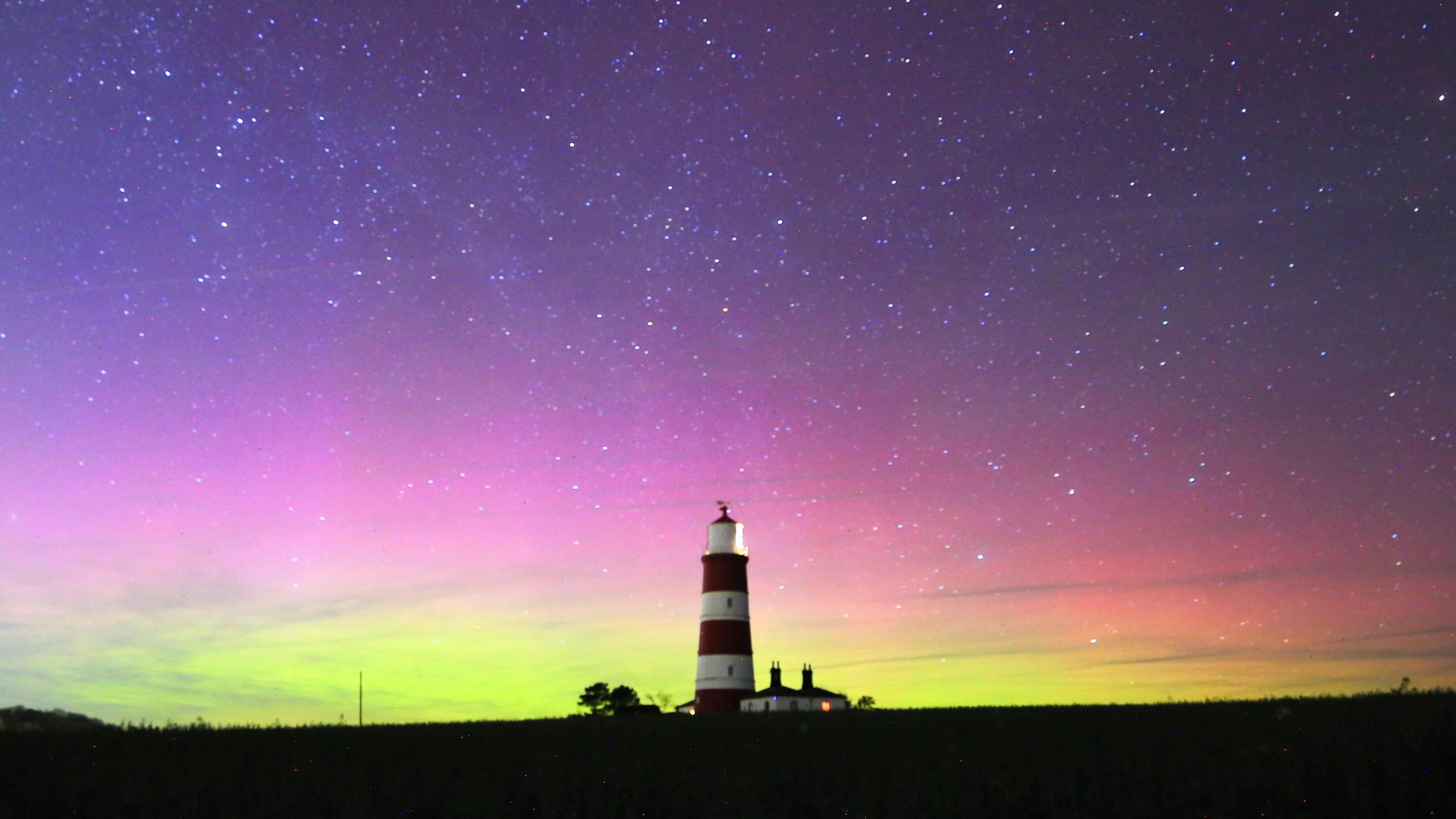
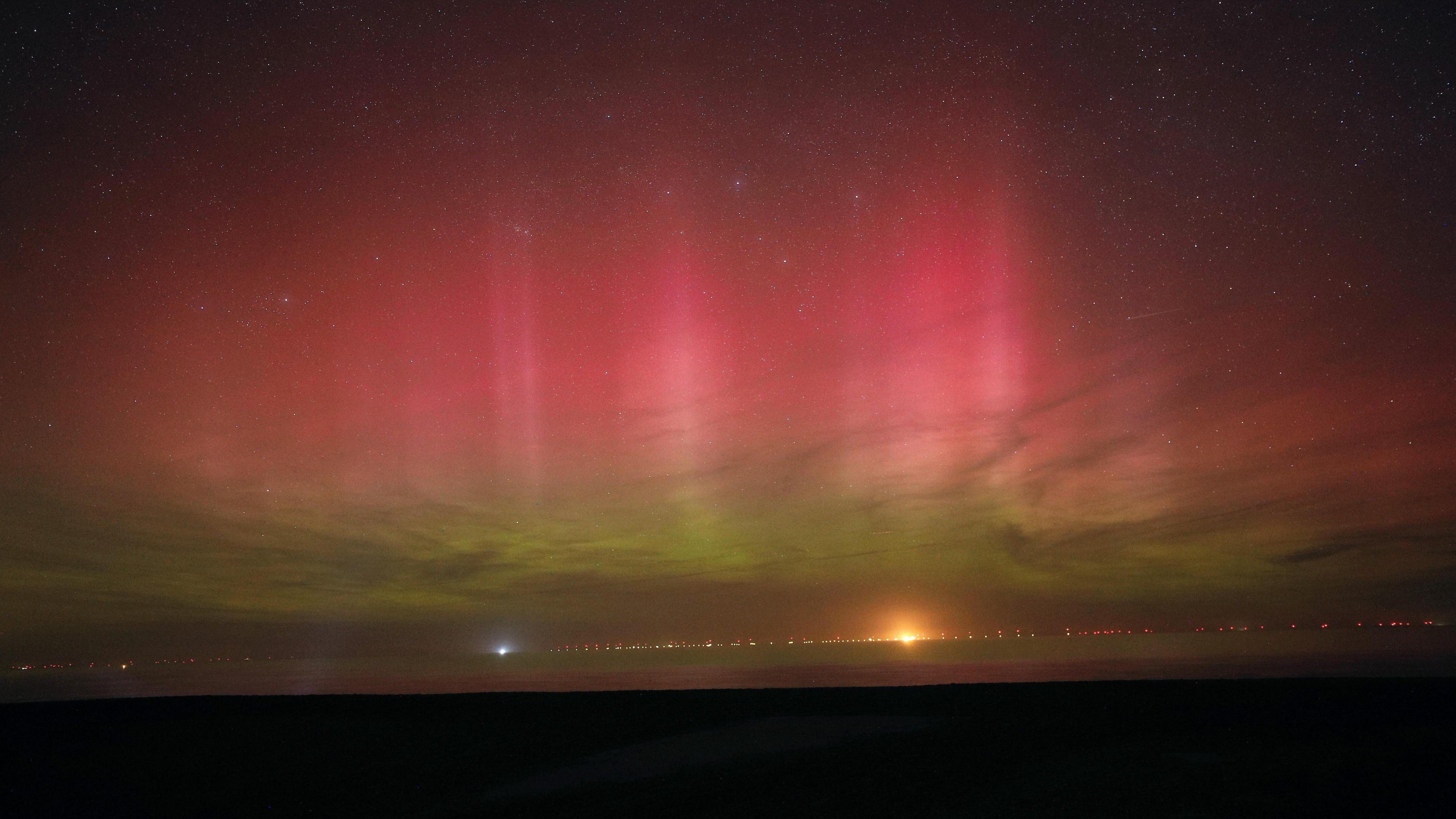
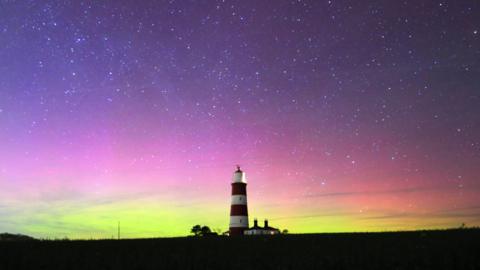
The aurora was spotted as far south as the Norfolk coastline

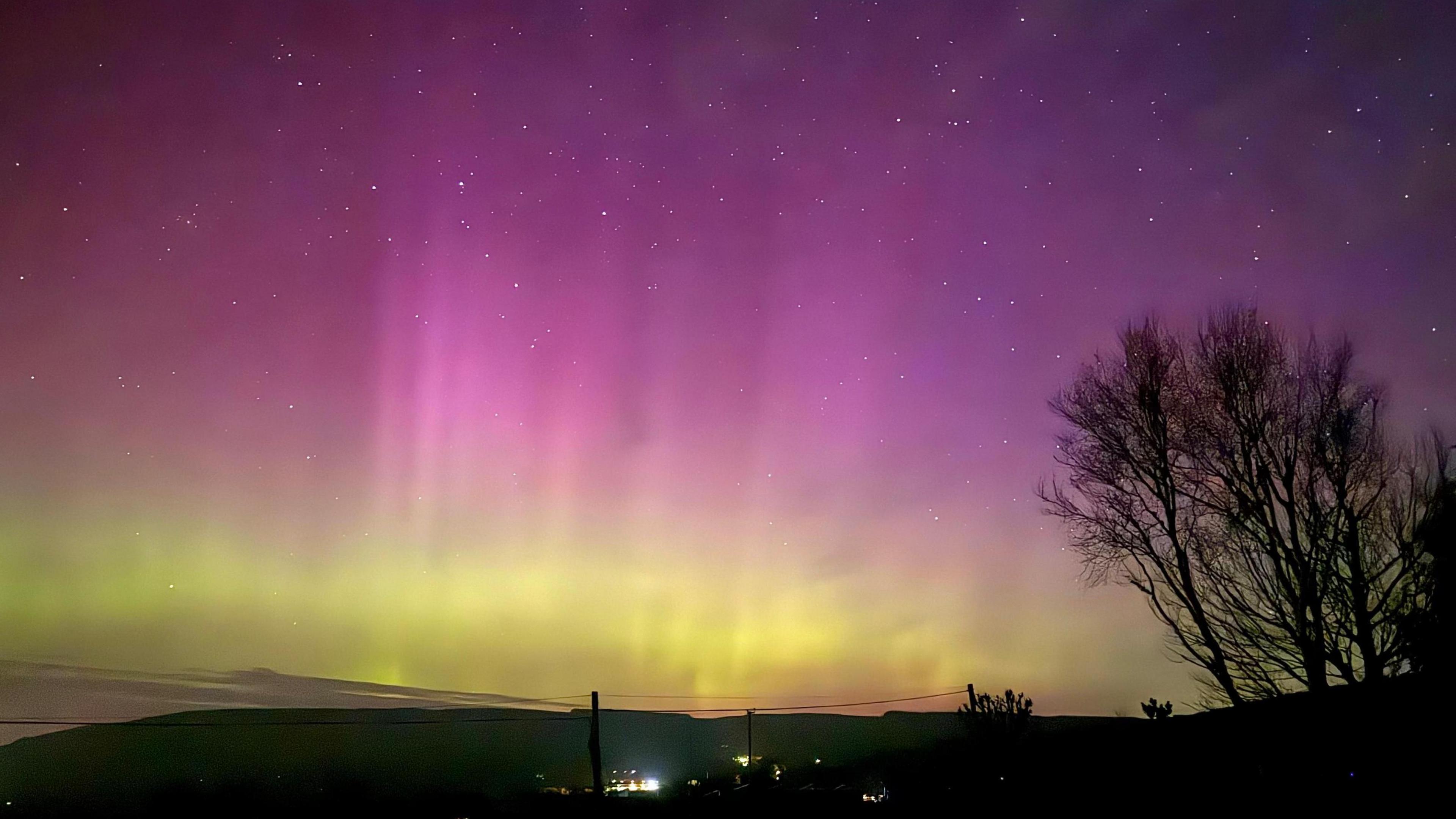
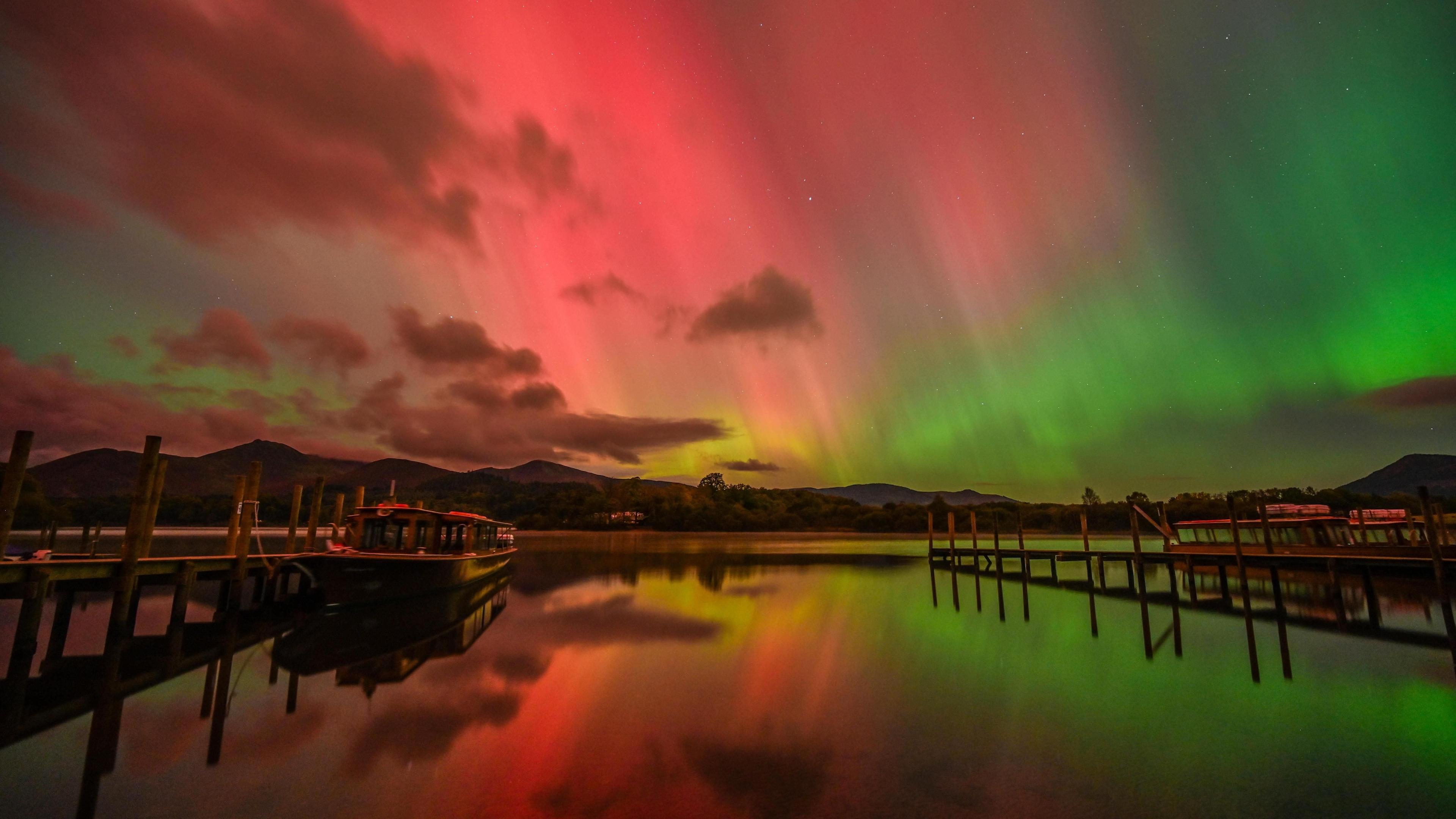
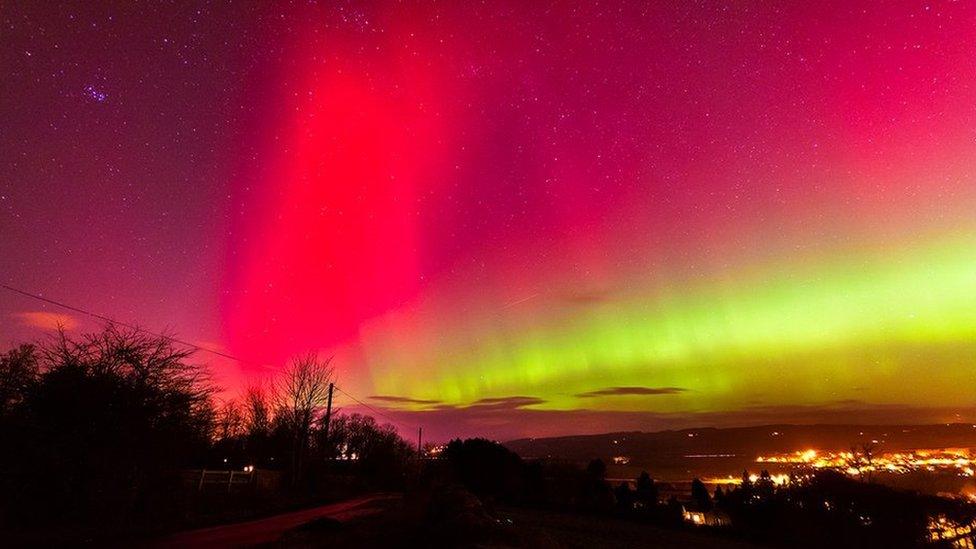
Skies across the UK were illuminated in the spectacular colours of the Northern Lights on Friday night.

The natural phenomenon - known as the Aurora Borealis - was the result of increased solar activity sending energy towards Earth and interacting with our atmosphere.

While the Northern Lights are mostly visible near the Arctic Circle and northern Scotland, following a strong storm they were visible as far south as Norfolk on Friday night.

Forecasters suggest that, with activity remaining high, there's another chance to see them again tonight.

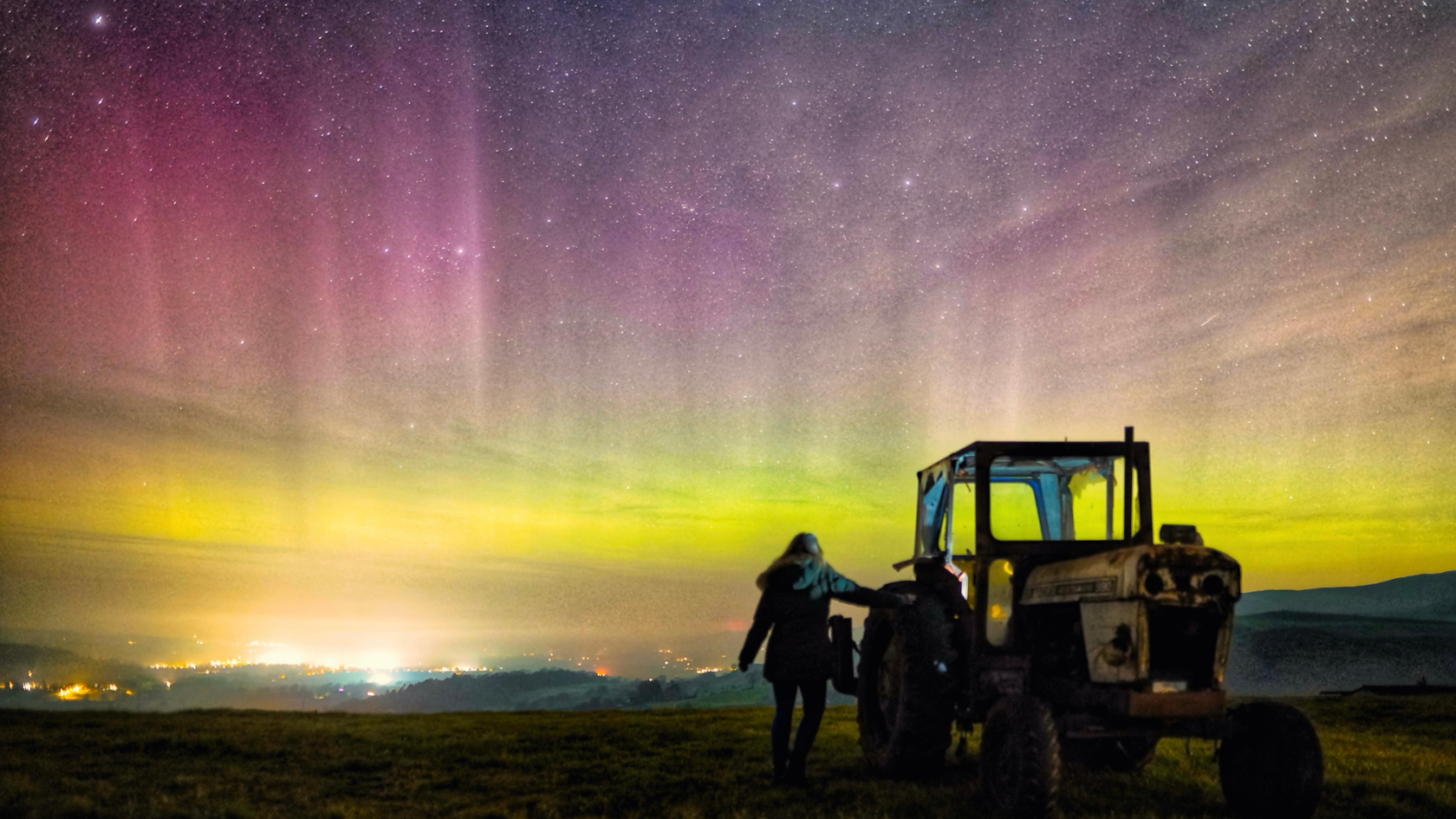
The Northern Lights were seen in Llandegla, North Wales on Friday night

Friday nights aurora was the result of a strong geomagnetic storm caused by a coronal mass ejection (CME) - waves of charged particles that erupt from the Sun's surface.

As they approach Earth, they interact with gases in the atmosphere, creating the colours we see in the night sky.

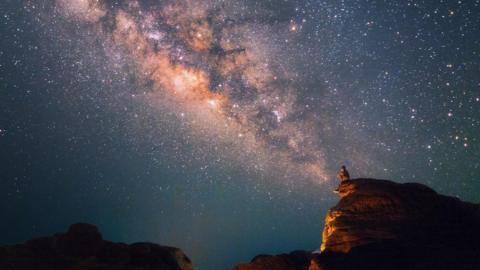
Oxygen atoms glow green and nitrogen light up in reds, blues and pinks.

It's during the stronger solar storms when the Northern Lights can be visible further south across the UK, as they were last night.

Friday was also the spring equinox, which may have also had an impact in seeing the lights as far south as Norfolk.

A phenomenon known as the Russell-McPherron effect can make the Northern Lights stronger around the equinoxes, as the Earth's magnetic field is aligned with the incoming solar winds.

The Northern Lights put on a stunning show in Powys

If you missed the display on Friday night, forecasters at the Met Office Space Weather Prediction Centre say it could be seen again on Saturday night.

They say "geomagnetic activity is expected to remain... with a chance of reaching a strong storm".

The Northern Lights could therefore be seen across Scotland, Northern Ireland and northern areas of England and Wales.

There's also a small chance they could be seen further south.

Cloud could spoil the view for those in Scotland and Northern Ireland but elsewhere, especially during the first part of Saturday night, there will be some clear skies.

To have a go at spotting the lights, look to the north for a faint glow at first and, if you can't see the colours, try through a camera lens or on your phone.

Geomagnetic storms and solar flares are perfectly safe for us as we are protected from the radiation by our atmosphere, but they can interfere with technology.

Weather Watchers in Northern Ireland were also able to see the Northern Lights on Friday night

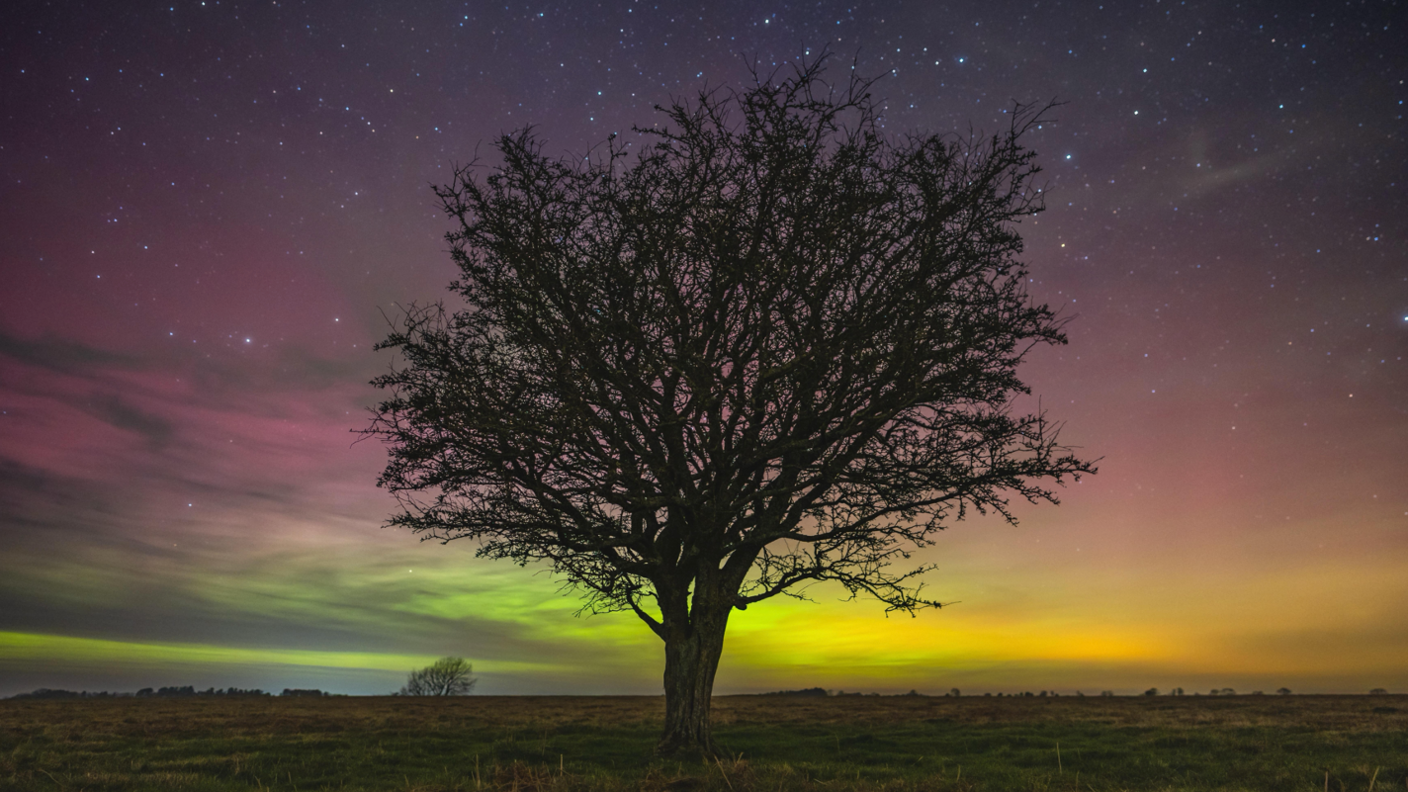
It's not common to see the Northern Lights so far south across the UK but here they are spotted in Weybourne, Norfolk

Why the aurora dazzled in 2024 and what 2025 has in store

What are the Northern Lights?

Comments can not be loaded

To load Comments you need to enable JavaScript in your browser
Comments
You must be logged in to comment.