bbc Press
Lab-grown food pipe implanted in pigs offers new hope for young patients
Images
1 / 6

2 / 6

3 / 6
4 / 6
5 / 6
6 / 6
UK scientists have grown fully functioning food pipes in a lab and successfully transplanted them into mini pigs.

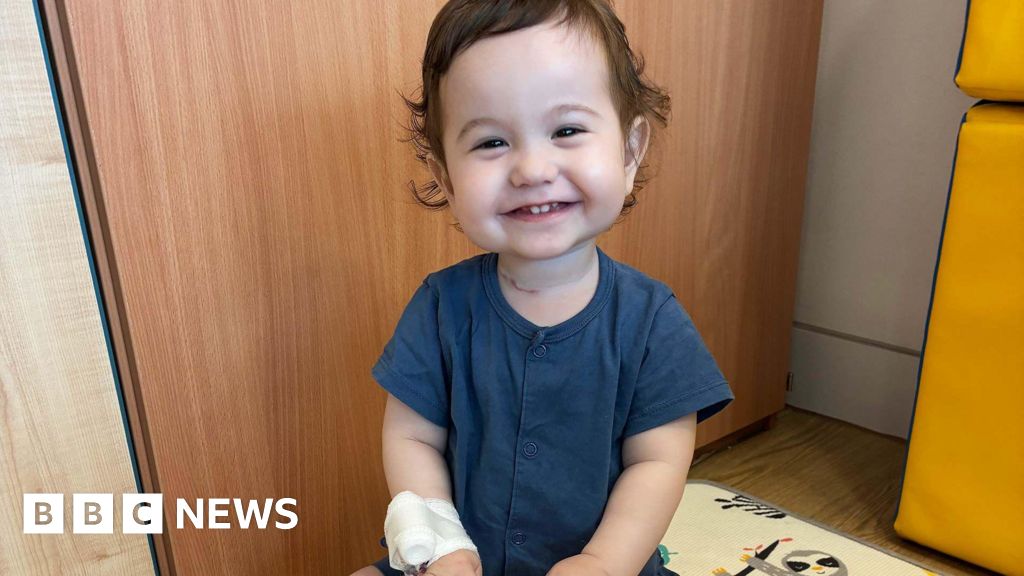
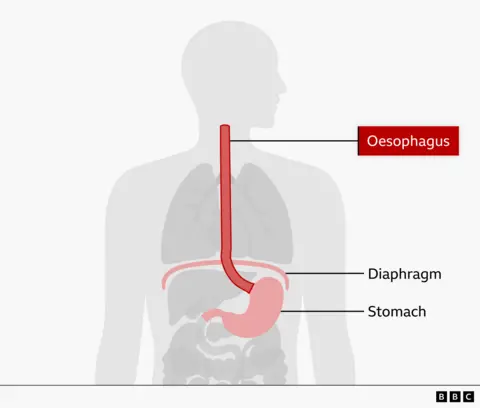
Experts say the breakthrough, reported in the journal Nature Biotechnology, offers real hope to patients like two-year-old Casey Mcintyre, who was born with 11cm missing from his oesophagus.

His mum, Silviya, said they had been made aware before Casey was born that he would have major issues with his food pipe and need extensive surgeries.

Doctors have since moved his stomach up to bridge the "gap",  but it's been a long road and he still has a feeding tube while he develops his swallowing.

Silviya explained: "The repeated surgeries have left him with some damage to his vocal cords so he's developing his speech and noise-making to catch up.

"Once he's eating enough through his mouth, we'll be able to take his tube out."

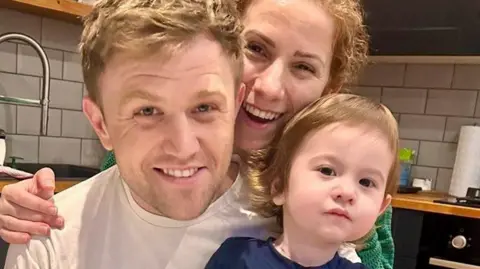
Casey's dad, Sean, said they had had to learn things as new parents that they never considered would be part of family life - from feeding him through a stomach tube to what to do if the hospital calls with an urgent update in the middle of the night.

"To look at him, he's just amazing and we are very proud of him.

"Whatever the team did for him was really a miracle. But the idea that there could be one operation early in your child's life that could transplant a working piece of oesophagus, and then we could move on, would be life-changing."

Around 18 babies are born each year in the UK with the same condition as Casey.

The work in pigs shows it is possible to safely make and replace a full section of the oesophagus and restore normal function, including swallowing, in a living being.

Anti-rejection drugs were not needed as the implant was grown using the animals own cells.

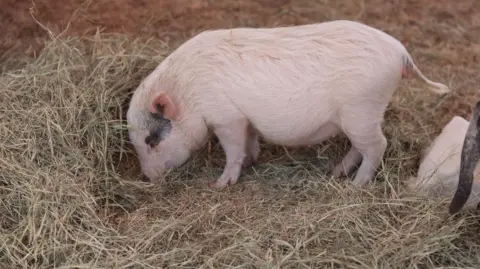
The scientists chose Göttingen minipigs - the smallest domestic pig breed known in the world - to work with, since they are the most similar to a human child in terms of size and cell makeup.

To create new food pipes, scientists took a donor pig's oesophagus and stripped it of its cells, while keeping the underlying support structure intact.

They then added the new cells to this scaffold and placed it in a bioreactor - a special container that pumps vital growth fluids through the tissue - to grow and mature for a week.

Eight pigs had the transplants and recovered well, developing working swallowing muscles to squeeze food down towards the stomach.

Five survived to the six-month end point of the trial and their grafts had functional muscle, nerves and blood vessels.

Prof Paolo De Coppi, who led the research team at Great Ormond Street Hospital and University College London, said he hoped to be able to offer the treatment to children within the next five years.

"The oesophagus is a really complex organ, without a blood supply from its own vessels, so it cannot be 'transplanted' in the way you might expect.

"To develop alternatives, it is essential to work with animal models that closely reflect human anatomy and function."

He said the graft would not be suitable for adults with other oesophageal problems such as cancer because it wouldn't be the right size. It is designed to grow with the children as their oesophagus gets bigger and longer.
Comments
You must be logged in to comment.