yahoo Press
This Ice Age Animal Is Still Alive Today Thanks to Its Bizarre Inflatable Nose
Images
1 / 11
2 / 11

3 / 11

4 / 11

5 / 11

6 / 11
7 / 11
8 / 11
9 / 11
10 / 11

11 / 11
The post This Ice Age Animal Is Still Alive Today Thanks to Its Bizarre Inflatable Nose appeared first on A-Z Animals.

The unusual proboscis of the Saiga antelope helps filter dust, regulate air temperature, and protect its lungs in harsh steppe environments.

This Ice Age survivor once lived alongside species like the woolly mammoth and saber-toothed tiger, yet still survives today.

Conservation efforts have helped the species rebound dramatically, with global populations rising to around two million animals after earlier declines.

Growing up, I was obsessed with the 2002 movie Ice Age. I watched it day in and day out, captivated by the adventures of Diego the saber-toothed tiger, Sid the sloth, and Manny the woolly mammoth. To me, it was astounding that creatures like saber-toothed tigers and woolly mammoths once roamed our planet 18,000 years ago, but I would never get the chance to see them.

However, when I learned about saiga antelopes (Saiga tatarica), I realized that some Ice Age animals have survived into the modern world. Saiga antelopes, also known as saigas, lived alongside mammoths and saber-toothed tigers throughout the Pleistocene Epoch. More specifically, they roamed along the Mammoth Steppe, an extremely biodiverse grassland that stretched across the northern hemisphere.

The saigas’ longevity begs an interesting question. What adaptations have helped this species survive for tens of thousands of years? The answer lies somewhere you might not expect: the nose. Saigas’ large, floppy noses may look odd, but these multifunctional noses have helped saigas thrive. Here’s why.

The saiga antelope is a small antelope species. Historically, saigas were found in the Eurasian steppe zone, as well as around North America’s Bering Sea Land Bridge. These migratory antelopes, which are around two and a half feet tall and weigh between 66 and 110 pounds when fully grown, are primarily found today in Mongolia, Kazakhstan, Russia, Turkmenistan, and Uzbekistan. According to the IUCN Red List, which assesses extinction risk for species worldwide, Kazakhstan hosts the largest population of saiga antelopes, although significant populations also exist in the other listed countries.

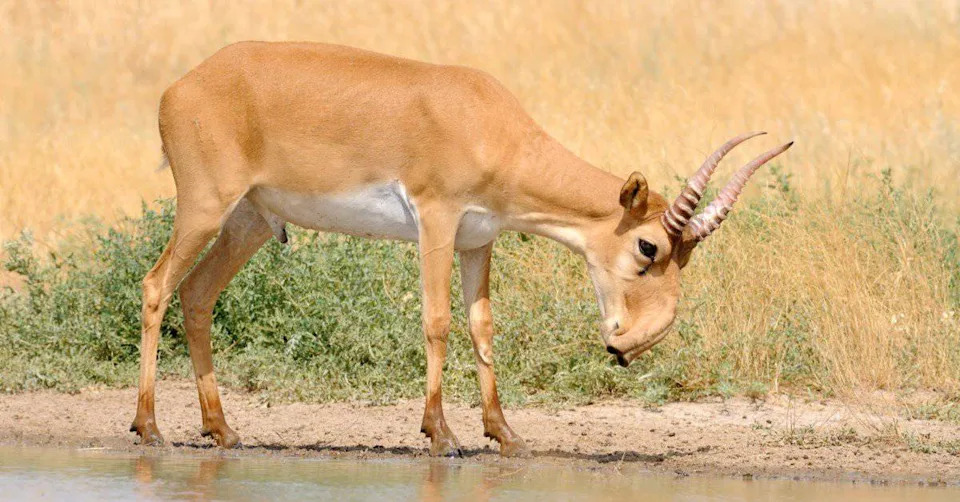
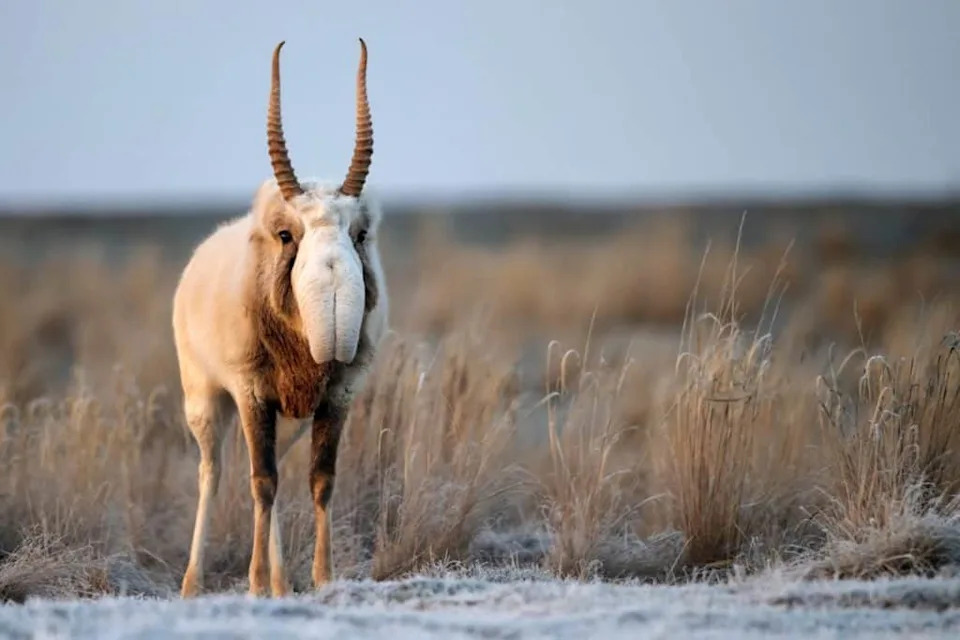
In terms of appearance, saigas have short, chestnut-brown hair and pale legs in the summer. In winter, saigas develop large, fluffy, and pale winter coats. The species displays sexual dimorphism, meaning physical differences exist between males and females. This is most evident in the horns, which only males develop.

Saigas are herbivores, meaning their diet consists of diverse grasses, lichens, herbs, and shrubs.

©iStock.com/VictorTyakht

A single male saiga antelope usually controls a “harem” of anywhere from 20 to 50 female saigas. After mating, the gestation period lasts about 150 days. Uniquely, saigas usually give birth to twins. The Wildlife Conservation Society (WCS) Mongolia notes that this has, historically, helped protect saiga antelopes against population loss due to hunting.

Unfortunately, this has not always been the case. Due to poaching, the illegal horn trade (where horns are sold for traditional medicine), competition with livestock, and disease, the saiga population fell drastically. As of 2005, only an estimated 30,000-40,000 saiga antelope still existed in the wild. Although the population rebounded for a time, in 2015, approximately 200,000 saigas died in Kazakhstan over a three-week period due to a bacterial infection called hemorrhagic septicemia. Throughout this period, saigas were considered Critically Endangered by the IUCN Red List.

However, many people view saigas as an example of how beneficial conservation efforts can be. The population has grown significantly, thanks in part to organizations, initiatives, and research such as the Saiga Conservation Alliance, the Wildlife Conservation Alliance, the U.S. Fish and Wildlife Service’s Species Conservation Catalyst Fund, and the Royal Veterinary College‘s research into respiratory diseases, among others. Government interventions, law enforcement efforts, and anti-poaching measures have also contributed to the recovery. Today, the population has risen to an estimated two million saiga antelopes. Saigas are considered Near Threatened by the IUCN.

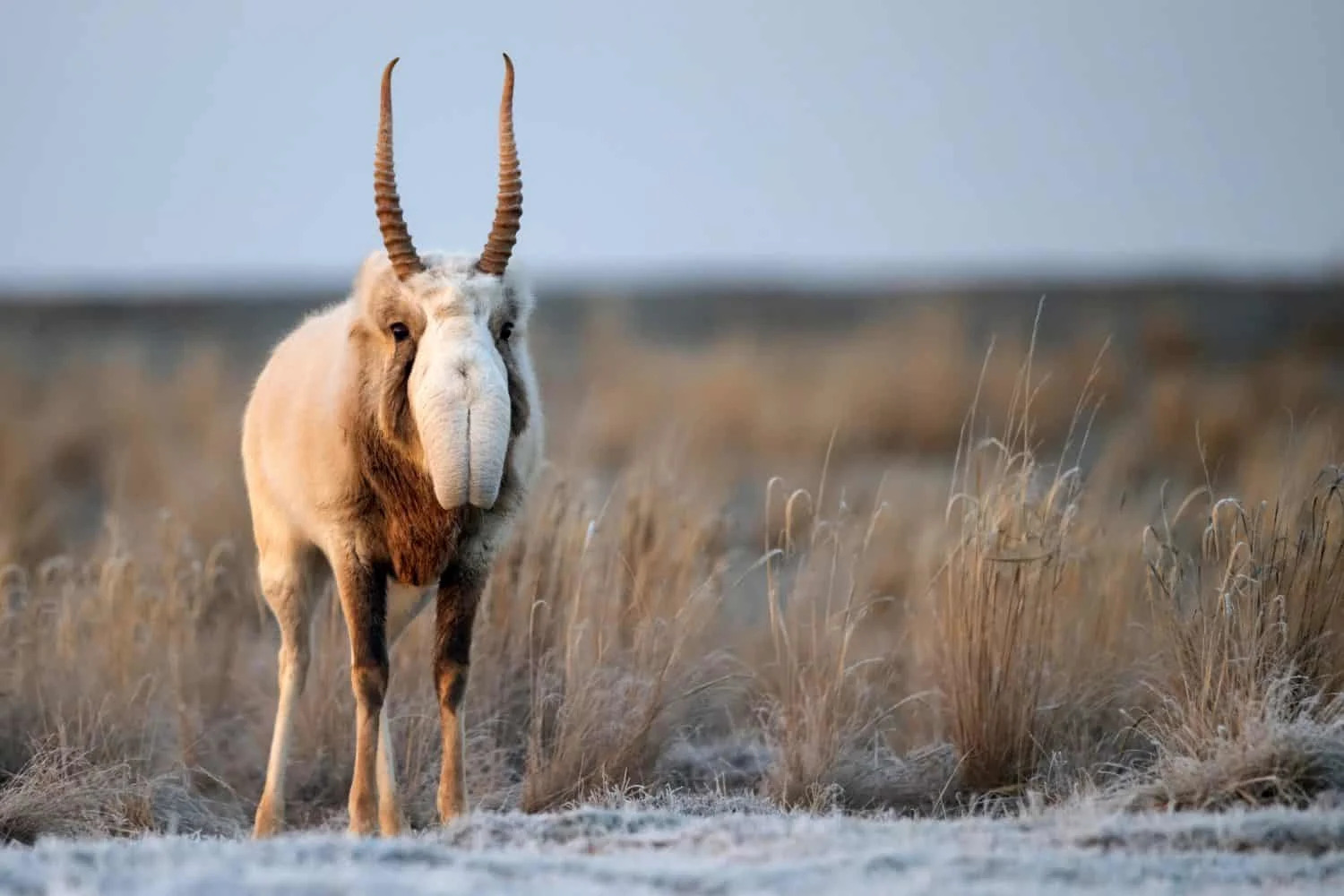
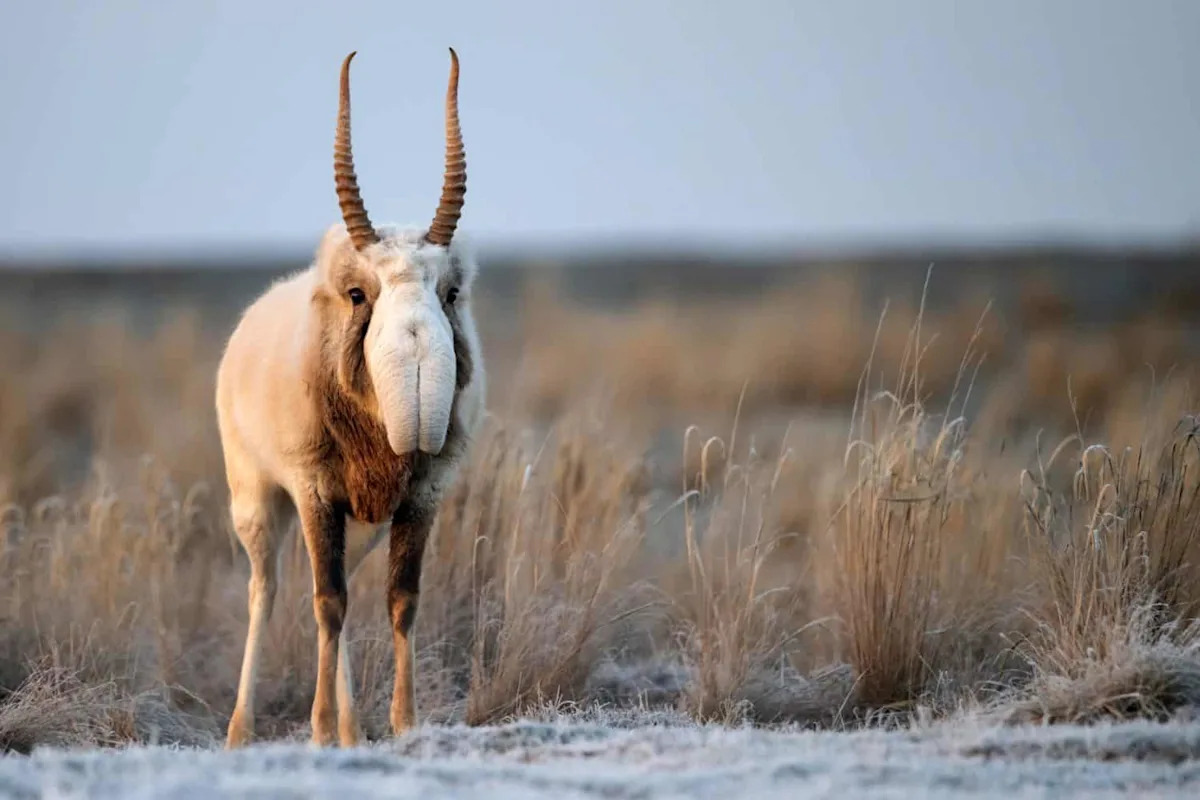
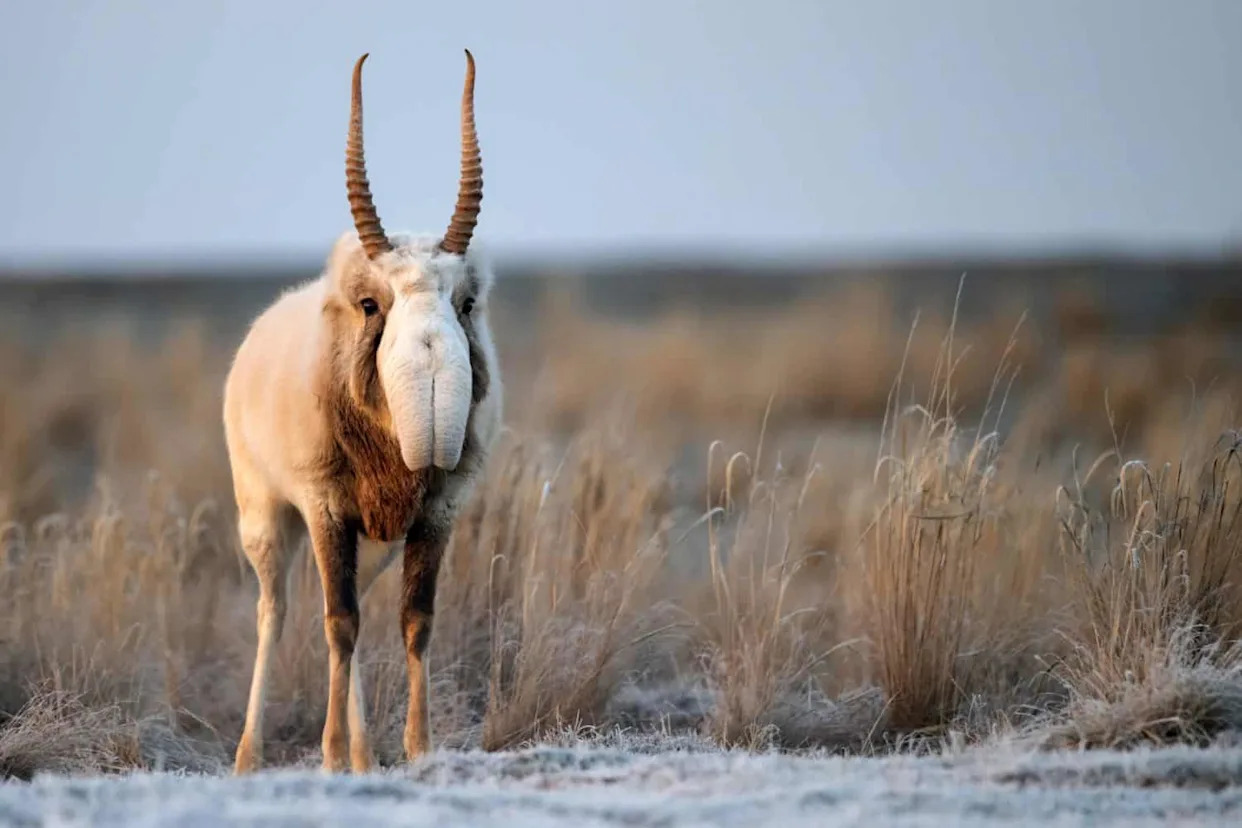
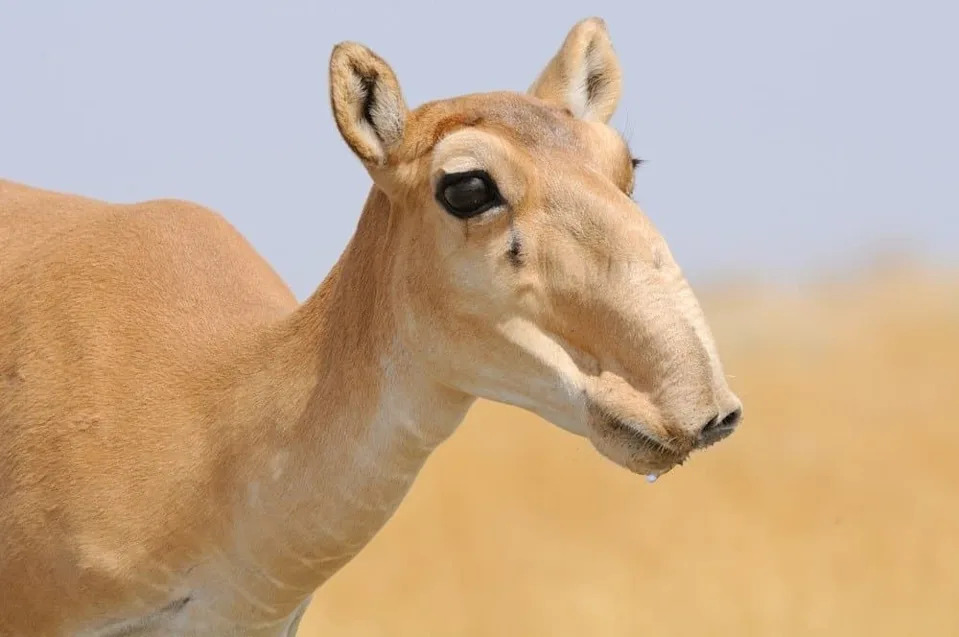
Saiga antelopes have a bulbous nose with many features that help these animals live in more challenging environments.

©Victor Tyakht/Shutterstock.com

If you’ve ever seen a photograph of a saiga antelope, the first thing you probably notice is its unusual nose, called a proboscis. Over the years, scientists have debated exactly why the saiga antelope’s nose is so bulbous and inflated. Potential reasons have included:

Enhanced smelling to locate and escape from predators

Temperature regulation

Dust filtration

A 2004 study examined the anatomical structure of the saiga antelope’s proboscis to better understand its function. The study found that the specialized structures in the nose significantly contributed to filtration. In fact, you might be surprised to learn that the proboscis is one of the reasons why the saiga antelope has survived from the Ice Age until now.

As you might expect, our world’s climate changed during and after the Ice Age. The Yukon Beringia Interpretive Centre explains, “Their large, bulbous nose with downward pointing nostrils contains a series of chambers with mucus glands to warm and moisten cold, dry air. These nostrils were also effective at filtering the dusty air that was kicked up when large herds moved across the dry landscape.”

Research shows that saiga antelopes can extend their nasal cavities by up to 20%.

©Yakov Oskanov/Shutterstock.com

To break that down further, saigas have a main nasal vestibule full of mucus-producing glands. They can compress this vestibule with their muscles. When dust gets into their noses, vascular tissue within the vestibule swells. Dust or other debris then gets caught in the sticky mucus. Saigas can then sneeze or otherwise expel dust from their nostrils. This interesting filtration system helps saigas minimize lung damage in the arid environments where they live.

In addition, their noses can humidify frozen air in the winter as another form of respiratory protection. Over the summer, the dense network of blood vessels in the proboscis also cools incoming air, preventing saigas from overheating. Because of these capabilities, saigas have remained remarkably resilient and adaptable. Their noses are suited to different environments, allowing saiga antelopes to adapt to new locations and habitats as their geographical range has shifted.

Dust filtration is believed to be the primary reason for the saiga antelope’s nasal structure, with temperature regulation as another important function. But that’s not all the proboscis is designed to do.

As mentioned earlier, scientists have long believed the saigas’ proboscis improves their sense of smell. Wolves, feral dogs, foxes, and raptors all prey on saiga antelopes. While most of these predators attack vulnerable calves, wolves are known to hunt and kill both adult and juvenile saigas. The saigas’ specialized nose means they can smell predators from a great distance. If predators get close, the saiga’s best defense is to run. Fun fact: they can reach speeds of up to 50 miles per hour!

Similar to moose, elk, and deer, the saiga antelope’s mating season is known as rutting, or the rut. During the rut, male saigas fiercely compete for their chance to win over female saigas. Remember the “harem” mentioned earlier? If males are successful during the rut, they can collect up to 50 female saigas to mate with.

Their noses play an important role in the rut. A 2007 study published in the Journal of Anatomy explains that male saigas can produce nasal roars by curving their nose, extending their nasal vocal passages by up to 20%. This deepens their roar. According to the study’s authors, the nasal roar serves two purposes: “Nasal roaring in saiga may equally serve to deter rival males and to attract females.” Deepening the roar, for example, may signal to other males that a saiga is bigger, tougher, or more prepared to fight. Female saigas also want a strong partner, so these roars can help attract females to their mates.

After the rut, nasal vocalizations can also be used for communication, especially between mothers and their newborn calves. Both a 2014 study and a 2017 study in Bioacoustics explored how this communication worked. The first study found that mothers and calves both produce oral and nasal vocalizations. Oral calls were more heavily related to high emotions, such as distress when a calf was separated from its mother. The second study also discovered that calves and mothers can identify specific oral and nasal calls. This suggests to the study authors that nasal contact calls can help mothers avoid losing their calves or accidentally raising another female’s calf.

The post This Ice Age Animal Is Still Alive Today Thanks to Its Bizarre Inflatable Nose appeared first on A-Z Animals.
Comments
You must be logged in to comment.