yahoo Press
Can Agentic AI Save the Market From $110 Oil?
Images
1 / 5
2 / 5

3 / 5

4 / 5
5 / 5
The short answer? No. Why do we say that? Let's unpack.

It’s a tug-of-war between one of the oldest commodities, oil, and one of the newest technologies, which is agentic AI. As we head into Q2 2026, three key factors are driving the market: $110 oil fueled by Iran-U.S./Israel tensions and a Fed leadership transition are keeping rates stable.

The rapid rise of agentic AI. Previous AI systems mostly generated content. The latest agentic systems autonomously execute complex business workflows - and there is hope they could counter energy-driven inflation. Is that hope justified?

The Oil Shock

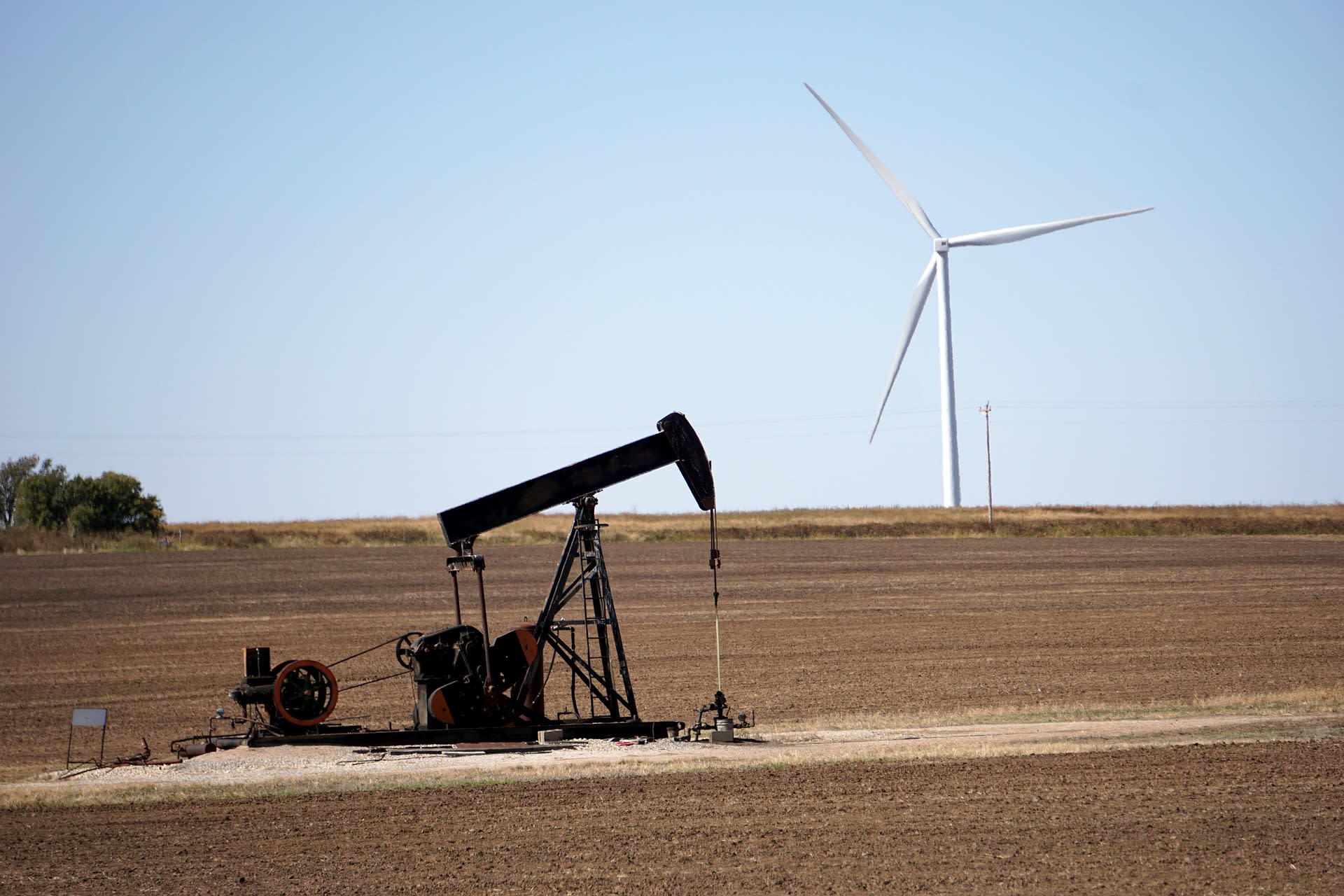
Iran has launched retaliatory strikes on key energy infrastructure across the Gulf, while escalating tensions have severely disrupted traffic through the Strait of Hormuz—a chokepoint that typically carries about 20% of global oil and significant LNG flows.

Sure, the U.S. enters this crisis as a net energy exporter, but it is not shielded from the shock. Oil is a globally priced commodity. A barrel in Texas costs the same as a barrel in Rotterdam. Even with domestic production at record highs of over 13 million barrels per day, American consumers and businesses face immediate pain. There are two factors to watch here.

First, there is cost-push inflation. Unlike demand-driven growth, this is a "supply-side" shock that increases the cost of producing and transporting everything from groceries to semiconductors. For the Fed, this is a challenge, since this is an inflationary spike that interest rate management can’t easily fix. Then there is the consumer squeeze: At $110, gasoline is averaging over $3.80/gallon nationally. For the average household, this represents a substantial annual "tax" on their budget. This could drain some of the discretionary spending that fueled the 2025 rally, potentially cooling the economy just as the Fed is forced to stay hawkish.

Fed: Steady Rates, Rising Uncertainty

The Federal Reserve held rates steady at 3.5%–3.75% on March 18, signaling a "wait-and-see" approach as Jerome Powell’s term concludes in mid-May. This creates two primary market pressures for Q2. First, there is policy uncertainty: With Kevin Warsh nominated as the successor but his confirmation process still ongoing, the market lacks a clear long-term roadmap. Investors are uncertain whether the "Warsh Fed" will prioritize fighting energy-driven inflation or supporting the labor market.

Then there is also yield curve pressure. The so-called "bear steepening" of the yield curve—where long-term rates rise faster than short-term ones—reflects fears that $110 oil will keep inflation high. This higher cost of capital places a ceiling on stock valuations, making it harder for equities to sustain their highs.

Agentic AI: Deflationary Force?

While $110 oil fuels cost-push inflation and the Fed's steady-but-uncertain stance risks stagflation, a potentially game-changing force is emerging. Artificial intelligence is evolving beyond generating images and writing text into a potential force that could drive economic productivity and reshape entire industries. AI bellwether Nvidia’s GTC 2026 conducted earlier this week, demonstrated this focus. Agentic AI - autonomous systems capable of reasoning and executing multi-step business workflows without human prompting. This technology could very well be seen as a "deflationary" force in the market.

Agentic AI acts as a hedge against rising costs. By automating complex tasks in logistics, coding, and middle management, companies could achieve non-inflationary growth. Essentially, if an AI agent can handle the workload of five specialized roles for the energy cost of a single server, corporate margins could hold up or perhaps even expand as elevated oil prices increase transport and raw material expenses. This allows the economy to scale revenue without an equivalent increase in labor or energy demand—the holy grail for a market facing stagflationary pressures.

Then there is the massive spending that will need to happen for agentic to be implemented at scale. Jensen Huang indicated that Nvidia could sell close to $1 trillion worth of its top-end chips between 2025 and 2027. This massive investment in high-end chips (such as the Vera Rubin architecture) should create a "cascading" positive impact. As hyperscalers and sovereign nations build out these data centers, the capital flows towards construction, specialized cooling, and power grid modernization, providing a robust floor for GDP growth. These companies stand to benefit from the AI capex surge.

Navigating Volatility: Why Settle for Average Returns?

In the current market environment — marked by oil-driven inflation risks, Fed policy uncertainty, and the deflationary potential of agentic AI — the key is selecting resilient assets that can deliver strong, consistent returns. A balanced portfolio helps you ride market volatility, boosts gains, and reduces risk associated with individual stocks. Which raises the question: why settle for average market returns? The Trefis High Quality Portfolio invests in a diverse group of 30 stocks that have collectively delivered stronger upside with reduced volatility compared to broader indices. For investors who want the upside of markets with less drawdown risk in oil shock environments, it’s worth exploring the methodology behind those smoother, higher returns in the HQ Portfolio performance data.
Comments
You must be logged in to comment.