yahoo Press
The US economy is booming on paper, but everyday Americans feel squeezed. Why one expert says we’re in a boomcession
Images
1 / 4
2 / 4

3 / 4

4 / 4
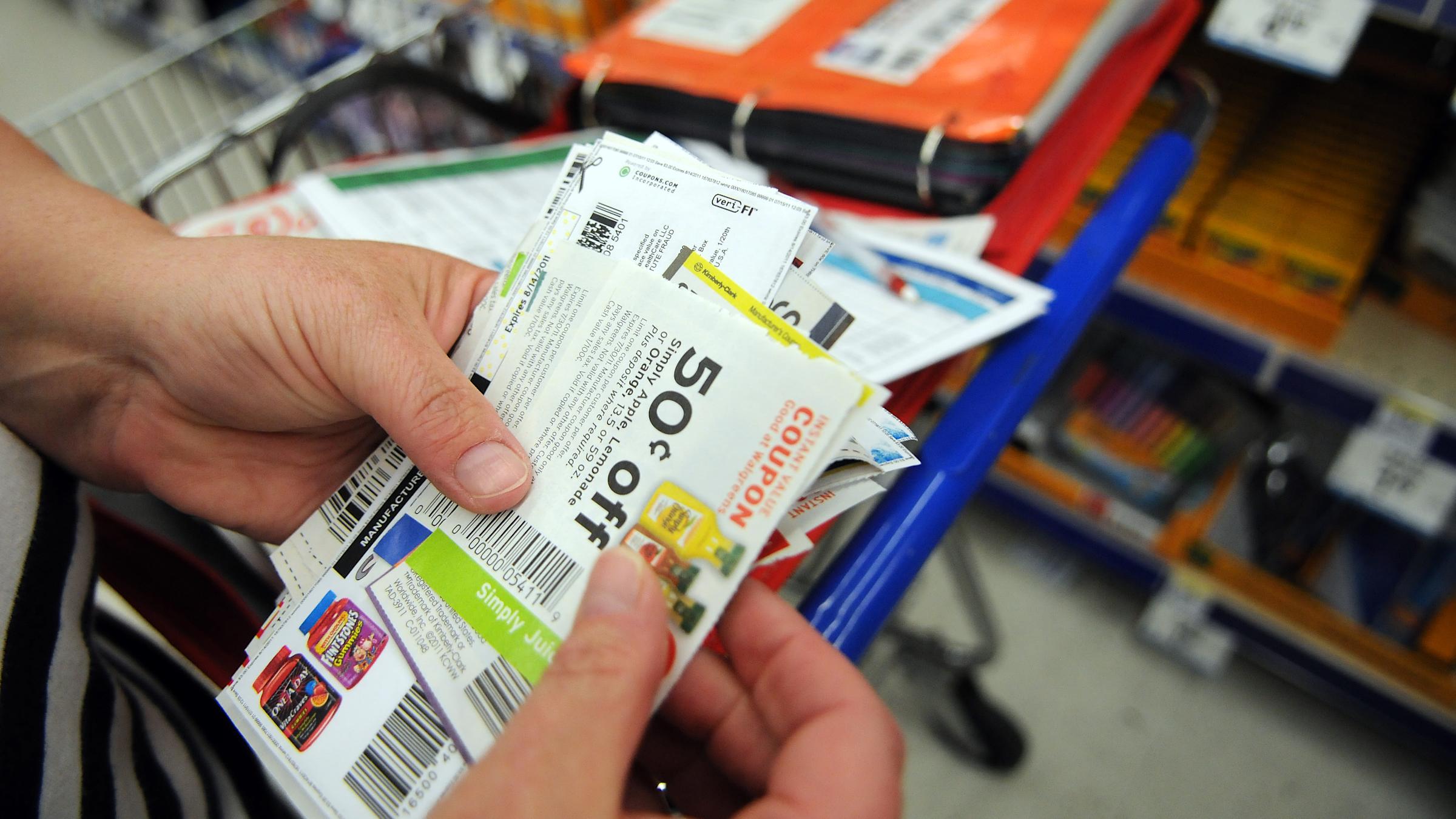
You've heard of recession and depression — but what about the "boomcession"? That's the term Matt Stoller has coined for the current state of the economy. A combination of the words "boom" and "recession," the term highlights the disconnect between surging economic data and the financial hardships many Americans are seeing in their daily lives.

“Traditionally, the economy is doing really well,” shared Stoller, an antimonopoly advocate and research director at the American Economic Liberties Project, a nonpartisan think tank. “But ordinary people are saying they’re not.”

Thanks to Jeff Bezos, you can now become a landlord for as little as $100 — and no, you don't have to deal with tenants or fix freezers. Here's how

This 20-year-old lotto winner refused $1M in cash and chose $1,000/week for life. Now she’s getting slammed for it. Which option would you pick?

Dave Ramsey warns nearly 50% of Americans are making 1 big Social Security mistake — here’s what it is and the simple steps to fix it ASAP

The stock market is booming, and consumer spending is up, pointing to a healthy economy. But many Americans aren't feeling good about their financial futures (1). A study from Pew Research found that most Americans have a negative view of the economy, with 72% of adult Americans rating the country's economic condition as fair or poor (2).

Economic experts examine specific data when assessing the state of the economy — most often the GDP (gross domestic product, or the measure of all goods and services produced by the country), the stock market, inflation, the labor market, and consumer sentiment. And right now, those numbers are telling different stories.

GDP is up (3), the stock market is hitting all-time highs (4), and inflation is down (5), which are all indicators of a strong economy. The labor market has been sending mixed signals, especially after recent revisions sharply reduced previously reported job growth, and consumer sentiment is at its lowest level in the past five years. So what gives?

“I’ve never seen anything like it,” said Diane Swonk, chief economist at consulting firm KPMG. “I’ve been doing this for 40 years. And that’s a long time to never see anything like this” (1).

Part of the disconnect is that inflation doesn’t hit everyone equally. While overall inflation has cooled, the categories that matter most (groceries and housing) rose sharply between 2020 and 2025. Those essentials make up a larger share of lower-income households’ budgets, meaning price increases hit them harder.

Debt is adding to the strain. Credit card balances hit a record $1.28 trillion in the fourth quarter of last year, according to the New York Fed. With interest rates still elevated, carrying a balance is more expensive than it was just a few years ago.

The labor market is also sending mixed signals. Economists have described today’s environment as a “hiring recession” or “jobless boom.” At the same time, productivity has climbed, raising concerns that companies may be able to produce more with fewer workers. That can leave employees feeling vulnerable, even if unemployment remains relatively low (1).

Put simply, the economy may be expanding, but the gains aren’t evenly distributed. And for Americans who don’t own stocks or have large financial cushions, a booming market doesn’t translate into day-to-day security.

Read More: 5 essential money moves to make once you’ve saved $50,000

Read More: Young millionaires are ditching stocks. Why older Americans should take note

If you're feeling economic stress, you're not imagining things. While national numbers look good, many everyday Americans are feeling the budget strain . Here are a few ways to build financial security in today's boomcession:

Start or build your emergency fund. Saving for a rainy day can be difficult when you're struggling to make ends meet. But even small contributions add up over time. Putting just a few dollars a month in a high-yield savings account can create a safety net over time. Aim for three to six months of expenses, but focus on saving consistently if things are tight.

Tackle high-interest debt first. With credit card balances hitting record highs, monthly payments can quickly eat away at any financial wiggle room. Focus on paying down the highest-interest debt first, then move on to lower-interest debt. If you qualify, consider opening a new card with a low or no introductory interest rate. Just make sure you can pay off the balance transfer before the introductory period ends.

Diversify your income sources. In today's labor market, you can't rely on one company for your entire household's income. Depending on your situation, that might mean freelancing, gig work, or opening a service-based business on the side. Having more than one way to pay the bills can ease financial stress and provide a cushion if you face job loss.

Learn new skills to help you spend less. Look for ways to work with what you already have. Mending or altering clothing can be a satisfying hobby and a way to spend less on clothing. Utilize how-to videos on the internet to learn basic skills like fixing a broken washer or a dripping pipe. Search for recipes that offer easy swaps for basic ingredients so you can use what is already in your pantry.

Lean on your community. Tough economic conditions serve as a reminder that we're not in this alone. Look for self-led community groups, sometimes called mutual aid, that offer support. Look for grassroots community groups that offer support. Many neighborhoods have local sharing networks, free food pantries or item-swap groups where neighbors help one another during tough times. And if you don't find what you need in your own community, consider creating it. You might find your neighbors are looking for a similar solution.

The idea of a “boomcession” captures a strange moment in the U.S. economy, one where strong national indicators coexist with real household stress. While individuals can’t control the broader economy, building savings, reducing debt and strengthening community ties can make uncertain times more manageable.

Robert Kiyosaki begs investors not to miss this ‘explosion’ — says this 1 asset will surge 400% in a year

Turning 50 with $0 saved for retirement? Most people don’t realize they’re actually just entering their prime earning decade. Here are 6 ways to catch up fast

Vanguard reveals what could be coming for U.S. stocks, and it’s raising alarm bells for retirees. Here’s why and how to protect yourself

Here’s how I’m keeping my $2M nest egg safe at 71 — and making sure my grandkids inherit every penny

Join 250,000+ readers and get Moneywise’s best stories and exclusive interviews first — clear insights curated and delivered weekly. Subscribe now.

We rely only on vetted sources and credible third-party reporting. For details, see our editorial ethics and guidelines.

CNBC (1, 4); Pew Research Center (2); Bureau of Economic Analysis (3); YCharts (5)

This article provides information only and should not be construed as advice. It is provided without warranty of any kind.
Comments
You must be logged in to comment.